What's inside
As an Amazon Associate I earn from qualifying purchases. This post may contain affiliate links at no extra cost to you.
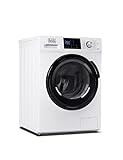
The best all in one washer and dryer combo for most households is a 5.0–5.3-cubic-foot ventless heat-pump model from LG or Samsung; choose GE Profile instead when a 120-volt installation and a comparatively compact footprint matter most.
These machines wash and dry in one drum, so you can load laundry once and remove it later. The trade-off is speed: a complete wash-and-dry cycle commonly takes about two to four hours, and dense loads such as towels may take longer. The right choice depends less on brand prestige than on capacity, drying expectations, electrical supply, and how often you do laundry.
As an Amazon Associate we earn from qualifying purchases at no extra cost to you.


What we cover
Best all-in-one washer and dryer combos by situation
| Situation | Best fit | Why | Main compromise |
|---|---|---|---|
| One machine for a family | Large heat-pump combo, such as LG WashCombo or Samsung Bespoke AI Laundry Combo | Approximately 5.0–5.3 cu. ft. capacity, enough for substantial mixed loads | High purchase price and long full-cycle times |
| Apartment without a dryer vent | Any ventless heat-pump combo | Needs water, drain, and electricity but no exterior exhaust duct | Drying is slower than a conventional vented dryer |
| Limited electrical work | GE Profile UltraFast Combo | Designed for a standard 120-volt outlet in common configurations | More modest usable capacity than the largest competitors |
| Frequent small loads | Any combo with load-sensing and quick-wash options | Avoids transferring clothes and makes unattended laundry convenient | Small loads are more efficient than tightly packed loads |
| Lowest upfront cost | Compact ventless combo or separate entry-level washer and dryer | Lower initial investment and simpler replacement options | Usually less capacity, slower drying, or weaker long-term value |
Head-to-head comparison
| Model or type | Approximate capacity | Drying system | Electrical requirement | Full-cycle expectation | Typical market range in 2026 |
|---|---|---|---|---|---|
| LG WashCombo | About 5.0 cu. ft. | Ventless heat pump | Typically 120 V | Roughly 2–4 hours, depending on load and program | $1,800–$2,500 |
| Samsung Bespoke AI Laundry Combo | About 5.3 cu. ft. | Ventless heat pump | Typically 120 V | Roughly 2–4 hours | $1,800–$2,700 |
| GE Profile UltraFast Combo | About 5.0 cu. ft., depending on version | Ventless heat-pump system | 120 V on common models | Often about 2–4 hours | $1,700–$2,400 |
| Compact ventless combo | About 2.4–3.5 cu. ft. | Condenser or heat pump | 120 V or 240 V, model-dependent | About 3–6 hours for a complete load | $1,000–$1,800 |
| Separate washer and vented electric dryer | Washer typically 4.5–5.5 cu. ft. | Resistive electric heating with exhaust vent | Usually 120 V washer plus 240 V dryer | Often under 2 hours total, but requires transfer | $1,200–$2,500 for both |
Prices are broad street-market ranges rather than fixed recommendations. Capacity, finish, promotions, and regional availability can change them substantially. Check the exact model number before buying because electrical specifications and included features vary.
Cycle time: the biggest practical difference
A combo saves handling time, not necessarily clock time. A normal wash followed by automatic drying can run for several hours because the machine must wash, extract water at high speed, condense moisture, and dry without sending hot air through a vent.
LG, Samsung, and GE advertise accelerated programs on some models, but the shortest claims generally apply to a particular load size, fabric mix, and dryness setting. A full cotton load, towels, or clothing packed tightly against the drum will take longer. If you need several loads of dry towels every day, separate machines remain faster because one load can wash while another dries.
Combos are more convenient for overnight laundry, baby clothing, work uniforms, and households that prefer to load once. They are less suitable when you routinely need a large volume of laundry dried immediately.
Ventless drying performance and energy use
Modern heat-pump combos reuse warm air rather than continuously heating new air and exhausting it outdoors. That usually reduces electricity consumption compared with a conventional electric dryer, but it also produces a gentler, slower drying process. Clothes may feel cool when the cycle ends even when they are dry, so judge dryness by moisture rather than temperature.
Water use is generally dominated by the wash portion. A high-efficiency front-loading combo may use roughly 10–25 gallons for a normal wash, while an additional amount may be used by the condenser or drying system, depending on design and program. Consult the Energy Guide for the exact model: published annual energy and water figures are more useful than a generic “eco” label.
For a simple operating-cost estimate, suppose a combo uses 1.5 kWh and 20 gallons per complete load. At $0.20 per kWh and $0.01 per gallon of combined water and sewer charges:
- Electricity: 1.5 × $0.20 = $0.30
- Water and sewer: 20 × $0.01 = $0.20
- Estimated utilities: about $0.50 per load
- At five loads per week: approximately $130 per year
This is an illustration, not a rating. Actual consumption changes with soil level, temperature, load size, drying target, local utility rates, and whether the machine uses water during drying.
Capacity: do not fill the drum to the wash rating
A combo can often wash a large load but dry it more effectively when the drum is only about half to two-thirds full. Wet clothing needs room to lift and tumble so warm air can reach the fabric. Overloading is one of the most common causes of damp results, wrinkling, and extended cycle times.
For one or two people, a 2.4–3.5-cubic-foot compact unit may be adequate if you wash frequently. A family should look for approximately 5 cubic feet or more. Bulky comforters need special attention: a large advertised capacity does not guarantee that every king-size comforter can be washed and dried successfully. Check the manual’s bedding guidance rather than relying on the drum number alone.
Installation in a small space
Measure the route into the home as well as the final alcove. Include door openings, stair turns, appliance doors, hose connections, and the clearance needed to level the machine. A typical full-size combo is roughly 27 inches wide and 30–34 inches deep, but door projection can add several inches. Compact units are often around 24 inches wide and 24–27 inches deep.
- Provide a cold-water supply, a drain standpipe or approved drain connection, and a grounded outlet.
- Do not assume the existing dryer outlet can power a combo; many units use 120 volts, while others require 240 volts.
- Leave access to the pump filter, detergent drawer, and rear hoses.
- Use a rigid, level floor. Excess vibration is often an installation problem rather than a defective motor.
- Follow local rules for drain height and outlet protection, especially in a basement or utility room.
The absence of a vent is a major advantage in condos, interior laundry closets, and older homes. However, “ventless” does not mean “connection-free”: the appliance still needs drainage and may need a water supply for its drying process.
Maintenance and ownership realities
Combo machines have more airflow and moisture-management components than a washer alone. The first parts to demand attention are usually lint screens, pump filters, door seals, detergent drawers, and small drain passages. A blocked filter can cause slow draining, odors, poor drying, or an error code.
A practical maintenance routine
- After each load, wipe the door gasket and leave the door ajar so trapped moisture can evaporate.
- Clean the lint filter and condenser-related screens according to the manual, particularly after towels or fleece.
- Inspect and clean the drain pump filter monthly, placing a shallow tray underneath before opening it.
- Run the manufacturer’s tub-clean cycle monthly or at the interval specified for your usage.
- Use only the recommended amount of high-efficiency detergent; excess soap creates residue and extends rinsing.
- Do not use dryer sheets unless the manufacturer explicitly permits them, since coating can affect sensors and screens.
Seals and pumps are wear points on any front-loading laundry appliance. A combo also concentrates all laundry activity in one machine: if it needs repair, both washing and drying are unavailable. Before buying, check local service coverage, warranty terms, and whether replacement filters or drain-pump access are practical.
Which one should you buy?
Choose the LG WashCombo or Samsung Bespoke AI Laundry Combo if you want the largest practical drum, automatic wash-to-dry operation, and a premium feature set for regular family laundry. Choose the GE Profile UltraFast Combo if your installation favors a standard 120-volt supply or you prefer GE’s control layout and service network in your area. Choose a compact ventless model when width and depth are more important than throughput.
Buy a separate washer and dryer instead if you run back-to-back loads, frequently dry bedding, need the shortest possible turnaround, or want one appliance to remain usable while the other is serviced. For everyone else, a large ventless heat-pump combo is the strongest small-space solution—provided you accept longer cycles and commit to regular filter and seal cleaning.