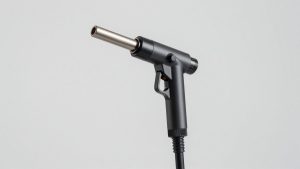
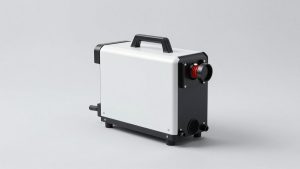
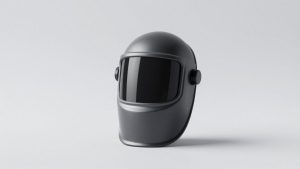
Our Top Picks


What's inside
As an Amazon Associate I earn from qualifying purchases. This post may contain affiliate links at no extra cost to you.
Most welding carts die in the same three spots. Casters splay and start grinding, the bottle sits in one loose chain and rocks every time you cross a cord, and the bottom tray fills with oily rags right under falling slag. Good welding cart ideas start with those failures, not with paint color.
Here is how to spec a cart for the machine you actually run. What steel to use. How big the wheels need to be. Where the cylinder goes. Buy it or cut it out of scrap tube, the rules do not change.
As an Amazon Associate we earn from qualifying purchases at no extra cost to you.


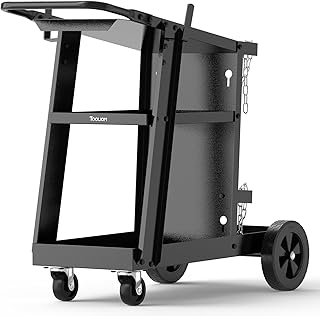
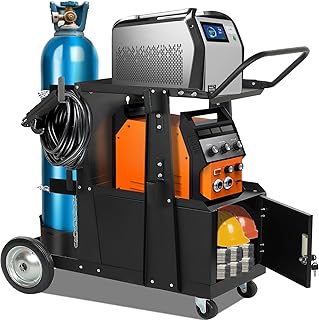
| Cart style | Best for | Watch for |
|---|---|---|
| Bolt-together budget cart | 120V MIG, hobby hours, tight money | Thin legs, 3 inch plastic casters, one short chain |
| Welded scrap-tube build | MIG plus plasma, shops that already weld | A weekend of cutting, fitting and paint |
| Two-bottle production cart | Shared bays, 250A class machines, two gases | Weight, turning radius, floor condition |
| Cart and weld table hybrid | Small garages where floor space runs out | Heat and slag on the top, cable clutter |
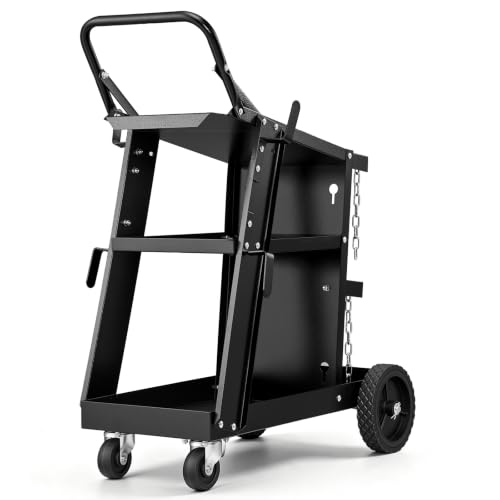
Rolling welding cart with drawers
Drawers beat an open shelf because tips, nozzles and tungsten stop collecting grinding dust. Check caster diameter and steel gauge before you look at the price. If the legs flex in the listing photos, they flex worse loaded.
What we cover
Welding Cart Ideas That Survive a Working Shop
Fix the cheap cart before you scrap it
Swap the little plastic wheels for 5 inch hard rubber casters. Two swivel with brakes up front, two fixed at the rear. Add a second chain or a ratchet strap so the bottle is captured up high and again near the middle. Gusset the leg joints. One afternoon, most of the problem gone.
Build around the machine you own
Measure the machine, then the bottle, then the narrowest door you push through. Keep the deck low. A machine at knee height with the cylinder behind the rear wheels is hard to tip. Tall carts with the bottle up high are the ones that go over on an extension cord.
Two bottles, one cart
Running mix for MIG and straight argon for TIG means swapping regulators unless you build a dual rack. Put the cylinders side by side over the fixed axle, never stacked front to back, with an independent chain on each. Loaded, that cart runs 250 pounds or more. Use 5 to 6 inch casters and a flat floor.
Cart and weld table in one footprint
A 3/16 or 1/4 inch plate top gives you a ground point, a tacking surface and storage underneath. Leave the top bare. Paint burns, galvanized coating gasses off, and neither belongs where you strike an arc.
Steel Thickness, Amps and Torque in Plain Terms
Thickness is where builds go wrong. 14 gauge tube is about 0.075 inch. 11 gauge is about 0.120 inch. 1/8 inch plate is 0.125 inch. Use 11 gauge or 1/8 inch wall square tube for legs and the bottle rack, 14 gauge for shelves. Thinner dents when a full bottle swings into it.
Amperage is heat. The rule of thumb on mild steel is roughly 1 amp per 0.001 inch of thickness, so 1/8 inch material wants about 125 amps and 14 gauge closer to 75. Too hot on thin tube and you blow through the corner. Too cold on 1/4 inch and the bead sits on top with no penetration. On a 120V machine, stay in the 14 to 11 gauge range.
Torque is only how hard a fastener is tightened, measured in foot-pounds. A 3/8 inch grade 5 bolt into 1/4 inch plate is happy in the low 30s. The same bolt through 16 gauge sheet dishes the metal long before that, so add a backing washer or a nut plate. Recheck caster bolts after the first week. They always loosen once.
Heavy duty 5 inch locking casters
Wheel diameter matters more than any other spec on a shop floor. Bigger wheels roll over cords, spatter and expansion joints instead of stopping dead. Buy hard rubber or polyurethane rated well above your loaded weight, with brakes on at least two.
Bottles, Fumes and Fire Come First
A compressed cylinder is a rocket with a brass valve on the nose. Two restraint points, upright, valve cap on any time the regulator is off or the cart is moving between bays. Oxygen fittings stay clean and oil free. No grease, no exceptions.
Never weld coated steel on a cart build. Galvanized tube looks like free material, and zinc fume gives you metal fume fever, chills and a ruined night. Grind the coating back an inch either side of the joint, pull air across the joint with a fan or extractor, and wear a P100 respirator, not a dust mask. Same story for primed or painted scrap.
Helmet at the right shade, leather gloves, cotton or leather sleeves, no synthetics that melt into skin, glasses under the hood when you grind. Boots, not sneakers.
The cart tray is not storage for brake cleaner, starting fluid, aerosols or rags. Mount an ABC extinguisher on the frame where you can reach it without walking through the fire. Look under the cart before you strike an arc. Sparks travel and dust smolders.
Storage, Leads and Rust
Leads want a large radius hook, not a nail. Tight kinks kill liners and copper. Hang the gun or stinger off the end of the cart so the ground clamp never rests against the work lead. Consumables belong in a closed drawer. Tungsten and stick electrodes pull moisture out of the air and hand you porosity you will chase for an hour.
- ✔ Big wheels roll over cords and slag instead of stopping dead
- ✔ Low deck with the bottle over the rear axle resists tipping
- ✔ Closed drawers keep tips and electrodes dry
- ✔ Bare steel top doubles as a ground and tacking surface
- ✘ Loaded two-bottle carts get heavy and steer poorly
- ✘ A DIY build eats a weekend plus consumables
- ✘ Budget carts almost always need new casters and a second chain
- ✘ Table hybrids collect clutter fast
Buy or Build
Buy if you run a 120V or 140A class MIG, have no scrap on hand, and want the machine off the floor this week. An entry cart plus decent casters usually costs less than the steel would. Build if you weld daily, have tube in the rack, need an odd footprint, or run two gases.
Dual cylinder welding cart
Worth it if you switch between mix and argon in the same session. Check the cylinder well diameter against your bottle size before ordering, and confirm it ships with two separate chains. Plenty come with one, and one chain across two bottles is not a restraint.
Welding Cart FAQ
What steel should I use for a DIY welding cart? 11 gauge to 1/8 inch wall square tube for the frame and bottle rack, 14 gauge for shelves and trays. 1 inch or 1.5 inch square tube handles a single-bottle cart fine.
How big should the casters be? 4 inch minimum, 5 to 6 inch if you cross cords, cracks or a rough slab. Total load rating well above your loaded weight, brakes on at least two, hard rubber or polyurethane. Never hollow plastic.
Can I lay the bottle down on the cart? No. Cylinders ride upright and restrained. Acetylene especially, because the acetone inside can carry out through the valve and into your regulator. Cap it whenever the regulator comes off.
Spec the wheels, the wall thickness and the bottle restraint first. Everything else on a cart is convenience. Get those three right and the cart outlasts the machine sitting on it.
Check prices on Amazon →