What's inside
As an Amazon Associate I earn from qualifying purchases. This post may contain affiliate links at no extra cost to you.
The best bandsaw for metal depends on how much you cut and what you cut: for occasional small-shop work, a compact portable band saw for metal like the Milwaukee M18 deep-cut or Makita XBP02 covers most jobs under $300 (tool-only); for regular fabrication, a horizontal band saw such as the Jet HVBS-56M or Grizzly’s metal-cutting models gives you hands-free cutting capacity up to about 5 inches. Below we break down the criteria that actually matter and match picks to real situations.
As an Amazon Associate we earn from qualifying purchases at no extra cost to you.



What we cover
What Actually Matters in a Bandsaw for Metal Cutting
Metal cutting is fundamentally different from wood: you need slower blade speeds, coolant management, and blades with far more teeth. Ignore any marketing that conflates the two. These are the five criteria worth your attention:
- Cutting capacity — throat depth and maximum stock size. A 5-inch capacity horizontal saw handles pipe, angle iron, and solid bar; a portable band saw for metal typically maxes out around 3–5 inches of depth but goes where the work is.
- Blade speed (SFPM) — metal needs roughly 50–300 surface feet per minute. Mild steel cuts cleanly around 150–250 SFPM; stainless wants under 100; aluminum can run 500+. Single-speed saws at ~200 SFPM are a compromise that works for steel and aluminum but not stainless.
- Motor power — corded stationary saws in the 1/2–1 HP range are standard; portable units run 5–10 amps corded or 18V brushless cordless. Underpowered saws stall in thick stock and ruin blades.
- Portability — cordless portable band saws weigh 10–15 lbs and are the right tool for cutting threaded rod, conduit, and strut on a jobsite; a 150+ lb horizontal saw belongs bolted to a shop floor.
- Durability and blade cost — blades are your main consumable ($15–40 each for bimetal). A saw that tracks poorly eats blades; check for cast or welded wheels rather than stamped steel.
Spec Comparison: 2026’s Leading Options
| Model | Type | Cutting Capacity | Blade Speed | Motor | Weight | Typical Price Range |
|---|---|---|---|---|---|---|
| Milwaukee 6238-21 Deep Cut | Portable, corded | 5″ × 5″ | 200–400 SFPM (variable) | 11 A | ~16 lbs | $300–400 |
| Makita XBP02Z 18V LXT | Portable, cordless | 4-3/4″ | 630 SFPM (high TPI blades) | 18V brushless | ~15 lbs | $280–350 (tool only) |
| DEWALT DWM120K | Portable, corded | 5″ × 4-3/4″ | 100–350 SFPM | 10 A | ~15 lbs | $320–420 |
| Jet HVBS-56M | Horizontal/vertical, corded | 5″ round, 6″ flat | 80 / 120 / 200 SFPM | 1/2 HP | ~110 lbs | $800–1,100 |
| Grizzly G0622 | Horizontal, corded | 4-1/2″ round | 90–258 SFPM (variable) | 1 HP | ~105 lbs | $500–800 |
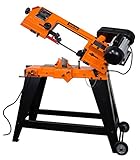
| WEN 3970 (metal-cutting) | Vertical, corded | 4″ × 6″ | 80–420 SFPM | 4 A | ~80 lbs | $300–450 |
Numbers above are manufacturer-rated specs; real-world capacity on wall-thick tube is usually less than solid bar of the same diameter.
Picks by Situation
Best for jobsite and field work: Milwaukee Deep Cut or DEWALT DWM120K
If you’re cutting unistrut, rebar, or threaded rod away from the bench, a portable band saw metal setup is the answer — nothing else comes close. The Milwaukee’s 5×5 throat swallows EMT bundles; the DEWALT’s variable speed down to 100 SFPM handles stainless better. Both run standard 44-7/8″ blades you can buy anywhere.
Best one-saw shop solution: Grizzly G0622 or Jet HVBS-56M
Horizontal saws cut hands-free: clamp the stock, set the feed weight, walk away. For a fabrication or automotive shop cutting steel daily, this is where durability pays off — cast frames, coolant-compatible designs, and gravity feed produce square, repeatable cuts a portable can’t match.
Best budget vertical for mixed use: WEN 3970
A benchtop band saw metal-capable unit like the WEN 3970 suits hobbyists cutting aluminum and thin steel under 4 inches, plus curves and contours a horizontal saw can’t do. Expect to tune the blade guides out of the box.
Decision Matrix: Match the Saw to Your Shop
| Your situation | Recommended type | Why |
|---|---|---|
| Contractor, cuts conduit/rod on site, no bench space | Cordless portable (Makita XBP02Z, Milwaukee M18) | Battery platform you likely already own; 10–15 lb carry |
| Fabrication shop, daily cuts on steel bar/pipe | Horizontal, 1 HP, coolant (Jet HVBS-56M) | Three-speed gearbox covers mild steel and stainless; repeatable square cuts |
| Weekend hobbyist, mostly aluminum, occasional steel | Budget vertical (WEN 3970) | Curves + straights; higher SFPM suits aluminum |
| Mixed fleet, all material types, tight budget | Corded portable (DEWALT DWM120K) + vise | Variable speed covers stainless; clamp work and treat it like a chop saw |
| Cutting stainless or tool steel regularly | Any saw with sub-100 SFPM low speed + cutting fluid | Stainless work-hardens instantly if the blade runs hot or rubs |
Blade and Speed Math Worth Knowing
The most common beginner mistake is running too fast for the material. A quick reference for mild steel: use a 14–18 TPI bimetal blade for stock over 1/4″, 18–24 TPI for thin-wall tube, and keep at least 3 teeth in the cut at all times — fewer teeth than that and you’ll strip them immediately.
Worked example on blade cost: a quality 64-1/2″ bimetal blade (~$30) typically delivers 200–400 cuts in 1″ mild steel bar with proper speed and pressure. At 300 cuts, that’s ~$0.10 per cut. Running the same blade 30% over speed can halve its life — blade “economy” is mostly operator technique, not blade brand.
Ownership Realities: What Wears First
- Blade guides and bearings wear before anything else; inspect every ~50 hours. Cheap saws use bushings that slop out fast.
- Tire rubber on wheels degrades with coolant exposure — wipe down after wet cutting.
- Chip buildup in horizontal saw trays causes tracking problems; clean the sump and brush wheel regularly.
- Blade tension — de-tension when the saw sits unused more than a day or two to protect tires and bearings.
- Feed pressure on portables: let the blade cut. Forcing it generates heat, work-hardens stainless, and kills blades faster than any other factor.
FAQ
Can I use a wood bandsaw for metal?
No — wood saws run 2,000+ SFPM, roughly 10–20× too fast for steel. You’d destroy the blade in seconds and risk fire. A dedicated bandsaw metal machine or a variable-speed model with a sub-300 SFPM range is required.
Cordless or corded portable band saw for metal?
Cordless wins on jobsites if you’re already on the 18V platform; corded wins for sustained cutting sessions since a battery drains in roughly 30–60 cuts of thick stock.
What blade cuts both aluminum and steel?
A 14 TPI bimetal blade at ~200 SFPM handles both adequately. For best aluminum results, drop to 10 TPI and run faster — chip evacuation matters more than speed on soft metals.