What's inside
- Food Contact Versus Decorative Use
- Mineral Oil and Waxes: The Natural Route
- Film-Forming Finishes: Polyurethane and Varnish
- Hardwax Oils: The Modern Hybrid Approach
- Avoiding Common Finishing Mistakes
- Determining When to Spend More on Premium Products
- Maintenance Schedules and Compatibility
- Related Guides
- FAQ
- Related Guides
- Food Contact Versus Decorative Use
- Mineral Oil and Waxes: The Natural Route
- Film-Forming Finishes: Polyurethane and Varnish
- Hardwax Oils: The Modern Hybrid Approach
- Avoiding Common Finishing Mistakes
- Determining When to Spend More on Premium Products
- Maintenance Schedules and Compatibility
- Related Guides
- FAQ
- Related Guides
As an Amazon Associate I earn from qualifying purchases. This post may contain affiliate links at no extra cost to you.
Selecting the right finish for a butcher block countertop is the single most important decision you will make regarding its long-term performance, appearance, and maintenance. Whether you are installing a new island in a high-traffic kitchen or upgrading a workspace in 2026, the sheer variety of oils, waxes, and film-forming sealants on the market can feel overwhelming. Manufacturers often rely on marketing buzzwords rather than clear technical specifications, leaving DIYers and woodworkers guessing about food safety, moisture resistance, and recoating intervals.
To cut through the noise, you need to evaluate a finish based on how you actually plan to use the surface. A countertop destined for heavy food preparation requires an entirely different approach than a dry bar or decorative desktop. By understanding the core mechanics of how different finishes interact with wood fibers, you can select a product that protects your investment without creating an ongoing maintenance headache.
As an Amazon Associate we earn from qualifying purchases at no extra cost to you.
What we cover
- Food Contact Versus Decorative Use
- Mineral Oil and Waxes: The Natural Route
- Film-Forming Finishes: Polyurethane and Varnish
- Hardwax Oils: The Modern Hybrid Approach
- Avoiding Common Finishing Mistakes
- Determining When to Spend More on Premium Products
- Maintenance Schedules and Compatibility
- Related Guides
- FAQ
- Related Guides
Food Contact Versus Decorative Use
The primary divider when choosing a butcher block finish is whether you intend to use the surface for direct food preparation. If you plan to chop vegetables, slice meats, and roll out dough directly on the wood, your options narrow significantly. You must use non-toxic, food-safe products that will not flake off into your food supply. Mineral oil, beeswax, and specific food-grade paraffin blends are traditional favorites for this exact reason. Conversely, if your countertop is primarily for serving or purely decorative, film-forming finishes like polyurethane open up, offering superior moisture protection with zero food-prep capability.
Mineral Oil and Waxes: The Natural Route
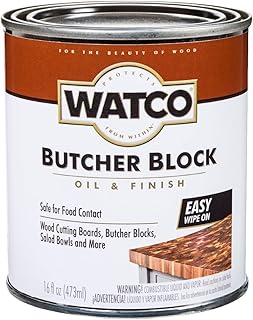
Mineral oil is the classic baseline finish for butcher block. It penetrates deep into the wood fibers, keeping the material hydrated and preventing it from drying out and splitting. Because it is completely food-safe and easy to apply, it remains a popular choice for homeowners who love the warm, tactile feel of raw wood. However, mineral oil does not cure or harden; it simply sits in the wood and eventually evaporates or washes away. To improve its longevity, many users pair mineral oil with a beeswax topcoat, which creates a slight water-resistant barrier and enhances the natural grain pattern.
Film-Forming Finishes: Polyurethane and Varnish
If your priority is absolute protection against water rings, wine spills, and heavy kitchen moisture, film-forming finishes are the industry standard. Products like oil-based or water-based polyurethane sit on top of the wood, creating a hard, impermeable plastic-like shield. While this means you cannot easily cut on the surface without ruining the finish, it also means you rarely have to reapply it. When choosing a film-forming finish, pay close attention to the sheen level—satin or matte options tend to look much more natural on solid wood than high-gloss varieties, which can highlight every microscopic dust speck and minor scratch.
Hardwax Oils: The Modern Hybrid Approach
Hardwax oils have surged in popularity among modern woodworkers because they bridge the gap between traditional oils and film-forming sealants. These products combine natural plant oils—such as linseed or sunflower oil—with hard waxes like carnauba. When applied, the oil penetrates and bonds chemically with the wood fibers, while the wax stays on the surface to provide a durable, water-repellent shell. The major advantage of hardwax oils is their spot-repairability. If a section gets damaged or worn down, you can simply clean that specific area, reapply a small amount of product, and buff it in without having to sand down the entire countertop.
Avoiding Common Finishing Mistakes
One of the most frequent mistakes woodworkers make is failing to properly prep the wood grain before application. Butcher block typically comes pre-sanded from the mill, but running a fine-grit sandpaper over the surface just before finishing opens the pores and ensures even absorption. Another common error is applying finishes in overly humid environments or ignoring drying times between coats. Rushing a multi-coat finish inevitably leads to tackiness, peeling, or trapped moisture that can ruin the final appearance and compromise the structural integrity of the wood.
Determining When to Spend More on Premium Products
It is easy to assume that all mineral oils or standard varnishes are identical, but price points often reflect ingredient purity and formulation quality. Cheap mineral oils can occasionally go rancid or pick up odors over time, while premium food-grade oils are heavily refined for stability. Similarly, high-end hardwax oils utilize advanced polymer technology that cures faster and offers significantly better resistance to heat and acidic liquids like lemon juice or vinegar. Investing in a higher-tier product generally pays off through reduced maintenance frequency and a superior aesthetic finish that withstands daily kitchen abuse.
Maintenance Schedules and Compatibility
Before committing to any finish, you must consider your willingness to perform ongoing maintenance. Mineral-oil-treated blocks require reapplication every few weeks or whenever the wood looks dry and light-colored. Hardwax oils might only need a refreshing coat once a year, while a polyurethane finish can last several years before requiring a light scuff-sanding and recoat. Furthermore, you must never mix incompatible systems; applying a film-forming finish over an uncured oil will result in adhesion failure. Always verify whether your chosen product can be layered or if it requires stripping the wood down to bare fibers for future maintenance.
Related Guides
For a deeper dive into top-performing products, check out our guide on the Best Finishes for Butcher Block Countertops to compare specific formulations and brand options.
FAQ
Can I use standard furniture varnish on a butcher block countertop?
Standard furniture varnishes are generally not recommended if you plan on preparing food directly on the counter, as they are not food-safe. Even for non-food surfaces, many standard varnishes lack the necessary durability and moisture resistance to handle daily kitchen spills and heavy cleaning agents.
How often do I need to reapply food-grade mineral oil?
You should reapply food-grade mineral oil every three to four weeks, or whenever the wood begins to look faded, dull, or feels dry to the touch. Heavy usage and frequent washing will require more frequent applications to keep the wood properly hydrated.
Is it possible to switch from mineral oil to a polyurethane finish later?
Switching from a penetrating oil to a film-forming finish like polyurethane is extremely difficult because any lingering oil prevents the polyurethane from bonding. To successfully transition, you would need to aggressively sand down the entire countertop to remove every trace of oil embedded in the wood fibers.
What is the best way to clean a finished butcher block?
Clean your finished butcher block using a soft cloth, warm water, and a mild dish soap. Avoid harsh chemical cleaners, abrasive scouring pads, or letting standing water sit on the surface for extended periods, as these can degrade even the toughest finishes.