Our Top Picks



What's inside
As an Amazon Associate I earn from qualifying purchases. This post may contain affiliate links at no extra cost to you.
Most beginners fail for one reason. They buy a machine before they know what metal they need to join. Then they run thin wire on thick plate, get a bead sitting on top like hot glue, and decide they have no talent. This welding for beginners guide covers the four things that decide it: one process, amperage matched to thickness, gear that protects your skin and lungs, and a shop corner that will not smolder behind you.
Welding is a hand skill with a settings problem bolted to the front. The hand part takes arc hours. The settings part takes a chart and a scrap coupon. Fix the settings first. Nobody learns technique while fighting a machine that is set wrong.
As an Amazon Associate we earn from qualifying purchases at no extra cost to you.


| Process | Best First Use | Thickness Sweet Spot | Learning Curve |
|---|---|---|---|
| MIG with gas | Clean steel in a garage | 22 gauge to 1/4 in | Easiest |
| Flux-core, no bottle | Outdoors, rusty or painted steel | 16 gauge to 3/8 in | Easy but dirty |
| Stick | Trailer and farm repair, thick plate, wind | 1/8 in and up | Medium |
| TIG | Thin steel, stainless, aluminum | 24 gauge to 3/16 in | Hardest |
What we cover
Welding For Beginners Guide: Pick One Process And Stay There
Wire feed first. A small MIG or flux-core machine feeds the filler for you, so you only manage gun angle, travel speed and distance. Stick is the honest second choice for thick steel, rust, and wind outdoors. TIG is a beautiful process and a terrible first one: two hands, a foot pedal, and metal that has to be surgically clean.
Do not buy a multiprocess machine planning to learn all four. You will be mediocre at three. Two specs matter more than the amp number on the box. Input power: a 120V machine on a household 20 amp circuit tops out near 140 amps in real use. Duty cycle: 20 percent at rated output means two minutes of arc in every ten. Fine for practice coupons, not for a long fence rail.
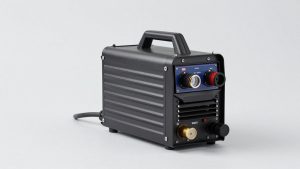
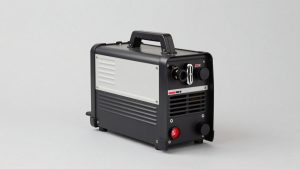
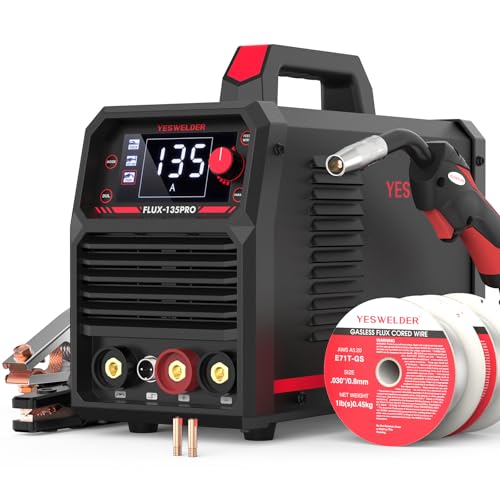
Entry-Level 120V MIG/Flux-Core Welder
Good for sheet, exhaust, brackets and anything up to about 1/4 in with prep. Look for infinitely adjustable voltage and wire speed instead of four preset taps, plus a duty cycle printed in the manual. If your work is 3/8 in plate, skip this tier and wire a 240V circuit.
Amperage, Wire Size And Metal Thickness In Plain Numbers
Here is the rule that fixes most beginner welds. On mild steel, figure roughly one amp per 0.001 in of thickness. So 1/8 in is 0.125 in, which is about 125 amps. Sheet at 22 gauge is around 0.030 in, so about 30 amps and a fast travel speed. It is a starting point, not gospel, but it tells you immediately whether your machine can do the job at all.
On MIG, the voltage knob sets how wide and flat the bead lays. The wire speed knob is your amperage: more wire, more heat, more penetration. Wire size follows thickness. Run 0.023 to 0.030 on sheet and body panels, 0.030 to 0.035 for general shop steel, 0.035 flux-core to bury a bead in something heavy. Keep about 3/8 in of stickout, tip the gun 10 to 15 degrees, push solid wire, and drag flux-core and stick so the slag trails the puddle. Stick sets amps by rod size; a 1/8 in 7018 runs roughly 110 to 140 amps and wants clean metal and dry rods. Past 1/4 in, bevel the joint and stack passes. Nobody fills thick steel in one heroic pass.
Two things beginners overtighten. Gas fittings get hand tight plus one snug pull with a wrench, and that is all the torque brass and a nylon seat want. No tape and no oil on oxygen threads, ever. Drive roll tension gets snugged only until the wire stops slipping when you pinch it with a gloved hand. More than that flattens the wire and births a nest at the rolls.
Choosing between flux-core wire and gas comes down to this trade:
- ✔ No gas bottle, no rental, no leaks
- ✔ Runs outdoors where wind strips shielding gas
- ✔ Tolerates mill scale, light rust and paint
- ✔ More penetration on thick steel at the same amps
- ✘ Slag to chip on every pass
- ✘ Smokier, so ventilation matters more
- ✘ Ugly on thin sheet next to gas MIG
- ✘ Wire has to stay dry and sealed
PPE, Fume And Fire Risk You Do Not Get To Skip
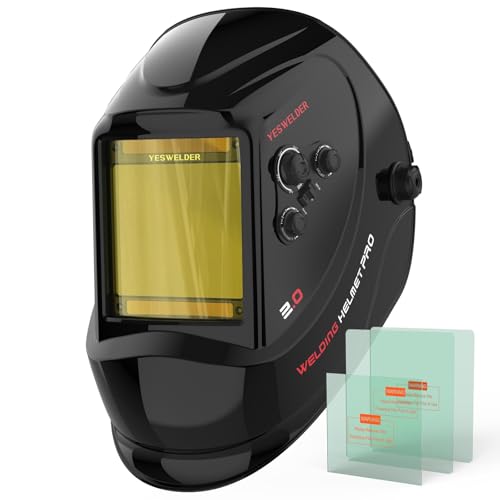
The arc is a UV source inches from your face. Shade 10 is the floor at beginner amperage, moving to 11 through 13 as amps climb. Get an auto-darkening helmet with a wide window and clean optics, and wear safety glasses under it, because you grind more than you weld. Leather gloves. Leather boots with the pant leg over the top. No cuffs, nothing that catches a hot bead. Cotton or leather clothing only, since polyester and fleece melt into skin. Cover your neck and forearms and screen the area so nobody catches an arc flash from across the shop.
Fume is the risk that does not hurt today. The arc turns metal and coatings into particles you breathe deep. Galvanized steel throws zinc oxide and gives you metal fume fever, which feels like flu with a hangover; grind the coating well past the joint or leave that job alone. Stainless makes hexavalent chromium, a carcinogen. Keep your head out of the plume every time. Set a fan to pull air across the bench and away from you, never blowing at the arc, because moving air strips shielding gas and fills the weld with porosity. In a closed garage that means a fume extractor, a P100 respirator or a PAPR hood, and the door open.
Fire is the risk that hurts an hour later. Sparks fly, bounce, roll and drop through floor cracks. Clear combustibles 35 feet out or cover what you cannot move with a welding blanket. Keep an ABC extinguisher within arm’s reach. Check the area for at least 30 minutes after the last arc. Never strike an arc on a closed drum, tank, or anything that held fuel, because that is an explosion and not a fire. Never weld where brake cleaner or chlorinated solvent has been sprayed; the arc can turn it into phosgene gas.
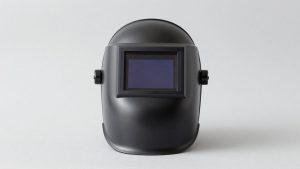
Auto-Darkening Welding Helmet
This is the one place a beginner should overspend. Wide window, fast lens, adjustable shade across 9 to 13, and a grind mode. Muddy optics make you chase the puddle instead of reading it. Check that replacement cover lenses are cheap and easy to find, because you will scrap several.
Leather Welding Jacket And Gauntlet Gloves
Split leather over the chest and arms, gloves that cover the wrist, and a cap so sparks stay out of your hair. Buy the jacket a size up so it fits over a hoodie in winter and still lets you move.
Your First Ten Hours: Drills, Not Projects
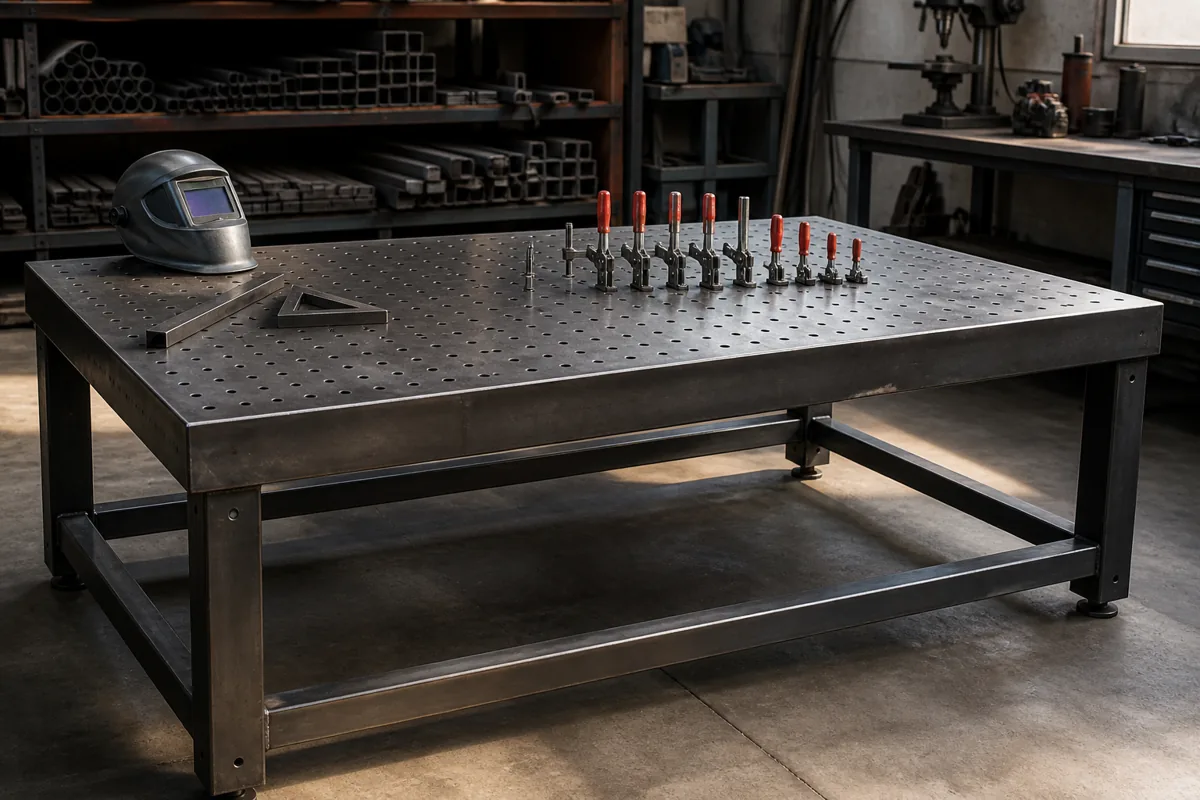
Buy flat bar and sheet and burn it on purpose. Lay a pad of beads across a plate, each one overlapping the last by a third, until the plate is covered. That single drill teaches travel speed and consistency faster than any project. Then run a lap joint, a T-joint fillet, a butt joint with a gap, and only then turn the coupon vertical.
Then break your work. Clamp the coupon in a vise and hammer the joint over until it fails. Bright metal through the joint means penetration; a dark line, gas holes, or a seam that peels like a sticker means you were cold or dirty. Grind scale, rust, paint and oil off the joint and an inch either side, clamp your ground to bare metal near the weld, and alternate tacks end to end so the part does not pull into a banana.
Beginner Welding FAQ
Flux-core or gas MIG for a first machine? Flux-core if you work outdoors or on steel that is not perfectly clean. Gas MIG for garage work on panels, brackets and exhaust. Most beginner machines run both, so start with flux-core and add a bottle when chipping slag gets old.
Do I need a 240V outlet? Not to learn. A 120V machine teaches every skill you need on material up to about 1/4 in with prep. If the plan involves 3/8 in plate or long production beads, wire the circuit first and buy the machine once.
Can I weld my own hitch or suspension parts? No. Anything that carries a load down a road, lifts weight, or protects a person is not beginner work. Practice on carts, stands and shop furniture, and pay a qualified shop for the parts that can kill somebody.
One process, coupons before projects, amperage matched to thickness, and PPE you actually wear every time. Skill shows up around hour ten and it stays. Keep the extinguisher close and start burning steel.
Check prices on Amazon →