As an Amazon Associate I earn from qualifying purchases. This post may contain affiliate links at no extra cost to you.
A printer for a home workshop or small side business needs to produce clean labels, readable instructions, and the occasional color proof without eating into your margin. The market is crowded with budget inkjets that seem identical on paper, but owners of the cheapest models routinely complain about printhead clogs after two weeks of dormancy, proprietary cartridge lock-in, and mobile apps that disconnect mid-job.
What separates a printer you will keep past year two from one you replace every Easter break comes down to a handful of decisions: whether ink costs remain predictable at your volume, whether duplex printing works without manual page flips, and whether the machine handles both plain paper and cardstock without jamming. We compared published specs, list prices, and aggregated owner feedback on the eight most prominent models buyers search for under “new printer” in 2026 to narrow this list to the options that solve those problems at a fair cost.
As an Amazon Associate we earn from qualifying purchases at no extra cost to you.




Our Top Picks
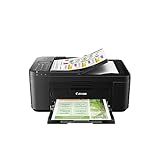
 Canon PIXMA TS6520 Wireless Color Inkjet PrinterMedium14.8 x 14 x 6.7 inches15.42 PoundsCheck on Amazon
 HP OfficeJet Pro 8125 Wireless All-in-One Color Inkjetone size13.29 x 18.11 x 9.17 inches17.6 poundsCheck on Amazon
 Epson EcoTank ET-4800 Wireless Color All-in-One Supertank PrinterOne Size11.8 x 14.8 x 6.7 inches11 poundsCheck on Amazon


Quick Picks
| Product | Best for | Price |
|---|---|---|
| HP DeskJet 2955 | Tightest budget, occasional printing | $59.99 |
| Canon PIXMA TS6520 | Compact desktop with duplex | $80.48 |
| HP OfficeJet Pro 8125 | Home-office volume with ADF | $119.99 |
| Epson EcoTank ET-4800 | Lowest long-run cost per page | $199.99 |
| Canon PIXMA TR4720 | Fax-plus-ADF on a budget | $69 |
| Canon PIXMA TS4320 | Minimalist, print-only lifestyle | $69 |
| HP Envy 6155 | Stylish home setup with duplex | $89.99 |
| HP Envy Photo 7975 | Photo-quality output for craft projects | $159.89 |
How We Picked
We evaluated each model on four criteria: upfront price relative to page-yield economics, feature completeness for a small workshop (duplex, ADF, mobile printing), ink or toner accessibility outside proprietary lock-in, and recurring owner complaints about reliability over the first eighteen months. A printer that wins on cost alone but generates a flood of jam reports or printhead-replacement tickets does not qualify for this list.
The 8 Best New Printer in 2026
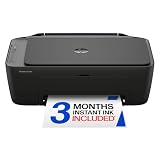
HP DeskJet 2955 Wireless All-in-One (A24HJA)
This is the entry point for anyone printing a handful of shop signs, invoices, or pattern sheets per month. The three-month Instant Ink trial removes the first ink-cost shock, and the AI-Capable designation means HP’s app can auto-scan documents into editable files. Pros include a sub-$60 sticker price and a compact footprint that clears a small corner of a workbench. The con is that inkjet models in this tier are notorious for printhead drying when left idle beyond a week. Skip it if you go weeks between prints or need double-sided output without manual intervention.
Canon PIXMA TS6520 Wireless Color Inkjet Printer
Canon positions this as the duplex-value pick for desktop users who want two-sided printing without paying for an ADF. The integrated rear tray handles cardstock up to reasonable thickness for craft labels and small banners. Pros: automatic duplex is included at under $85, and the individual ink tanks let you replace one color without discarding the others. Con: the control panel is minimal, so settings tweaks often push you toward the Canon app. Skip it if you regularly scan multi-page contracts where an ADF saves real time.
HP OfficeJet Pro 8125 Wireless All-in-One (C2VJ4A)
Designed for the home office that doubles as a small-batch production space, the 8125 bundles a full ADF, duplex, and wired Ethernet alongside wireless modes. The three-month Instant Ink trial and AI-Capable label mean document scanning into searchable PDFs is a one-tap action. Pros: the ADF handles ten pages at once for scanning invoices or multi-page shop manuals, and duplex is automatic in both directions. Con: at $119.99 it is the priciest inkjet here that still relies on cartridges, so long-run cost creeps up without subscribing to Instant Ink. Skip it if you print fewer than fifty pages per month and can tolerate manual flipping.
Epson EcoTank ET-4800 Wireless All-in-One
The EcoTank line exists to kill the cartridge economy, and the ET-4800 adds fax, a thirty-page ADF, and Ethernet in a white chassis that reads more modern office than garage. Pros: included ink bottles cover a substantial initial volume, dropping cost per page well below any cartridge model on this list, and fax plus ADF make it a one-stop document hub. Con: the upfront $199.99 price is the highest here, and the refill process is messier than swapping a cartridge. Skip it if your monthly volume stays under a few dozen sheets and the payback period stretches past two years.
Canon PIXMA TR4720 All-in-One Wireless Printer
At $69 the TR4720 packs an auto document feeder and built-in fax into a footprint that fits a narrow shelf, making it the budget ADF pick. Pros: the ADF eliminates hand-feeding multi-page scans, and fax capability remains useful for older trade partners who still send paper quotes. Con: no duplex printing means two-sided documents require manual re-feeding, and the black-only finish may clash with lighter workshop aesthetics. Skip it if you need automatic double-sided output or want a color-accurate print for photo-grade craft work.
Canon PIXMA TS4320 Wireless Color Inkjet Printer
The TS4320 strips printing, copying, and scanning to their essentials in a square, cube-like shell that occupies minimal desk space. Pros: the compact design is genuinely one of the smallest all-in-one footprints available, and setup via Wi-Fi Direct works without a router for quick single prints. Con: there is no ADF, no duplex, and no fax, so any batch scanning or two-sided job requires hand-feeding every sheet. Skip it if you handle more than occasional single-page documents or need any automation beyond basic print-copy-scan.
HP Envy 6155 Wireless All-in-One (C2WR7A) Portobello
The Portobello color finish signals that HP designed this for living-room-adjacent spaces rather than a windowless back office. Under $90 it adds duplex and the Instant Ink trial, covering the features that separate a household workhorse from a toy. Pros: automatic two-sided printing eliminates the manual re-feed most budget models demand, and the AI-Capable smart-scan feature digitizes receipts and patterns into searchable folders. Con: like other HP inkjets in this tier, it expects you to subscribe to Instant Ink for the best page cost, which locks you into a monthly commitment after the trial ends. Skip it if you refuse subscription ink plans and want truly open-cartridge freedom.
HP Envy Photo 7975 Wireless Color Inkjet Photo Printer (B63K3A)
For the woodworker who prints full-color project renderings, catalog pages, or client-facing photo proofs, the 7975 is the only dedicated photo model in this lineup. Pros: the six-cartridge system delivers richer color and finer gradients than any four-ink option here, and the rear specialty tray handles photo paper weights up to heavy cardstock. Con: at $159.89 plus six separate cartridges, running costs climb fast if you print more than a few photos per month. Skip it if your primary need is text documents, labels, or invoices rather than color-accurate images.
Buying Guide
Ink Cost and Long-Run Economics
Cartridge-based printers tempt you with low hardware prices, but per-page cost can run two to four times higher than refillable-tank systems. If your monthly volume exceeds one hundred sheets, a higher upfront investment like the EcoTank or a subscription plan like HP’s Instant Ink will likely save money within the first year. Below that threshold, the cheapest cartridge printer with a decent trial period remains rational.
Automation Features That Save Time
Duplex and ADF are not luxuries—they are time-savers. A five-page contract scanned without an ADF costs you thirty seconds of hand-feeding; a fifty-page manual costs you fifteen minutes. Duplex eliminates re-feeding for double-sided print jobs. If you handle multi-page documents weekly, filter for models that include both at your price point rather than buying a cheaper unit and resenting the workflow.
Connectivity and Ecosystem Lock-In
All models here offer Wi-Fi, but Ethernet ports (present on the OfficeJet Pro and EcoTank) deliver more reliable throughput when your router is far from the shop. Also consider how deeply the manufacturer’s app and subscription tie you to their ink supply. If you want freedom to buy third-party cartridges or generic refill ink, avoid models whose firmware blocks non-OEM supplies.
Our Verdict
The HP OfficeJet Pro 8125 is our top pick for most workshop-based buyers: it covers duplex, ADF, wired and wireless networking, and the Instant Ink trial, all at a price that sits comfortably in the middle of the range. The HP DeskJet 2955 takes the budget slot at under $60 for anyone who prints sparingly and can tolerate manual page flips. However, if your monthly volume reliably exceeds two hundred pages, the Epson EcoTank ET-4800 wins outright because its refillable tanks collapse per-page cost enough to offset the higher hardware price within roughly a year.
FAQ
Do inkjet printers dry out if left unused?
Yes, especially budget cartridge-based models. Printheads integrated into the cartridge or the machine itself can clog after a few weeks of inactivity. Manufacturers counter this with auto-maintenance cycles that use ink overnight, but those cycles add to running costs. If you print less than once a week, consider a laser printer or an EcoTank model whose user-replaceable heads reduce the severity of clogs.
Is a subscription ink plan like Instant Ink worth it?
For predictable monthly volumes, the per-page rate under a subscription is often lower than buying cartridges outright. The trade-off is that you commit to a fixed tier and lose the flexibility to buy third-party ink. If you print fewer than thirty pages a month, paying the subscription even at the lowest tier likely costs more than occasional cartridge purchases.
What is the minimum set of features a home-office buyer should require?
Wireless printing and at least one of duplex or ADF. Without wireless, you are tethered to a USB port or a dedicated station. Without duplex or ADF, every multi-page or two-sided task becomes a manual, error-prone process that erodes the convenience of having a printer at all.
Can any of these printers handle cardstock or thick media for craft labels?
Most rear- or straight-path-feed models in this list, including the Canon TS6520 and HP Envy Photo 7975, accept media up to roughly sixty-five-pound cardstock. Front-loading trays on compact models tend to struggle with anything thicker than standard paper. Check each unit’s maximum media weight spec before assuming it will handle your specific project material.