What's inside
- Lincoln 120V welder options at a glance
- Which Lincoln 120V welder fits your situation?
- POWER MIG 140 MP versus Weld Pak 140 HD
- What can a 120V Lincoln welder really weld?
- Breaker, outlet, and extension-cord requirements
- Setup choices that affect weld quality
- Ownership costs and parts that wear first
- Bottom line
- Related Guides
- Lincoln 120V welder options at a glance
- Which Lincoln 120V welder fits your situation?
- POWER MIG 140 MP versus Weld Pak 140 HD
- What can a 120V Lincoln welder really weld?
- Breaker, outlet, and extension-cord requirements
- Setup choices that affect weld quality
- Ownership costs and parts that wear first
- Bottom line
- Related Guides
As an Amazon Associate I earn from qualifying purchases. This post may contain affiliate links at no extra cost to you.
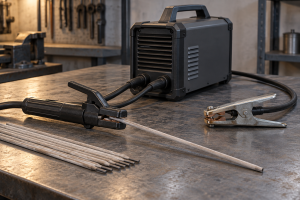
The best Lincoln 120V welder for most home users is the POWER MIG 140 MP if you want MIG, flux-cored, and stick capability; choose the Weld Pak 140 HD when low cost and simple flux-cored welding matter more than versatility.
As an Amazon Associate we earn from qualifying purchases at no extra cost to you.


What we cover
- Lincoln 120V welder options at a glance
- Which Lincoln 120V welder fits your situation?
- POWER MIG 140 MP versus Weld Pak 140 HD
- What can a 120V Lincoln welder really weld?
- Breaker, outlet, and extension-cord requirements
- Setup choices that affect weld quality
- Ownership costs and parts that wear first
- Bottom line
- Related Guides
Lincoln 120V welder options at a glance
Lincoln Electric’s 120-volt machines fall into two useful groups: compact flux-cored welders designed for basic steel repair, and multi-process inverter welders that add gas MIG and stick welding. The numbers below are representative published ratings, but always confirm the data plate and manual for the exact package because Lincoln sells regional and package variations.
| Model or type | Input | Maximum output | Duty cycle | Processes | Practical mild-steel range |
|---|---|---|---|---|---|
| Lincoln Weld Pak 140 HD | 120V, 20A circuit recommended | 140A class | About 20% at 90A | Flux-cored, some packages support MIG conversion | Thin sheet through about 3/16 in with preparation |
| Lincoln POWER MIG 140 MP | 120V, 20A circuit recommended | 140A | 20% at 90A | MIG, flux-cored, DC stick | Sheet through about 1/4 in with multiple passes |
| 120V/230V Lincoln multi-process class | 120V or 230V | Roughly 180–210A, model dependent | Higher output on 230V | MIG, flux-cored, stick; some include TIG | Up to about 1/4 in on 120V; thicker on 230V |
“Maximum output” is not the same as continuous welding capacity. A 140-amp machine may produce 140 amps briefly, while its rated duty cycle is commonly measured at approximately 90 amps. This distinction matters when welding long seams, heavy brackets, or trailer frames.
Which Lincoln 120V welder fits your situation?
| Your situation | Best fit | Why |
|---|---|---|
| Lowest purchase cost, occasional outdoor repair | Weld Pak 140 HD | Simple controls, no shielding-gas bottle required with self-shielded wire |
| Beginner working indoors on clean steel | POWER MIG 140 MP | Gas MIG is easier to control and leaves less slag than flux-cored wire |
| One machine for household fabrication | POWER MIG 140 MP | MIG, flux-cored, and stick cover more materials and conditions |
| Frequent fabrication or future heavier work | 120V/230V multi-process model | 230V operation provides more headroom and a longer duty cycle |
| Limited electrical service or long extension-cord runs | Compact 120V unit, used close to the outlet | Lower demand and less voltage drop than a large machine operated from a marginal circuit |
POWER MIG 140 MP versus Weld Pak 140 HD
POWER MIG 140 MP: the versatile choice
The POWER MIG 140 MP is the stronger choice when the welder will be used for more than occasional tack repairs. It supports MIG with shielding gas, self-shielded flux-cored wire, and DC stick welding. That lets you switch from clean indoor sheet-metal work to windy outdoor repairs without buying a second machine.
Its practical advantage is process flexibility rather than a dramatic increase in amperage. With solid MIG wire and a suitable gas mixture, it is well suited to automotive panels, light frames, tubing, carts, brackets, and general mild-steel fabrication. Stick mode is useful for rougher material and outdoor work, although a 120V machine has limited reserve for large electrodes.
Typical accessories include a MIG gun, work clamp, electrode holder, regulator or gas equipment depending on the package, and starter consumables. Check the box contents carefully: a gas-ready machine is not necessarily sold with a full cylinder, gas hose, or the wire size you need.
Weld Pak 140 HD: the economical flux-cored choice
The Weld Pak 140 HD makes sense when the work is occasional, the budget is tight, and portability is more important than process range. Self-shielded flux-cored wire eliminates the gas bottle and regulator, making it convenient for gates, farm repairs, outdoor brackets, and dirty or lightly rusty steel.
The tradeoff is more cleanup and more sensitivity to technique. Flux-cored welding produces slag that must be removed between passes, and incorrect gun angle or polarity can cause spatter, worm tracks, and porosity. It is also less pleasant for thin automotive sheet than gas-shielded MIG because the process runs hotter and deposits more spatter.
What can a 120V Lincoln welder really weld?
For practical planning, treat these machines as light-fabrication welders rather than structural-production equipment:
- 20-gauge to 16-gauge sheet: achievable with short, controlled welds and appropriate wire settings.
- 1/8-inch steel: comfortable territory for MIG or flux-cored welding when the joint is clean and fitted correctly.
- 3/16-inch steel: realistic with beveling, preheating when appropriate, and multiple passes.
- 1/4-inch steel: possible in short joints with a prepared groove and several passes, but not ideal for long continuous seams.
- Over 1/4 inch: generally a job for a 230V machine, especially when penetration and production speed matter.
Joint design often matters more than the advertised amperage. A square-butt joint in 1/4-inch plate asks the welder to fuse through the full thickness. A properly beveled joint with a root gap allows several narrower passes and gives a 120V machine a more realistic chance of achieving sound fusion.
Breaker, outlet, and extension-cord requirements
A 120V Lincoln welder plugs into a standard household-voltage supply, but that does not mean every outlet is equally suitable. Many 140-amp-class units are intended for a dedicated 20-amp branch circuit. A 15-amp circuit may trip when welding near the upper range, particularly if lights, compressors, or heaters share the circuit.
- Use a properly grounded outlet and avoid loose, heat-damaged receptacles.
- Use the breaker and conductor size specified in the manual; do not install a larger breaker on undersized wiring.
- Keep extension cords short and heavy enough for the machine’s input current. A 12-gauge cord is a sensible minimum for many 120V welding setups; long runs may require heavier cable.
- Fully unwind an extension cord before welding to prevent heat buildup.
- Do not run the welder through a household power strip.
If the circuit repeatedly trips, reduce the welding load and inspect the supply rather than repeatedly resetting the breaker. An electrician can verify circuit capacity and voltage drop.
Setup choices that affect weld quality
For clean mild steel indoors, solid wire in the common 0.030-inch range with shielding gas is usually the easiest starting point. It produces a smoother bead and less slag than self-shielded flux-cored wire. Use self-shielded wire when wind makes gas shielding unreliable or when a gas bottle is impractical.
Polarity must match the wire. Solid MIG wire normally uses electrode-positive polarity, while many self-shielded flux-cored wires require electrode-negative polarity. The wire label and Lincoln manual take priority over general rules. Reversing polarity can cause excessive spatter, poor penetration, and an unstable arc.
Before welding, remove paint, oil, mill scale, and rust from the joint and clamp the work lead to clean metal. Set wire speed and voltage for the material thickness, then make a test bead on matching scrap. A test coupon reveals fit-up and settings problems before they appear on the finished project.
Ownership costs and parts that wear first
The machine itself is only part of the ownership cost. Contact tips, nozzles, liners, drive rolls, and welding wire are consumables. Spatter can block the nozzle, a worn contact tip can cause inconsistent arc starts, and a contaminated liner can make wire feeding surge or stop.
A useful maintenance routine is simple:
- Brush or blow debris away from the wire-feed area regularly, following the manual’s cleaning instructions.
- Replace a contact tip when the hole becomes visibly enlarged or wire feeding becomes erratic.
- Keep wire dry; moisture damages flux-cored wire and can contribute to porosity.
- Inspect the gun cable, work lead, plug, and ground clamp for cuts, hot spots, or loose connections.
- Allow the fan to run and the machine to cool when the duty-cycle indicator requires it.
For occasional use, a 120V Lincoln welder can be economical because it avoids installing a 230V circuit. For weekly fabrication, long welds, or repeated work on thick plate, the extra purchase and electrical cost of a 230V model may be cheaper than working around frequent thermal pauses and limited penetration.
Bottom line
Choose the Lincoln POWER MIG 140 MP if you want the most useful all-round Lincoln welder 120V platform, particularly for indoor MIG work, flux-cored repairs, and occasional stick welding. Choose the Weld Pak 140 HD for straightforward, budget-conscious flux-cored repairs. If your projects regularly involve 1/4-inch plate, long welds, or production work, skip the limits of a 120V outlet and choose a Lincoln machine that can operate on 230V.