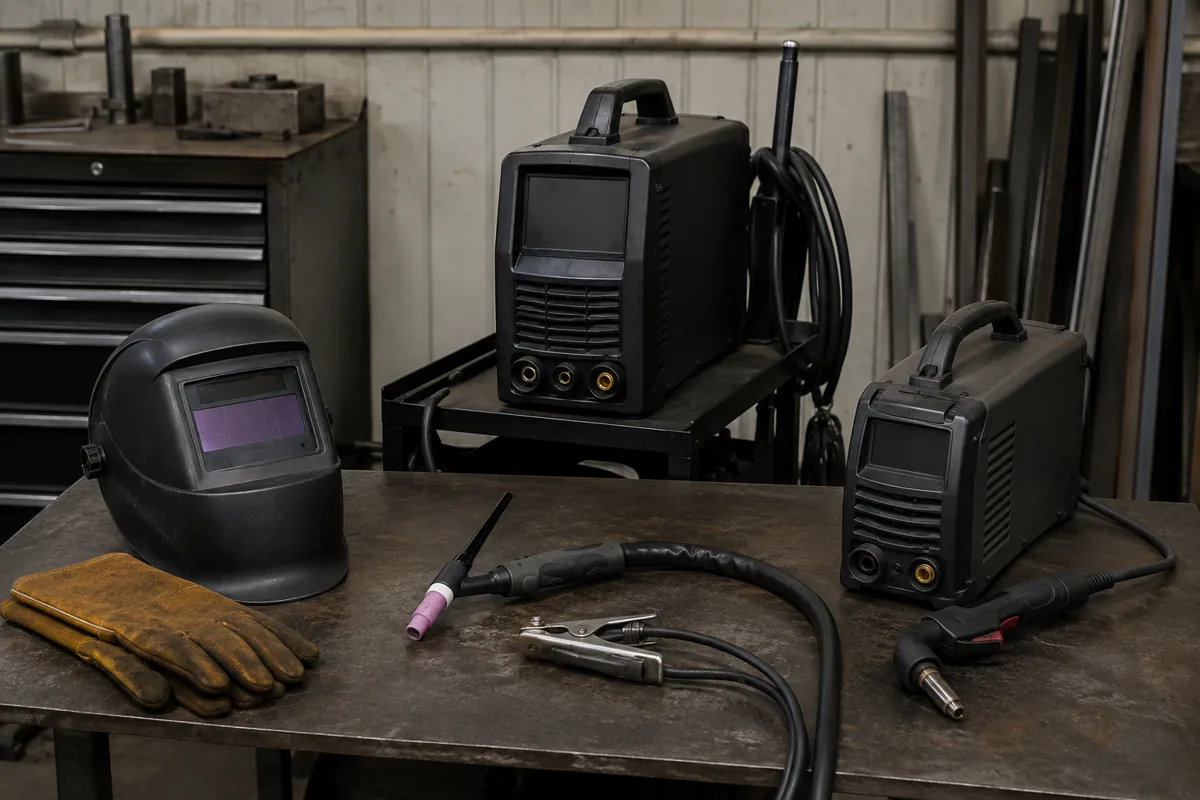
Welding Helmet Buying Guide
What actually matters in a welding helmet: optical class, sensor count, shade versus amperage, headgear fit, and the fume and fire risks the hood does not cover.
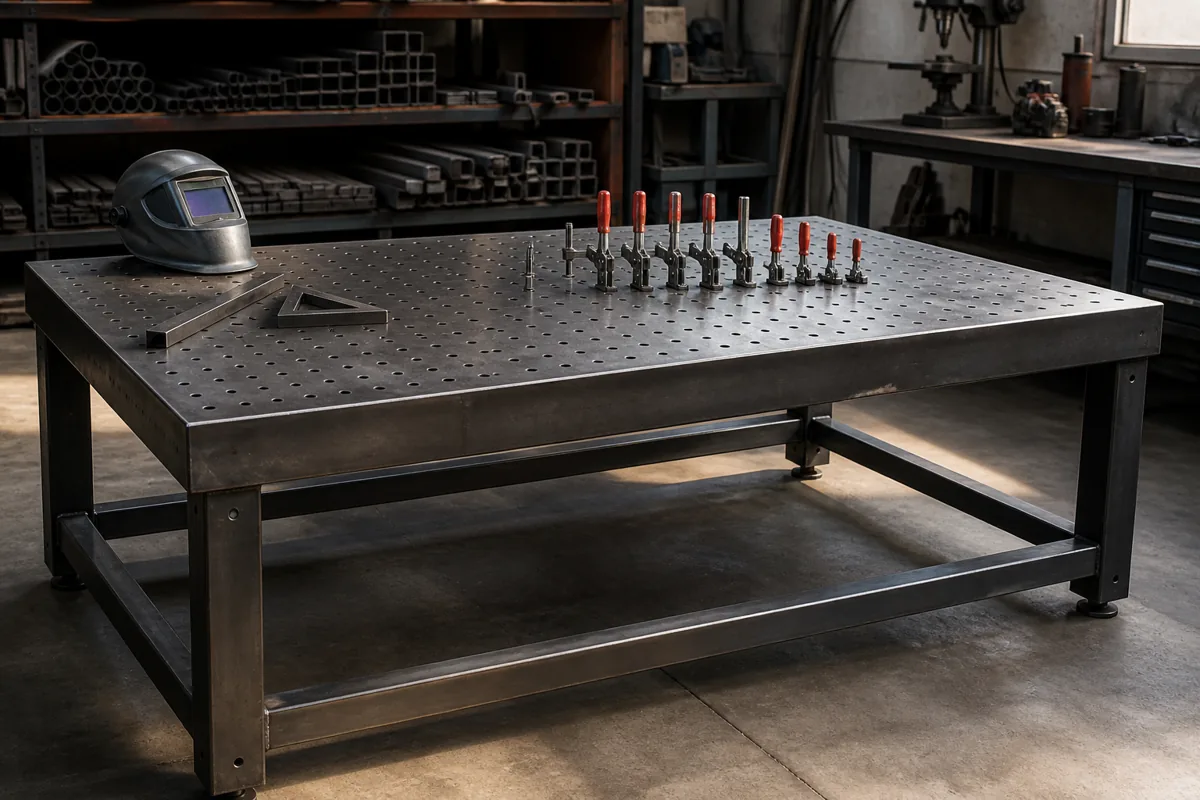
A blunt shop list of welding tools for starters, from picking a process to matching amps to metal thickness, plus the PPE and fire prep that keeps you working.
A blunt breakdown of what actually matters in a portable welding machine: duty cycle, input power, material thickness range and the safety gear you need with it.
How to pick a welding machine for home garage work: circuit limits, amperage versus material thickness, duty cycle, process choice, and the PPE, fume and fire rules that keep it safe.
AC or DC, real amp ranges, duty cycle and the safety setup that keeps a hobby TIG rig from becoming an expensive mistake.
A shop-floor guide to welding 18-22 gauge sheet without burn-through: process choice, heat control, tacking rhythm, backing bars, and the gear worth owning.
MIG is one hand and a trigger while TIG is two hands and a foot, so here is which welding process to learn first based on the work you actually do.
A blunt shop take on the best MIG welder for beginners: which machine class fits your metal thickness and your outlet, plus the spec sheet hype worth ignoring.
Your eyes are the consumable you cannot replace. Here are the four numbers that decide whether a helmet is any good.
Both are worth learning, but one gets you welding sooner. A straight answer for anyone starting out with a first machine.