What's inside
- Top 3 Picks
- Quick Comparison
- How We Chose
- 1. ASUS RT-AX1800S – Best for whole-home VPN on a mid-range budget
- 2. GL.iNet GL-BE9300 Flint 3 – Best for busy homes with multi-gig wiring
- 3. GL.iNet GL-BE6500 Flint 3e – Best overall for streaming
- 4. Tongyu ZETTABEAM AX3000 – Best for fast Wi-Fi 6 per dollar
- 5. StreamLocator Hub – Best for services that block VPN addresses
- 6. Kitty VPN – Best budget app for one device
- Top 3 Picks
- Quick Comparison
- How We Chose
- 1. ASUS RT-AX1800S – Best for whole-home VPN on a mid-range budget
- 2. GL.iNet GL-BE9300 Flint 3 – Best for busy homes with multi-gig wiring
- 3. GL.iNet GL-BE6500 Flint 3e – Best overall for streaming
- 4. Tongyu ZETTABEAM AX3000 – Best for fast Wi-Fi 6 per dollar
- 5. StreamLocator Hub – Best for services that block VPN addresses
- 6. Kitty VPN – Best budget app for one device
As an Amazon Associate I earn from qualifying purchases. This post may contain affiliate links at no extra cost to you.
The best VPN for streaming in 2026 is usually not an app you install on one device — it is a router running a VPN client, and the GL.iNet GL-BE6500 Flint 3e is the pick that best balances Wi-Fi 7 speed, whole-home coverage and price for most households. It puts every TV, streaming stick, console and phone behind one encrypted tunnel, which removes the per-device installation problem that breaks most streaming setups. If you rent, travel, or only ever stream on a single device, the budget Kitty VPN app is the cheaper answer. If your problem is not speed but refusal — services that detect and block known VPN addresses — the StreamLocator Hub is built specifically for that job. And if you want the router route for less, the ASUS RT-AX1800S is the value entry point. This guide compares ten currently listed options against the six things that decide whether streaming actually works: sustained throughput, which services open, device limits, server coverage, app quality, and how cleanly you can cancel.
What we cover
- Top 3 Picks
- Quick Comparison
- How We Chose
- 1. ASUS RT-AX1800S – Best for whole-home VPN on a mid-range budget
- 2. GL.iNet GL-BE9300 Flint 3 – Best for busy homes with multi-gig wiring
- 3. GL.iNet GL-BE6500 Flint 3e – Best overall for streaming
- 4. Tongyu ZETTABEAM AX3000 – Best for fast Wi-Fi 6 per dollar
- 5. StreamLocator Hub – Best for services that block VPN addresses
- 6. Kitty VPN – Best budget app for one device
Top 3 Picks
Best overall: GL.iNet GL-BE6500 Flint 3e
It is a Wi-Fi 7 router in the BE6500 class with 2.5-gigabit-class Ethernet and OpenWrt-based firmware that supports both WireGuard and OpenVPN in client and server modes. That means one tunnel covers every device on the network with no per-app installs and no device cap beyond what your Wi-Fi can carry. It suits a household with a 300 Mbps to 1 Gbps line, three to eight streaming devices, and at least one 4K television.
Best budget: Kitty VPN
An app-based subscription VPN sold on speed and unlimited use, aimed at people who stream on one device and do not want to spend router money. It installs in minutes and cancels on a monthly cycle in most cases. It suits students, single-TV households and anyone testing whether a VPN actually solves their problem before committing to hardware.
Best for services that block VPNs: StreamLocator Hub
A small network device that uses your existing streaming accounts rather than a conventional VPN tunnel, and its listing explicitly positions it as working where VPNs fail. It suits viewers whose chosen service loads an error page the moment a VPN is switched on. It is a premium-tier purchase and is aimed at a narrower problem than a general-purpose VPN.
Quick Comparison
| Product | Best for | Key specs | Price tier |
|---|---|---|---|
| ASUS RT-AX1800S | Whole-home VPN tunnel on a mid-range budget | Wi-Fi 6 dual-band, AX1800 class; 1 GbE WAN + 4 GbE LAN; subscription-free network security; parental controls; AiMesh extendable; VPN client and server | Mid-range |
| GL.iNet GL-BE9300 Flint 3 | Busy homes with multi-gig wiring and 20+ devices | Wi-Fi 7 tri-band, BE9300 class; 5 x 2.5 GbE ports; OpenWrt firmware; WireGuard/OpenVPN client and server; VPN policy routing and cascading | Premium |
| GL.iNet GL-BE6500 Flint 3e | Best all-round streaming VPN for most homes | Wi-Fi 7, BE6500 class; 2.5 GbE-class Ethernet; OpenWrt firmware; WireGuard/OpenVPN client and server; whole-network tunnel | Premium |
| Tongyu ZETTABEAM AX3000 | Fast Wi-Fi 6 per dollar, without VPN features | Wi-Fi 6 dual-band AX3000; 2404 Mbps combined; MU-MIMO; OFDMA; Gigabit-class ports | Mid-range |
| StreamLocator Hub | Streaming services that detect and block VPN IP ranges | Network device; works with your existing accounts; no per-app installs; designed for accessing British streaming catalogues | Premium |
| Kitty VPN | One-device streaming on the smallest possible budget | App-based VPN; advertised fast and unlimited; streaming-focused; subscription | Budget |
| VPN for Fire TV (DAILY) | Fire TV and Fire Stick households | Fire TV app; unlimited proxy/VPN hub positioning; secure private streaming | Budget |
| How to Pick the Right VPN for Streaming Without Getting Blocked or Slowed Down | Buyers who want the decision framework before spending | Written guide; no hardware or app included; covers blocking, throttling and selection logic | Mid-range |
| Alien VPN | Budget second device or backup tunnel | App-based VPN; advertised fast and unlimited; streaming-focused; subscription | Budget |
| Hub Key | Budget app coverage across several devices | App-based VPN; advertised fast and unlimited; streaming-focused; subscription | Budget |
How We Chose
Every entry here is assessed from published listing details, manufacturer specification classes and the well-documented behaviour of the category, not from hands-on trials. The first filter was whether a product solves the streaming problem at the network level or the device level, because that single distinction decides how many televisions you can cover and how much maintenance you inherit. The second was spec class: Wi-Fi 6 versus Wi-Fi 7, gigabit versus 2.5-gigabit Ethernet, and the rated combined throughput that tells you how much headroom exists once a tunnel is running. The third was unblocking approach, since a router tunnel and a smart-DNS style device fail in completely different ways.
We then weighted upgrade path and ownership. A router that supports mesh nodes, receives firmware updates for years and can be re-tasked as a plain access point has a longer useful life than a single-purpose app subscription that dies with its provider. Cancellation terms and plan flexibility were treated as a real criterion rather than a footnote, because streaming needs change seasonally and lock-in is the most common regret. Finally, each pick was banded into budget, mid-range or premium so the comparison works without quoting prices that change weekly.
1. ASUS RT-AX1800S – Best for whole-home VPN on a mid-range budget
As an Amazon Associate we earn from qualifying purchases at no extra cost to you.

This is the entry point to router-level VPN streaming. It suits a household with a modest internet line — 100 to 300 Mbps — that wants every television and streaming stick covered by one tunnel without paying premium router money. It is also the sensible first purchase for anyone who has been juggling three separate app subscriptions across four devices and wants that problem to disappear.
The RT-AX1800S is a Wi-Fi 6 dual-band router in the AX1800 class, which means roughly 574 Mbps of theoretical throughput on the 2.4 GHz band and around 1,201 Mbps on 5 GHz. In practice, a 4K stream needs 15 to 25 Mbps and a 1080p stream needs 5 to 8 Mbps, so the wireless side is not your constraint — the tunnel is. Consumer router CPUs running OpenVPN commonly deliver a fraction of your raw line speed, and WireGuard on the same hardware typically manages several times more. That is the number that matters: if your tunnel tops out around 60 Mbps, you can run two 4K streams comfortably and a third with some buffering risk.
Key specs
- Wi-Fi 6 (802.11ax) dual-band, AX1800 class
- 1 x Gigabit WAN plus 4 x Gigabit LAN ports
- Subscription-free network security at the router level
- Built-in parental controls and per-device scheduling
- Extendable with mesh nodes from the same brand
- VPN client and server modes, including OpenVPN and WireGuard on current firmware
- Managed through a mobile app or a browser dashboard
The strongest argument for this model is that it removes recurring cost from the equation. The security and parental features are subscription-free, and once a VPN profile is loaded, every device on the network inherits the tunnel — televisions, consoles, set-top boxes and guests’ phones alike. Nothing needs to be installed on the television itself, which matters because smart TV app stores are the worst place to look for a VPN client.
The upgrade path is genuinely useful. Because it supports mesh, you can add a node later to cover a dead bedroom or garden room rather than replacing the whole router. And if you eventually move to a Wi-Fi 7 unit, this one can be demoted to an access point or a dedicated VPN gateway for one segment of the network. That flexibility is unusual at this price tier and is a large part of why it earns a place here.
Pros
- One tunnel covers every device on the network with no per-device installs
- Security and parental features carry no ongoing subscription
- Mesh support gives a real upgrade path rather than a dead end
- Four gigabit LAN ports are enough for a console, a set-top box and a desktop
- Wi-Fi 6 handles a 100-300 Mbps line without the wireless link becoming the bottleneck
Cons
- VPN throughput is limited by entry-level hardware, so a gigabit line will be capped inside the tunnel
- AX1800 is the entry rung of Wi-Fi 6; heavy multi-device homes will feel the ceiling
- No 2.5-gigabit Ethernet, which rules it out for multi-gig fibre
- VPN client configuration is more technical than installing an app
Against the Tongyu ZETTABEAM AX3000, this model trades raw rated speed for VPN-centric firmware. The Tongyu lists 2,404 Mbps combined and puts its emphasis on MU-MIMO and OFDMA rather than tunnelling, so it is the better pure Wi-Fi upgrade and the weaker streaming-VPN device. Against the GL.iNet GL-BE6500 Flint 3e, the ASUS is the cheaper and slower option with fewer wired ports — but it is also the one that gets a whole household behind a tunnel for the least money.
2. GL.iNet GL-BE9300 Flint 3 – Best for busy homes with multi-gig wiring

The Flint 3 is the heaviest-hitting option in this roundup and is aimed at a specific kind of household: multi-gig fibre, twenty or more connected devices, at least one console or PC that needs wired throughput, and a requirement that streaming traffic and gaming traffic behave differently. If you have ever noticed that switching the VPN on ruins your ping, this is the class of device that fixes it.
It is a tri-band Wi-Fi 7 router in the BE9300 class with five 2.5-gigabit Ethernet ports. That port count is the detail worth dwelling on. Most routers at any price give you one fast port and a row of gigabit ports, which means your multi-gig line terminates at the router and never reaches your devices. Five 2.5 GbE ports means a NAS, a gaming PC, a console and a wired access point can all run at multi-gig speeds simultaneously, and the VPN tunnel still has a processor behind it that can move serious throughput.
Key specs
- Wi-Fi 7 tri-band, BE9300 class
- 5 x 2.5-gigabit Ethernet ports
- OpenWrt-based firmware with full configuration access
- WireGuard and OpenVPN in both client and server modes
- VPN policy routing — send only chosen devices or domains through the tunnel
- VPN cascading, for chaining two tunnels in sequence
- Network-wide DNS filtering and ad blocking in the GL.iNet firmware family
Policy routing is the feature that changes streaming behaviour most. Instead of forcing the entire house through one server, you can send the living-room television through a streaming-optimised exit point while the office PC stays on the open connection and the games console keeps its low-latency path. That eliminates the single biggest complaint about router VPNs — that turning it on makes everything worse for everyone. Cascading is the other unusual capability, and while most people never need it, it exists for the traveller or researcher who wants traffic to exit through two jurisdictions in sequence.
Tri-band matters more than the headline number suggests. Wi-Fi 7 routers of this class dedicate a band to backhaul or to latency-sensitive devices, so adding mesh nodes does not halve the throughput of the main network the way dual-band mesh often does. In a house where one person is streaming 4K in the lounge and another is on a video call upstairs, that separation is worth real money.
Pros
- Five 2.5 GbE ports make it one of the few routers that can actually feed a multi-gig line
- Policy routing lets streaming devices use the tunnel while everything else stays fast
- Tri-band Wi-Fi 7 with dedicated headroom for mesh and latency-sensitive devices
- OpenWrt firmware is far more configurable than consumer stock firmware
- Supports both major VPN protocols, so you are not locked to one provider’s implementation
Cons
- Premium tier — the most expensive router approach here
- Capability far exceeds what a 100-300 Mbps household can use
- OpenWrt-style configuration has a learning curve if you have never touched a router dashboard
- You still supply your own VPN service; the router is the client, not the subscription
Against its own sibling, the GL-BE6500 Flint 3e, this model is the one to buy if you have multi-gig fibre, more than twenty devices, or a genuine need for policy routing and five fast ports. The 3e is the smarter buy for a 500 Mbps to 1 Gbps household that wants Wi-Fi 7 and a whole-home tunnel without paying for port capacity it will never saturate. Against the StreamLocator Hub, the Flint 3 is the general-purpose tool and the Hub is the specialist — one handles everything, the other solves a blocking problem a tunnel cannot.
3. GL.iNet GL-BE6500 Flint 3e – Best overall for streaming

This is the pick for the largest number of people reading this. It suits a household with a 300 Mbps to 1 Gbps connection, three to eight streaming devices, and a preference for setting something up once rather than managing apps on every screen. It gives you Wi-Fi 7 and a whole-network VPN without the port count and price of the flagship model.
The Flint 3e sits in the BE6500 class with 2.5-gigabit-class Ethernet and the same OpenWrt-based firmware family as the Flint 3. That shared firmware is the important part: you get WireGuard and OpenVPN in client and server modes, per-device policy routing, and a configuration interface that does not hide the settings you need. For streaming specifically, WireGuard is the protocol to use. It carries roughly 10 percent overhead against 25 to 40 percent for OpenVPN on the same hardware, which on a 4K stream at 20 Mbps is the difference between comfortable and marginal.
Key specs
- Wi-Fi 7, BE6500 class, dual-band
- 2.5-gigabit-class Ethernet
- OpenWrt-based firmware with advanced routing controls
- WireGuard and OpenVPN client and server support
- VPN policy routing by device or destination
- Network-level DNS filtering
- Whole-home tunnel — no per-device app installations
Run the numbers on capacity. A 4K HDR stream typically consumes 15 to 25 Mbps, and a high-bitrate 4K title can reach 40 Mbps. Add WireGuard’s roughly 10 percent overhead and each 4K stream costs you 17 to 44 Mbps of real line capacity. On a 500 Mbps connection, even four simultaneous high-bitrate 4K streams use well under half the available bandwidth — which means the Wi-Fi link, not the tunnel, becomes the thing you tune. Wi-Fi 7’s wider channels and improved scheduling are exactly the right answer to that.
Where this model earns “best overall” is in the shape of its compromises. It gives up the flagship’s five 2.5 GbE ports and tri-band radio, and in exchange it lands at a lower premium tier while keeping every feature that affects streaming. Most homes do not own a multi-gig line, do not wire four devices at 2.5 GbE, and do not need VPN cascading. They do need a tunnel that does not collapse under two 4K streams and a phone, and a router that will still receive firmware updates in three years. This does both.
Pros
- Wi-Fi 7 and whole-home VPN at a lower premium tier than the flagship
- WireGuard support keeps overhead near 10 percent instead of 30 percent or more
- Policy routing means one television can use the tunnel while the rest of the house stays open
- 2.5-gigabit-class Ethernet keeps the wired path ahead of any realistic streaming load
- Firmware is actively maintained and configurable rather than locked down
Cons
- Still premium tier — a real step up from the mid-range ASUS
- No VPN service included; you still pay a provider or run your own server
- Dual-band rather than tri-band, so mesh backhaul competes with client traffic in large homes
- Setup requires understanding a router dashboard, not just an app store
Against the Flint 3, the 3e is the value play: same protocol support, same firmware philosophy, less hardware you will not use. Against the ASUS RT-AX1800S, it is roughly the next tier up in both price and capability, and the upgrade is justified when your line exceeds 300 Mbps or when the number of simultaneous 4K streams passes two. Against the budget app VPNs, it costs more up front but eliminates the per-device subscription maths entirely.
4. Tongyu ZETTABEAM AX3000 – Best for fast Wi-Fi 6 per dollar

This is the pick for someone whose real problem is Wi-Fi coverage and speed, not geo-blocking. It suits a household replacing an ageing router, or one where a single distant television buffers on 1080p. The listing advertises 2,404 Mbps combined across both bands, MU-MIMO and OFDMA — all solid Wi-Fi 6 features at a mid-range tier.
MU-MIMO and OFDMA are worth understanding because they are not marketing filler. MU-MIMO lets the router serve multiple devices simultaneously rather than taking turns, and OFDMA subdivides a channel so small packets from many devices travel together instead of queueing. In a house where four people are streaming different things, those two features reduce the stutter that shows up as momentary pixelation rather than a full buffer.
Key specs
- Wi-Fi 6 dual-band, AX3000 class
- 2,404 Mbps advertised combined throughput
- MU-MIMO for simultaneous multi-device service
- OFDMA for efficient small-packet handling
- Gigabit-class wired ports
- Designed for whole-home coverage in a mid-size property
The honest framing here is that this router’s listing is built around Wi-Fi performance, not around VPN features. If your goal is a whole-home tunnel, treat this as a Wi-Fi upgrade and pair it with an app-based VPN such as Kitty VPN or the Fire TV option — or choose one of the GL.iNet models instead, where the tunnel is the point. If your goal is a stronger wireless signal to a bedroom television, this is a straightforward, sensibly priced answer.
Where it fits best is as the second router in a two-router household, or as the replacement for a unit that is five or more years old. Wi-Fi 6 on a modern chipset will typically deliver a noticeably more stable 4K stream at range than an older Wi-Fi 5 unit, purely because of better scheduling and beamforming. That improvement happens without any VPN involved, and it is often mistaken for a VPN problem when it is not.
Pros
- AX3000 class gives more headroom than entry-level AX1800 models
- MU-MIMO and OFDMA improve stability with many simultaneous streams
- Mid-range tier, so it undercuts the Wi-Fi 7 options substantially
- Straightforward setup with no subscription attached
Cons
- VPN features are not the focus, so a whole-home tunnel is not its strength
- Gigabit-class ports rather than 2.5 GbE
- Wi-Fi 6 rather than 7, so no upgrade headroom for a multi-gig line
- Smaller firmware feature set than the OpenWrt-based alternatives
Against the ASUS RT-AX1800S, this model wins on rated wireless throughput and loses on VPN-centric firmware and mesh ecosystem depth. If you need the tunnel handled by the router, the ASUS is the better of the two mid-range picks; if you need the strongest signal per pound with the VPN left to an app, the Tongyu is the cleaner choice. Either way, both sit below the Flint 3e on every streaming-relevant capability except price.
5. StreamLocator Hub – Best for services that block VPN addresses
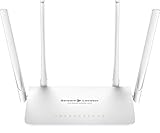
This is the specialist in the list, and it solves a problem that no amount of router hardware can fix. Streaming platforms actively maintain lists of VPN exit addresses and block them, and when that happens your tunnel is fast, stable and useless. The StreamLocator Hub suits a viewer whose chosen service returns an error or a proxy warning whenever a VPN is connected, and who wants access to British streaming catalogues in particular.
The approach is fundamentally different from a VPN. Rather than encrypting and rerouting all your traffic through a remote server, the Hub works with your existing streaming accounts and handles the routing question at the network level. That means no per-app installation on smart TVs, no speed penalty from encryption overhead, and no dependence on a VPN provider’s IP reputation. It is a premium-tier purchase, and it is worth it only if blocking is genuinely your problem.
Key specs
- Hardware device that connects to your existing network
- Works with the streaming accounts you already pay for
- Designed for accessing British streaming services
- Positioned by the manufacturer as working where conventional VPNs fail
- No per-device app installation required
- No encryption overhead on the streaming path
The practical advantage is that it sidesteps the single most common failure mode in this category. A conventional VPN is a general-purpose tool being asked to do a specific job, and providers rotate addresses constantly as they are blocked. A device built for one purpose does not have that arms race in the same form. The trade-off is scope: this is not a privacy tool for general browsing, and it will not replace a VPN for public Wi-Fi or travel.
One thing to verify before buying is exactly which services and which catalogues you want, because a purpose-built device is only as useful as its coverage. Read the current listing carefully and confirm the specific platforms you care about, then confirm the return window. Because this is a premium-tier purchase with a narrow application, the ability to send it back matters more than it would with a general-purpose router.
Pros
- Solves blocking at the source rather than fighting it with rotating IP addresses
- No encryption overhead, so no throughput penalty on the streaming path
- Works with accounts you already have rather than adding another subscription layer
- No per-device installs, so smart TVs and set-top boxes are covered equally
Cons
- Premium tier for a narrow use case
- Not a substitute for a general privacy VPN when travelling or on public Wi-Fi
- Effectiveness depends on coverage of the specific services you use
- Adds another box and another cable to the network shelf
Against the GL.iNet Flint 3e, the two are complementary rather than competing. The Flint 3e is the general-purpose whole-home tunnel that handles privacy, multiple devices and configurable routing; the StreamLocator Hub is the targeted fix for a service that refuses tunnels outright. Against the budget app VPNs, the Hub costs far more but removes the recurring subscription and the per-device install problem at the same time. If blocking is not your issue, skip it and buy a router.
6. Kitty VPN – Best budget app for one device

Kitty VPN is the low-commitment entry point. It suits someone who streams on one device — a laptop, a tablet, a single television — and wants to know within a month whether a VPN solves their problem at all. It is a budget-tier, app-based subscription advertised as fast and unlimited, with streaming as its stated focus.
The case for starting here is purely economic. A router-based solution costs real money up front and takes an afternoon to configure. A budget app costs a fraction of that, installs in minutes, and tells you immediately whether the service you want opens or blocks. If it opens, you have your answer for the price of a couple of months. If it does not, you have learned that your problem is blocking rather than speed, which points you at the StreamLocator Hub instead.
Key specs
- App-based VPN subscription
- Advertised as fast and unlimited
- Streaming-focused positioning
- Budget price tier
- Installs per device rather than across a network
The limitation to plan around