
Key takeaways
- Find the best sickle for your yard with our hands-on notes on five grass hooks and sickles for weeds, vines, tall grass and brush clearing work.
What's inside
As an Amazon Associate I earn from qualifying purchases. This post may contain affiliate links at no extra cost to you.
As an Amazon Associate we earn from qualifying purchases.
Tall grass creeps along fences, vines climb into beds, and weeds fill gaps a mower cannot reach. A powered trimmer needs fuel or a charged battery, throws debris, and is loud. The best sickle solves the same problem with a curved blade and a pull or swing you control — no cord, no engine, no setup beyond keeping the edge sharp.
Sickles and grass hooks come in more shapes than most people expect. A short Japanese kama works close to the ground in a bed. A hooked brush sickle grabs vines and pulls them into the cut. A long grass whip, the American cousin of the grass hook, clears ditches while you stand. This guide compares five tools across those styles, so you can match the blade to the growth in front of you.
Disclosure: This post contains affiliate links. If you buy through links on this page, we may earn a commission at no extra cost to you.
What we cover
Quick picks
- Best overall brush sickle: Zenport K310 — hooked 9-inch carbon steel blade for vines, weeds, and undergrowth.
- Best for standing clearing: AMES True Temper 1942600 Grass Whip — double-edged serrated blade for tall grass and ditches.
- Best for neat edges: Corona GS 6750D ClassicCUT Grass Shear — short, precise blades for trimming along beds, paths, and walls.
- Best Japanese-style weeder: TOYPOPOR Weeding Sickle Hoe — twisted kama that skims weeds at the soil line.
- Best sturdy hand hoe sickle: ZELARMAN Garden Weeding Sickle — thick blade for weeding, digging, and loosening soil.
Our five picks in detail
1. Zenport K310 Brush Clearing Sickle

The Zenport K310 is the tool our take keeps returning to for mixed clearing. Its 9-inch blade uses SK5 Japanese high-carbon steel with a straight edge and a hooked profile. You reach into growth, hook a stem or bundle of vines, and pull. The hook gathers the material, so the edge bites instead of pushing stems away. That makes it effective on brambles, thick weeds, and light undergrowth along fences and paths.
The 9-inch aluminum tube handle has a soft grip, and the whole tool is about 18 inches long and light in the hand, so long sessions bring little fatigue. Carbon steel needs a wipe of oil after wet work, but it takes a keen edge again quickly with a file or stone.
Specs
- Blade length: 9 inches
- Blade material: SK5 Japanese high-carbon steel
- Handle: 9-inch aluminum tube with soft rubber grip
- Overall length: 18 inches
- Weight: 12.8 ounces
- Model: K310
- ASIN: B01FJMKND2
Pros:
– Hooked blade gathers vines and stems into the cut
– Light aluminum handle suits long sessions
– Strong carbon steel edge is easy to hone in the field
Cons:
– Carbon steel needs oiling to prevent surface rust
– No sheath included for storage or carrying
– Short reach means kneeling for low bed work
2. AMES True Temper 1942600 Serrated Grass Whip

If your problem is area rather than detail — a ditch bank, a pasture edge, or tall grass behind the workshop — the AMES grass whip is the right shape. Sold under the True Temper name by The AMES Companies, it mounts a double-edged serrated blade on a long handle and cuts with a relaxed side-to-side swing, much like a golf stroke. Both edges cut, on the forward pass and the return, which speeds work in thigh-high grass and soft weeds.
The maker lists a 38-inch overall length, with a seal-coated northern ash handle. Serrations keep it cutting fibrous stems that slide off a plain edge, though sharpening is slower — a small round file fits the teeth better than a flat stone. Keep the swing low and clear of people and pets, and it covers ground no hand sickle can match.
Specs
- Blade: double-edged serrated steel, about 9-1/4 x 1-1/2 inches
- Cutting width: 10 inches
- Handle: seal-coated northern ash hardwood
- Overall length: 38 inches
- Weight: 1.4 pounds
- Model: 1942600
- ASIN: B00004S1RY
Pros:
– Cuts on both the forward and return swing
– Long handle lets you clear while standing
– Serrated edges grip fibrous grass and weeds
Cons:
– Serrations take longer to sharpen than a plain edge
– Swing motion needs open space around you
– Not suited to precise work inside planted beds
3. Corona GS 6750D ClassicCUT Grass Shear
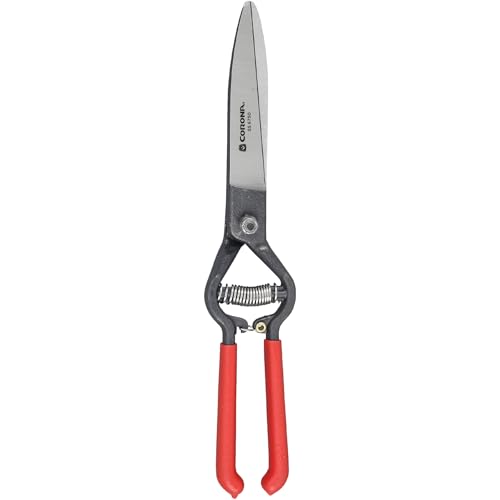
Not every grass job needs a swing or a hook. Along a path edge, around a post, or beside a wall, you need short blades and full control. The Corona GS 6750D ClassicCUT fills that end of this lineup. It is a hand grass shear with a 4-1/2 inch cutting blade, built for trimming tufts a mower leaves behind and shaping grass along beds and hard surfaces.
The listing notes alloy steel blades with a straight edge and bypass action, paired with natural wood handles. In practical notes, that feels calm and deliberate: you snip a small handful at a time, the cut stays clean, and you never risk nicking a plant the way a swinging blade can. It will not clear brush. Paired with a true sickle, it finishes the edges the sickle leaves rough.
Specs
- Cutting width: 4.5 inches
- Blade material: alloy steel
- Blade edge: straight, bypass action
- Handle material: wood
- Model: GS 6750D
- ASIN: B00004R9YH
Pros:
– Precise, controlled cuts for edging and trimming
– Comfortable classic wood handles for detail work
– Ideal where mowers and swing tools cannot reach
Cons:
– Small handful per cut, so large areas take time
– Not designed for vines, brush, or woody stems
– Hand snipping can tire the grip on long edges
4. TOYPOPOR Japanese Weeding Sickle Hoe

The TOYPOPOR sickle brings the Japanese kama tradition to this group. Its twisted neck sets a fan-shaped blade flat near the ground, so a short pull skims weeds off at the soil line and can undercut shallow roots. That flat angle is why kama tools are popular in dense beds: you work between plants you want to keep, loosening soil a little as you go, instead of hacking down from above.
The listing describes a high-carbon steel blade, a polished wood handle, and seamless welding where blade meets handle, and lists the model as a 14-inch hand hoe sickle. Our take is to use it for bed maintenance, harvesting leafy crops, and clearing grass runners at edges. Keep it away from woody stems and hone it often.
Specs
- Blade material: high-carbon steel
- Handle: polished wood
- Design: twisted kama neck with fan-shaped blade
- Model: 14 inch Hand Hoe Sickle
- Item weight listed: 1 pound
- ASIN: B0BWHVHNNM
Pros:
– Flat kama angle skims weeds right at the soil line
– Works safely between closely spaced plants
– Also handy for light soil loosening and harvesting
Cons:
– Made for soft growth, not woody brush
– Twisted shape takes a few sessions to learn
– Wood handle benefits from occasional drying and oiling
5. ZELARMAN Garden Weeding Sickle and Hand Hoe

The ZELARMAN tool is the sturdier, thicker-bladed take on the Japanese hand sickle. The listing describes a blade in 45# medium carbon steel with a wooden handle, built as a combined weeding sickle and hand hoe. Where the TOYPOPOR feels light and quick, this one feels planted: you can cut grass, scrape weeds, dig small holes, and loosen soil with the same tool as you move down a row.
That versatility appeals to anyone who wants one hand tool in the bucket. The thick blade tolerates soil contact better than a thin harvest blade, and carbon steel sharpens easily afterwards. The trade-off is finesse — it is less delicate around seedlings, and it should be cleaned and dried before storage.
Specs
- Blade material: 45# medium carbon steel
- Handle: wood
- Style: Japanese sickle style hand weeder and hoe
- Uses listed: weeding, digging, soil loosening, planting, grass cutting
- Manufacturer: ZELARMAN TOOLS
- ASIN: B08L3258Y3
Pros:
– Thick blade handles soil contact and tougher weeds
– Combines cutting, scraping, and light digging in one tool
– Carbon steel edge is simple to restore with a stone
Cons:
– Heavier feel is less delicate around young plants
– Carbon steel needs cleaning and drying after use
– General-purpose shape is less hooked for pulling vines
How to choose the best sickle for your work
Start with the growth. Soft grass and weeds in beds call for a short kama, where control matters more than power. Vines and undergrowth need a hooked brush blade like the Zenport K310, which gathers material before it cuts. Tall grass in open ground needs a long grass whip or hook, swung while you stand. Edges finish best with a small shear.
Next, think about steel. High-carbon steel, including SK5, takes a very sharp edge and is easy to hone, but it will rust if put away wet, so a wipe and a drop of oil become routine. Stainless steel resists rust, but can be harder to bring back to a fine edge. Serrated edges grip fibrous stems, yet demand a shaped file when they dull.
Handle length decides posture. Short handles give precision but mean kneeling. Handles around 18 inches suit mixed work. Long handles near 38 inches keep you upright and add swing power, at the expense of control in tight planting. Soft grips help on brush tools you pull hard, while smooth wood lets a kama rotate in your palm.
Finally, plan for care and storage. A sheath, guard, or wall hook keeps the exposed edge safe in a busy workshop. Hone little and often, check handle fixings on swing tools before each session, and always cut away from your legs.
Frequently asked questions
What is the difference between a sickle and a grass hook?
A sickle is usually short-handled with a strongly curved blade, used with a pulling cut close to the ground. A grass hook tends to have a longer, flatter blade and longer handle, used with a swing in open ground. The names overlap, so this guide groups them by job rather than label.
How do I sharpen a sickle blade?
Use a fine file or whetstone, follow the original bevel, and work from the base of the curve to the tip with light strokes. Hone little and often. Serrated blades need a small round file that fits each tooth. Secure the tool, wear gloves, and keep your free hand behind the edge.
Can a sickle replace a powered trimmer?
For many yards, yes, within limits. A sickle or grass whip is quiet, light, ready instantly, and precise around plants and fences where a spinning line throws debris. It is slower across large areas. Many owners keep both: the powered tool for big runs, and the best sickle for beds, edges, and vines.
How should I store a sickle in the workshop?
Clean the blade, dry it fully, and wipe carbon steel with a light coat of oil. Hang it on a wall hook, use a sheath or guard in a tool bucket, and keep it out of reach of children. Check handle and blade fixings before the next use.
Conclusion
The right sickle turns clearing into quick, controlled hand work. Choose the Zenport K310 for vines, weeds, and mixed brush, the AMES grass whip for tall grass while standing, and the Corona shear for clean edges. Pick the TOYPOPOR for a light bed skim or the ZELARMAN for a thicker multi-use blade. Keep the edge honed and the blade dry, and any of them will earn its place in the workshop.
Related guides
More from Amazon
Programs that pair well with the guide above. Offers and eligibility are set by Amazon and may change.
A free business account with business pricing and bulk-buying tools for work, shop or home office.
Create a business accountFree shipping on eligible items, Prime Video and more. Eligible new members can start with a free trial.
Start a Prime free trialAudiobooks and podcasts to listen to on the go. Eligible new members can start with a free trial.
Try Audible freeAd-free music streaming. Eligible new subscribers can start with a free trial.
Try Music Unlimited freeAs an Amazon Associate we earn from qualifying purchases.
Write Your Review
No reviews yet. Be the first to share your experience!