
What's inside
As an Amazon Associate I earn from qualifying purchases. This post may contain affiliate links at no extra cost to you.
What we cover
Our Top Picks
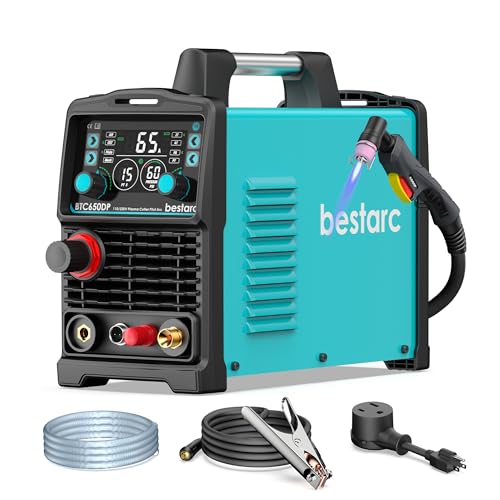
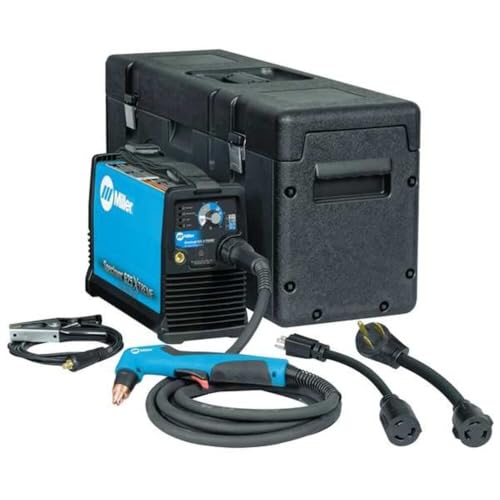


What matters when cutting aluminum plate
Aluminum is easy to cut with a plasma cutter, but plate thickness, power supply and air quality determine whether the cut is useful or just separates the pieces. A small shop should size the machine for its routine work, not its advertised maximum. A cutter may sever thick plate slowly while leaving a bevel, rough edge and dross that take longer to clean up than the cut itself.
For occasional brackets and sheet up to about 1/8 inch, a 30-amp-class machine can be adequate. For regular work around 1/4 inch, look at roughly 40 to 50 amps and check the manufacturer’s rated cut capacity—not just its maximum severance figure. If you often cut 3/8-inch aluminum, a 60-amp-class machine with a suitable power supply is a more sensible starting point. Exact capacities vary by machine and material; aluminum generally needs more cutting power than mild steel of the same thickness.
As an Amazon Associate we earn from qualifying purchases at no extra cost to you.


Choosing a cutter for a small shop
| Shop use | Practical machine class | Main trade-off |
|---|---|---|
| Light fabrication; mostly thin sheet and occasional 1/8-inch plate | About 30 amps | Lower cost and easier electrical demands, but slower cuts and limited headroom |
| Mixed work; regular plate up to about 1/4 inch | About 40–50 amps | Good middle ground, though a 240-volt circuit may be needed |
| Frequent work near 3/8 inch | About 60 amps or higher | More capacity, but higher cost, air demand and electrical requirements |
These are buying ranges, not guarantees of clean-cut capacity. Before ordering, compare the manual’s rated cutting capacity at the duty cycle you expect to use. A machine that cuts at full output for only a short interval may be frustrating for long profiles or repeated parts.
Check power and compressed air first
Many 40- to 60-amp cutters need 240-volt input, and the required breaker size and plug vary. Check the manual and your shop circuit before buying; do not assume a standard outlet can run a larger machine. Some dual-voltage units are convenient, but usually deliver less output on 120 volts.
Clean, dry air matters as much as amperage. Water or oil in the air line can shorten consumable life and cause an unstable arc or inconsistent cuts. Check the cutter’s required pressure and flow while it is running, not only the compressor’s advertised tank size. A small compressor may keep up with short cuts but fall behind on long ones. A filter and water separator help, but they cannot make an undersized compressor deliver enough air.
For a small shop with mixed work, compare 40-amp dual-voltage plasma cutters if plate around 1/4 inch is your usual limit. For thicker plate or longer production runs, a 60-amp, 240-volt cutter provides more room, provided your circuit and compressor can support it.
Features worth paying for
A pilot arc is useful when starting on painted, rusty or expanded metal, though clean aluminum plate should still be prepared when cut quality matters. A machine with a stable, transferable arc and readily available consumables is often a better buy than one with a long feature list. Check the price and availability of electrodes, nozzles and swirl rings before committing; worn or mismatched consumables cause poor starts, a wandering arc and wider kerfs.
For occasional straight cuts, a hand torch and a guide can do the job. A machine with a CNC connection is worth considering only if you plan to automate cutting and have a compatible table, torch height control and software. CNC-ready labeling alone does not mean the cutter includes those items.
Cutting aluminum without wrecking the edge
Secure the plate and keep the work lead attached to clean metal, preferably close to the cut. Use eye protection rated for plasma cutting, gloves and clothing that cover exposed skin. Aluminum reflects heat and can melt through quickly; keep hands clear of the underside, where hot metal and slag can fall. Good ventilation is essential, especially when cutting coated or contaminated material.
Set the air pressure and output using the manufacturer’s chart for the torch and material thickness. Hold the torch at the specified height and move at a steady speed. Moving too slowly creates a wide kerf, excess dross and more heat distortion; moving too quickly can leave an incomplete cut or heavy trailing dross. If the arc stops at the bottom of a cut, check travel speed, air supply and consumable condition before turning up the current.
Aluminum conducts heat quickly, so long cuts can warm a large area and make distortion more likely. Use short, planned cuts when possible, let the plate cool, and leave tabs if the part could shift as it separates. A plasma-cut edge may need grinding before welding: remove oxide, dross and contamination, then use a dedicated stainless brush or suitable abrasive to avoid embedding steel particles in the aluminum.
When a cheaper cutter is enough
If you cut thin sheet a few times a month, a lower-output cutter can be a reasonable choice. It costs less, may run from a more accessible circuit and can handle small repair work without needing production speed. The compromise is less capacity and less tolerance for a weak compressor or long, continuous cuts. Do not buy based on maximum severance alone: that number describes separating material, not necessarily producing a clean edge ready for fabrication.
For a small shop, the best cutter is the one that matches your regular plate thickness, available power and air supply. Spend extra for capacity you will use often; otherwise, a modest machine and careful cutting technique are usually the better value.
Related guides
More from Amazon
Programs that pair well with the guide above. Offers and eligibility are set by Amazon and may change.
A free business account with business pricing and bulk-buying tools for work, shop or home office.
Create a business accountFree shipping on eligible items, Prime Video and more. Eligible new members can start with a free trial.
Start a Prime free trialAudiobooks and podcasts to listen to on the go. Eligible new members can start with a free trial.
Try Audible freeAd-free music streaming. Eligible new subscribers can start with a free trial.
Try Music Unlimited freeAs an Amazon Associate we earn from qualifying purchases.










Write Your Review
No reviews yet. Be the first to share your experience!