
What's inside
As an Amazon Associate I earn from qualifying purchases. This post may contain affiliate links at no extra cost to you.
Heavy gussets put more demands on a MIG welder than thin sheet does. The machine needs enough output to fuse the gusset and the joint beneath it, a wire-feed system that stays steady at higher settings, and a duty cycle that suits the length of the welds. The right choice depends on steel thickness, available power, and whether you work in a garage or a shop.
As an Amazon Associate we earn from qualifying purchases at no extra cost to you.

What we cover
Our Top Picks
 ARCCAPTAIN 200A MIG Welder 110V 220V 6 in20.9" x 8.5" x 16.1"3.5 x 2.4 x 2.8 inches0.9 poundsCheck on Amazon

What the job demands
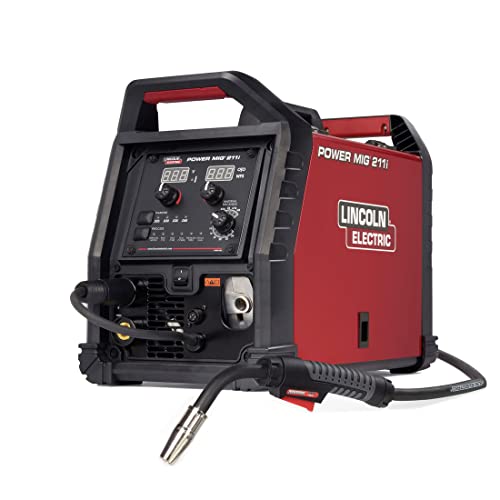
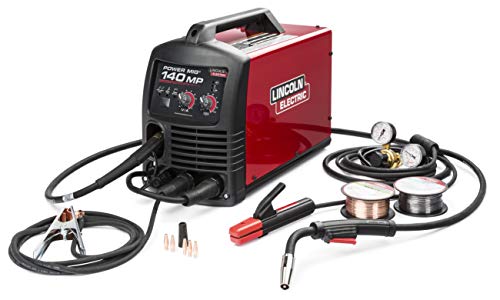
For common mild-steel fabrication, a 220–240 V MIG welder rated around 200–250 amps is a practical starting point for heavy gussets. It gives you room to weld 1/4-inch steel in suitable joint designs and handle some thicker work with preparation and multiple passes. A 120 V machine can be useful for tacks and lighter fabrication, but its limited output is a real constraint on sustained welds in heavy plate.
Check the rated output and duty cycle, not just the maximum amperage printed on the case. A 30% duty cycle at 200 amps means about three minutes of arc-on time in a ten-minute period at that setting, followed by cooling time. Gussets often require several short welds rather than one continuous bead, but a low duty cycle can still slow production.
For steel, solid wire with shielding gas is a common choice. A 75% argon/25% CO2 mix works well for general-purpose MIG, while flux-core wire is useful outdoors or where wind makes shielding gas unreliable. Flux-core typically makes more spatter and slag, so allow time for cleanup. Don’t weld over paint, mill scale, oil, or rust: clean the joint to sound metal before welding.
Welder types compared
| Welder category | Best fit | Trade-off |
|---|---|---|
| 120 V MIG, roughly 140–180 amps | Light brackets, tacking, and occasional thin-to-medium steel | Limited capacity and slower work on heavy joints; may require more passes |
| 220–240 V MIG, roughly 200–250 amps | Regular fabrication with gussets and plate around 1/4 inch | Needs a suitable circuit and costs more than a basic 120 V unit |
| Multi-process 220–240 V welder | Shops that also need stick or TIG capability | Extra functions may cost more without improving MIG performance at the same price |
These are broad shopping ranges, not guarantees of joint capacity. Actual results depend on the machine’s output, wire size, joint fit-up, welding position, and procedure. Read the manufacturer’s material-thickness guidance and verify that the machine can run the wire and gas setup you intend to use.
What to buy
For frequent heavy-gusset work, prioritize a 220–240 V machine with a published duty cycle, stable wire feed, and enough output for your plate thickness. A spool gun connection is useful if you may weld aluminum later, but it is not a requirement for steel gussets. Check whether the machine includes a regulator, gas hose, work clamp, and a usable torch; missing accessories can change the real purchase cost.
Browse 220 V MIG welders around 200 amps if you need a dedicated shop machine. Compare the stated duty cycle at a useful amperage, not only the maximum output. Also confirm your outlet and breaker can support the welder; don’t assume a plug adapter makes an undersized circuit suitable.
A cheaper 120 V MIG can be the sensible choice if gussets are small, welds are short, and the steel is within the machine’s rated range. It is also handy for repair work where portability matters more than speed. If you routinely join thick plate, though, buying a small machine and compensating with slow, repeated passes can waste time and produce an unreliable joint.
Flux-core is a practical option for outdoor repairs, especially when wind would disrupt shielding gas. For cleaner indoor work, solid wire and gas are usually easier to control. Search dual-process gas and flux-core MIG welders if you want both approaches. Verify that “dual-process” means the machine supports the wire type you plan to use; some require a polarity change and different drive-roll setup.
Prepare and weld the gusset
Fit the gusset tightly against both members and remove coatings from the weld area. A gap, poor fit, or heavy scale can make it difficult to get consistent fusion. Tack the assembly in several places, check alignment, then alternate weld locations to limit heat distortion. Use a short test weld on scrap of similar thickness to set voltage and wire speed before committing to the part.
Do not treat bead appearance as proof of strength. A bead can look smooth while failing to fuse at the root or along one edge. Common causes include low heat input, excessive travel speed, poor torch angle, and welding over contamination. If the joint is load-bearing or safety-critical, use a qualified welding procedure or have the design and weld inspected by someone competent for that application.
For thick plate, beveling an edge or using multiple passes may be necessary, depending on the joint design and required strength. Follow the machine and wire manufacturer’s settings, and clean slag between flux-core passes. A too-cold weld may sit on the surface without tying in; an excessively hot or slow weld can burn through thinner members or distort the assembly.
Safety and setup
Use a welding helmet with an appropriate shade, gloves, flame-resistant clothing, and eye protection when grinding. Remove flammable materials, protect bystanders from arc flash, and provide ventilation; welding fumes can be hazardous, especially on coated or galvanized steel. Never weld a sealed container or a component that may contain fuel or other flammable residue.
Before buying, match the welder to the thickest steel you expect to join, the outlet you actually have, and the length of work you do per session. For occasional small gussets, a 120 V unit may be adequate. For repeated heavy-steel fabrication, a capable 220–240 V machine is usually the more useful purchase—not because every gusset needs maximum power, but because it provides a workable margin when joint thickness and production demands increase.
Related guides
More from Amazon
Programs that pair well with the guide above. Offers and eligibility are set by Amazon and may change.
A free business account with business pricing and bulk-buying tools for work, shop or home office.
Create a business accountFree shipping on eligible items, Prime Video and more. Eligible new members can start with a free trial.
Start a Prime free trialAudiobooks and podcasts to listen to on the go. Eligible new members can start with a free trial.
Try Audible freeAd-free music streaming. Eligible new subscribers can start with a free trial.
Try Music Unlimited freeAs an Amazon Associate we earn from qualifying purchases.








Write Your Review
No reviews yet. Be the first to share your experience!