
Key takeaways
- Our take on the best hardfacing rods and wear-resistant stick electrodes for buckets, blades and augers, with hardness specs, sizing help and FAQs.
As an Amazon Associate I earn from qualifying purchases. This post may contain affiliate links at no extra cost to you.
As an Amazon Associate we earn from qualifying purchases.
Hardfacing is the cheapest trick in the welding shop that actually works: instead of letting a bucket edge, auger flight or crusher jaw wear down to scrap, you lay a layer of hard, wear-resistant alloy over the tougher, softer base metal and let that sacrificial skin take the abuse. The catch is that “wear” is not one thing. Sand and gravel grind metal away, rock pounding batters it, and steel sliding on steel galls and tears it. Each failure mode calls for a different electrode chemistry: manganese steels that harden under impact, chromium carbide deposits built for grinding abrasion, and balanced general-purpose alloys in between.
This guide covers five stick electrodes for shielded metal arc welding, from one-pound packs for farm repairs to eleven-pound shop packs for rebuilds. Our take is based on manufacturer data sheets, AWS A5.13 classifications, and practical notes on arc feel, slag behavior, and best-fit jobs. Match the rod to the wear first, and the rest of the decision gets much easier.
Disclosure: This post contains affiliate links. If you buy through links on this page, we may earn a commission at no extra cost to you.
Quick picks
- Best for heavy abrasion, small pack: Forney 42801 Superwear Heavy Abrasion Welding Rod
- Easiest arc for general repairs: Forney Supercote Hardfacing Welding Rod
- Best for manganese steel impact: SÜA EFeMn-A Hardfacing Electrode D256
- Best for severe grinding abrasion: SÜA EFeCr-A1 Hardfacing Electrode D667
- Best for severe abrasion, moderate impact: Blue Demon Hard Cover 470 Hardfacing Electrode
Forney 42801 Superwear Heavy Abrasion Welding Rod, 5/32 in, 1 lb

Superwear is Forney’s heavy-duty hardfacing electrode, and it earns the name with a deposit hardness of RC 58-60, the hardest figure among the small-pack rods in this guide. It is an all-position, general-purpose hardfacing electrode built for parts that take both impact and abrasion, and its heat-treatable deposit can be applied in multiple passes, so a worn edge can be rebuilt and finished in one session. Typical work includes shovels, loader and dozer blades, farm implements, and other wear surfaces that live in dirt and gravel.
In our take, this is the rod to grab when a cutting edge keeps disappearing and a softer overlay has already failed you. The one-pound pack suits one-off repairs. The 5/32 in diameter asks for a machine with healthy output, so check your welder can run it first.
Specs
- Brand: Forney
- Part number: 42801
- Type: All-position hardfacing electrode
- Diameter: 5/32 in (4.0 mm)
- Pack weight: 1 lb
- Deposit hardness: RC 58-60
- Typical uses: Shovels, blades, farm implements, wear surfaces
- ASIN: B003X5PBKI
Pros:
– Hardest deposit of the small-pack picks here
– All-position, so edges can be faced in place
– Heat treatable and multi-pass capable
Cons:
– One-pound pack disappears fast on large parts
– Not the right chemistry for manganese build-up
Forney Supercote Hardfacing Welding Rod, 5/32 in, 1 lb

Supercote is the friendlier half of Forney’s hardfacing pair. It deposits in the RC 52-58 range and is aimed at moderate abrasion with low impact: building up cast steel and manganese steel machine parts, cylinder bars, draw bars, augers, and similar hardware. It runs on AC or DC reverse polarity in all positions, with a smooth arc and slag that releases easily.
Our take: if you hardface a few times a year rather than every week, this is the rod that will frustrate you least. The forgiving arc and easy cleanup make it a sensible first hardfacing electrode, and AC capability means older transformer machines handle it fine. It gives up hardness to Superwear, so keep it away from crusher duty.
Specs
- Brand: Forney
- Part number: 42401
- Type: All-position hardfacing electrode
- Diameter: 5/32 in (4.0 mm)
- Pack weight: 1 lb
- Deposit hardness: RC 52-58
- Polarity: AC or DC reverse
- Typical uses: Build-up on cast steel and manganese steel parts, cylinder bars, draw bars, augers
- ASIN: B003X5QAXA
Pros:
– Smooth arc and easy slag removal
– Runs on AC machines as well as DC
– All-position for repair work in place
Cons:
– Softer deposit than Superwear
– Moderate abrasion and low impact only
SÜA EFeMn-A Hardfacing Electrode D256, 5/32 in x 16 in, 11 lb

The D256 is a true manganese build-up electrode classified AWS A5.13 EFeMn-A. It lays down an austenitic high-manganese deposit that leaves the arc at a modest 180-200 HB, then work-hardens in service to roughly 44-48 HRC. That behavior is exactly what manganese steel parts need: crusher jaws and cones, railroad frogs and crossings, and shovel pads. The coating is a low-hydrogen potassium type and the rod runs on AC or DC.
Technique matters more here than with the other rods. Manganese steel is sensitive to hot shortness and can crack if overheated, so keep interpass temperatures in the 100-150 °C window the maker specifies, with short beads and cooling breaks. The eleven-pound pack suits shop rebuilds, not quick field fixes.
Specs
- Brand: SÜA Welding Technologies
- Part number: D256
- AWS classification: A5.13 EFeMn-A
- Diameter: 5/32 in
- Length: 16 in
- Pack weight: 11 lb
- Coating: Low-hydrogen potassium type, AC/DC
- Deposit hardness: 180-200 HB as welded; work-hardens to 44-48 HRC
- Interpass: Hold at 100-150 °C
- ASIN: B0779PM4HT
Pros:
– Work-hardens under impact, matching manganese parts
– Correct chemistry for crusher and rail build-up
– Shop-size pack suits production rebuilds
Cons:
– Needs strict heat control to avoid cracking
– Deposit starts soft until worked in service
– Not a grinding-abrasion overlay
SÜA EFeCr-A1 Hardfacing Electrode D667, 3/16 in x 14 in, 11 lb

Where the D256 answers impact, the D667 answers abrasion. Classified AWS A5.13 EFeCr-A1, it deposits a chromium-rich alloy of the family that selection charts point to for bulldozer cutting edges, excavator bucket teeth, screw conveyors, and other parts that lose metal to sand, gravel, and crushed rock. The 3/16 in diameter lays down a lot of alloy per pass, and the eleven-pound pack suits equipment yards.
Our take: reach for this one when edges come back polished thin by dirt and stone, and impact is the secondary concern. Run it on a machine with real output, since the big diameter is happiest flat on heavy plate. Expect a network of fine check cracks across the deposit; on chromium-rich hardfacing that pattern is normal stress relief, not a defect.
Specs
- Brand: SÜA Welding Technologies
- Part number: D667
- AWS classification: A5.13 EFeCr-A1
- Diameter: 3/16 in
- Length: 14 in
- Pack weight: 11 lb
- Typical uses: Cutting edges, bucket teeth, screw conveyors, crushing parts
- ASIN: B0779R97XQ
Pros:
– Chromium-rich deposit for severe grinding abrasion
– Large diameter covers worn edges quickly
– Shop-size pack for repeated equipment work
Cons:
– Big diameter needs strong welder output
– Deposit is finished by grinding, not machining
– Check cracking in the deposit is expected
Blue Demon Hard Cover 470 Hardfacing Electrode, 1/8 in, 5 lb
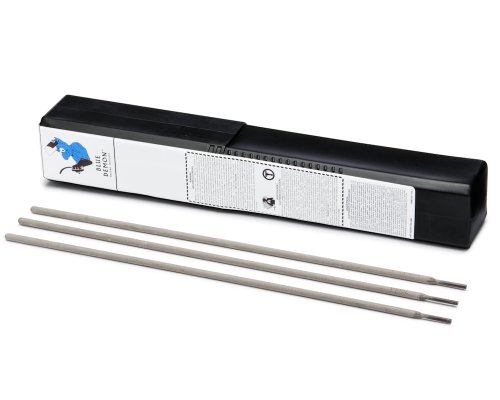
Hard Cover 470 is Blue Demon’s chromium carbide hardfacing electrode, built for smooth overlays on iron base surfaces that face severe abrasive wear with moderate impact. The deposit pairs chromium and complex carbides in an austenitic alloy matrix, and the formula is designed to eliminate the worm tracking porosity common in this alloy group. Published hardness runs RC 55-60. Classic applications include crusher jaws, hammers, bucket lips and teeth, and wear plates, plus pins, axles, shafts and cams.
Our take: pick this one when grinding wear is the main enemy but the part still takes knocks in service, and you want a mid-size pack instead of a one-pound trial size. It runs on AC or DC and welds flat and horizontal, so it rewards positioning the part before you strike an arc. Finish the deposit by grinding, and expect fine check cracks across the surface as the overlay cools.
Specs
- Brand: Blue Demon
- Part number: HC47012505
- Type: Chromium carbide hardfacing stick (SMAW) electrode
- Diameter: 1/8 in (3.2 mm)
- Pack weight: 5 lb
- Deposit hardness: RC 55-60
- Deposit chromium: 34%
- Current: AC or DC
- Positions: Flat and horizontal
- Typical uses: Crusher jaws, hammers, bucket lips and teeth, wear plates
- ASIN: B00I4BXK4U
Pros:
– Chromium carbide deposit for severe abrasion
– Formula aimed at eliminating worm tracking porosity
– Mid-size pack suits repeated equipment repairs
Cons:
– Flat and horizontal positions only
– Deposit is finished by grinding, not machining
How to choose the right hardfacing rod
Start with the wear, not the brand. Grinding abrasion from sand, soil and rock calls for chromium-rich deposits such as the D667 or Hard Cover 470. Pounding impact calls for manganese steel that work-hardens, which is the D256’s whole reason to exist. Mixed wear on farm and shop hardware is where balanced rods like Supercote and Superwear earn their keep.
Treat hardness as a trade, not a contest. Harder deposits resist grinding better but give up toughness, and very hard overlays are limited in how many layers you can stack. If a part is worn far below profile, rebuild the shape with a build-up electrode first, then cap it.
Match the rod to the base metal. Manganese steel parts should be repaired with manganese chemistry and restrained heat input; overheating them invites cracking. Carbon and low alloy steels are more forgiving, though thick parts still benefit from preheat and slow cooling.
Size the rod to the machine and the part. A 3/16 in electrode needs a welder with serious output and suits big edges laid flat. Smaller diameters and all-position rods are slower but far easier to control on teeth and parts that cannot be repositioned.
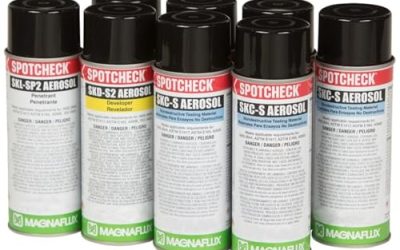
Expect check cracks on carbide deposits. The fine crackle pattern across a chromium carbide overlay is the deposit relieving stress as it cools: alarming to look at, but normal. Cracks that run into the base metal or lift at the edges are not.
Frequently asked questions
Can I hardface with a regular E7018 rod instead?
Not really. E7018 makes a sound structural deposit and works fine as a build-up layer to restore a worn profile, but its surface is ordinary mild steel and will disappear as fast as the original part. Use it underneath, then cap the part with a genuine hardfacing electrode.
How many layers of hardfacing can I apply?
Most high-hardness overlays are limited to about two layers over a build-up; more invites spalling, where the deposit lifts in flakes. Manganese build-up electrodes are the exception and can be layered more deeply, provided heat input stays controlled. When in doubt, build up with a tough electrode and keep the hard skin thin.
Do I need to preheat before hardfacing?
Thin carbon steel parts often need no preheat. Thick or higher-carbon parts benefit from modest preheat and slow cooling to stop the base metal cracking beside the deposit. Manganese steel is the opposite problem: keep it as cool as the procedure allows and watch interpass temperature.
Why did my hardfaced edge wear out so fast?
Usually the chemistry mismatched the wear: a moderate overlay in severe grinding abrasion polishes away fast, while a hard, brittle one in pounding service chips and spalls. Re-check whether the part fails by grinding, impact, or sliding, and switch families accordingly.
Conclusion
There is no single best hardfacing rod, only the best match for the way a part is dying. For most small shops and farm repairs, Forney’s Superwear and Supercote cover the everyday ground, with Superwear the harder of the two. When the work turns industrial, the SÜA D256 rebuilds manganese parts the way they were built, the D667 lays a chromium-rich skin against grinding abrasion, and the Hard Cover 470 handles severe abrasion with moderate impact. Match the wear, mind the heat, and the overlay will outlast the part.
Related guides
More from Amazon
Programs that pair well with the guide above. Offers and eligibility are set by Amazon and may change.
A free business account with business pricing and bulk-buying tools for work, shop or home office.
Create a business accountFree shipping on eligible items, Prime Video and more. Eligible new members can start with a free trial.
Start a Prime free trialAudiobooks and podcasts to listen to on the go. Eligible new members can start with a free trial.
Try Audible freeAd-free music streaming. Eligible new subscribers can start with a free trial.
Try Music Unlimited freeAs an Amazon Associate we earn from qualifying purchases.
Write Your Review
No reviews yet. Be the first to share your experience!