What's inside
As an Amazon Associate I earn from qualifying purchases. This post may contain affiliate links at no extra cost to you.
What we cover
Best Budget MIG Welders for Home and Garage Use
The best budget MIG welder for most home garages is a 120V gas-capable machine with a 20–30% duty cycle at its useful settings, standard 0.030-inch wire compatibility, and a complete enough package to avoid costly missing parts. Choose a dual-voltage model instead if you have a 240V outlet and expect to weld thicker steel regularly; choose a simple flux-core machine if low upfront cost and portability matter more than clean, low-spatter welds.
Budget machines are easiest to compare by the cost of a usable setup, not the price of the welder alone. You may also need a cylinder, regulator, gas hose, helmet, gloves, clamps, and extra contact tips. Prices vary by region and sales, so the ranges below are broad US-market estimates rather than quotes.
As an Amazon Associate we earn from qualifying purchases at no extra cost to you.
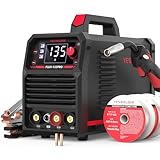


Shortlist: which type fits your garage?
| Machine or example | Power and process | Wire compatibility | Typical duty-cycle reference | Approximate setup cost |
|---|---|---|---|---|
| Hobart Handler 140 | 120V; gas MIG and flux-core | Up to 0.035-inch solid or flux-core wire, depending on setup | 20% at 90A | $850–$1,400 with basic gas gear |
| Lincoln Electric 140 MP | 120V; multiprocess, including MIG and flux-core | Check the manual and drive-roll setup for the selected wire | Published rating varies by process and output; verify the current manual | $800–$1,400 with basic gas gear |
| Forney Easy Weld 140 FC-i | 120V; flux-core only | Uses flux-core wire; no shielding-gas setup | 30% at 90A | $300–$550 for a usable flux-core setup |
| Hobart Handler 210 MVP | 120V or 240V; gas MIG and flux-core | Supports common wire sizes; confirm roll and liner configuration | 20% at 150A | $1,100–$1,800 with basic gas gear |
Duty-cycle figures are meaningful only at the stated amperage and over the manufacturer’s test interval—commonly ten minutes. A 20% rating means about two minutes of welding followed by eight minutes of cooling at that particular output. You can often weld longer at lower settings, but don’t treat a machine’s maximum amperage as continuous output. Check the current product manual before buying, since specifications and package contents can change.
Choose by outlet, material, and how often you weld
For occasional repairs on thin steel: 120V flux-core
A flux-core-only machine keeps the initial bill down: there’s no gas cylinder or regulator to buy, and the setup travels easily. It suits light brackets, lawn-equipment repairs, and practice on mild steel. The trade-offs are more spatter, visible slag to remove, and less control on thin sheet. Outdoor breezes are less troublesome than with gas-shielded MIG, but wind can still affect the weld.
The Forney Easy Weld 140 FC-i is an example of this category. Its 0.030-inch flux-core wire is a practical starting size, but confirm the machine’s polarity setup and recommended wire before loading a spool. Flux-core wire generally needs electrode-negative polarity; solid wire with shielding gas usually needs electrode-positive polarity. Follow the machine and wire instructions rather than assuming the factory connection is correct.
For cleaner welds and a wider range of small projects: 120V gas-capable MIG
A 120V gas-capable welder is a sensible budget MIG welder for a garage with ordinary household power and occasional projects. A machine such as the Hobart Handler 140 can run solid wire with shielding gas or flux-core wire. Gas-shielded solid wire typically makes cleaner welds on clean, thin steel, while flux-core provides a no-cylinder option.
Check what comes in the box: a regulator, gas hose, work clamp, gun, and a small starter spool may be included, but a cylinder often is not. Cylinder purchase, rental, or exchange terms vary locally. A small cylinder can be convenient, but it may run out sooner and cost more per refill than a larger one. Ask a local welding supplier about cylinder rules before choosing a machine around gas.
For thicker material or frequent work: dual-voltage
If you have a properly wired 240V outlet, a dual-voltage machine can deliver more useful output and reduce the frustration of slow travel on thicker steel. The Hobart Handler 210 MVP is an example, with plugs for 120V and 240V operation. On 120V, it remains constrained by the outlet; its higher-output advantage comes when connected to the correct 240V circuit.
Do not assume a standard dryer outlet, extension cord, or adapter is suitable. Match the plug, breaker, circuit capacity, and cord requirements to the manual, and have an electrician assess an uncertain outlet. A larger welder also adds cost and weight, so it is poor value if your projects are mostly thin sheet and occasional tack welds.
Calculate the real starting cost
Here is a simple comparison using broad price allowances. It shows why a low sticker price does not always mean the lowest cost to start welding.
| Setup item | Flux-core-only setup | Gas-capable MIG setup |
|---|---|---|
| Welder | $250–$450 | $500–$900 |
| Helmet, gloves, and basic safety gear | $80–$200 | $80–$200 |
| Wire and spare contact tips | $25–$60 | $25–$60 |
| Cylinder and gas gear | $0 | $200–$500 or more |
| Illustrative total | $355–$710 | $805–$1,660 or more |
These estimates exclude optional items such as a welding cart, grinder, and dedicated circuit work. If you already own safety gear or can borrow a cylinder, your actual total can be lower. If gas is not included, ask for the regulator’s gas type and pressure range; a regulator that does not match your cylinder or shielding gas can add expense or create a safety problem.
Spool fit, accessories, and repair support
Before ordering wire, check three things in the manual: spool diameter and hub fit, drive-roll groove and wire range, and contact-tip size. Small machines commonly accept 4-inch spools, while some also accept larger 8-inch spools; compatibility is model-specific. A spool that physically fits may still need a different adapter, drive roll, or tension adjustment. For solid wire, 0.023 inch can help with thinner material; 0.030 inch is a versatile general-purpose size. Use the wire manufacturer’s settings as a starting point and test on scrap of the same thickness.
Included accessories have real value. A package with the correct regulator, hose, extra tips, and a useful work clamp may save a separate purchase, but a low-cost helmet or small starter spool may be worth upgrading. Compare the exact package contents—not just the welder model name—because bundles differ.
Repair support matters when a machine is used beyond occasional hobby work. Look for a published parts diagram, accessible manuals, local authorized service, and availability of common consumables such as liners, guns, tips, and drive rolls. Established brands such as Hobart, Lincoln Electric, and Miller have service and parts networks, though coverage depends on location and model. For any brand, ask a nearby welding-supply shop whether it can source the gun, liner, and control parts before you buy.
Decision matrix
| Your situation | Best fit | Why |
|---|---|---|
| Lowest setup cost; occasional outdoor repairs | 120V flux-core-only | No cylinder or regulator; accepts more spatter and cleanup |
| Beginner; mostly clean, thin-to-medium mild steel | 120V gas-capable MIG | Flexible process options and a gentler learning path with solid wire |
| Frequent projects or thicker steel; suitable 240V outlet available | Dual-voltage gas-capable MIG | More headroom on 240V, with 120V portability when needed |
| Very limited storage or occasional transport | Compact 120V machine | Smaller footprint; check whether the gun and leads are replaceable |
Ownership tips that prevent avoidable costs
- Keep wire dry and covered. Damp flux-core wire can weld erratically; rusty solid wire can clog the liner.
- Trim and replace a damaged contact tip. A worn tip causes inconsistent feeding and can make a sound machine seem unreliable.
- Keep the liner clean and avoid sharp bends in the gun cable. Feeding problems often start with wire debris, a kink, or incorrect drive-roll pressure.
- Use clean, prepared metal and a sound work-clamp connection. Paint, rust, and mill scale make settings harder to judge and can weaken a weld.
- Use suitable eye, hand, and body protection, and provide ventilation. Welding produces intense light, heat, fumes, and fire risk; clear combustible material from the work area.
For most beginners with only 120V power, a gas-capable 140A-class machine offers the best balance if the full setup cost is manageable. Pick flux-core-only when avoiding cylinder costs is the priority, and move to dual voltage when your material thickness and work frequency justify the extra investment—not simply because the machine advertises a higher maximum amperage.