
Key takeaways
- Find the best air ratchet for engine bays and shop work, comparing torque, speed, drive size and head design across five proven pneumatic models.
As an Amazon Associate I earn from qualifying purchases. This post may contain affiliate links at no extra cost to you.
As an Amazon Associate we earn from qualifying purchases.
An air ratchet earns its place in a workshop the first time you face a row of fasteners buried behind a bracket, a hose, or a frame rail. A hand wrench works, but it is slow, and a full impact gun often will not fit or will hit far harder than a small bolt can take. A pneumatic ratchet sits in between: slim at the head, gentle enough for controlled run-down, and fast enough to turn a tedious strip-down into a few minutes of work.
Finding the best air ratchet means matching drive size, torque, and head shape to your jobs. Engine bay work favors compact 3/8-inch tools, larger hardware leans toward 1/2-inch drive, and dash or small-engine work rewards a stubby 1/4-inch model. The five tools below cover that spread.
Disclosure: This post contains affiliate links. If you buy through links on this page, we may earn a commission at no extra cost to you.
Quick picks
- Best all-round 3/8-inch pick: Ingersoll Rand 170G Edge Series — balanced torque and speed in a compact, comfortable body.
- Best 1/2-inch workhorse: Chicago Pneumatic CP828H — aluminum housing, anti-slip head design, and steady output for general maintenance.
- Best for tight quarters: Astro Pneumatic Tool 1114A ONYX Stubby — a short 1/4-inch tool built for confined spaces.
- Best for stronger run-down: AIRCAT 802 Composite Twin Pawl — the highest torque in this group, with a quiet tuned exhaust.
- Best second 1/2-inch option: Chicago Pneumatic CP886H — a simple, durable aluminum ratchet for everyday shop use.
Ingersoll Rand 170G Edge Series 3/8-Inch Air Ratchet

The 170G is the tool many shops reach for first, and our take is that it earns that habit. It delivers 55 ft-lb of maximum torque at a 170 RPM free speed, a combination that runs down most engine and chassis fasteners quickly without feeling abrupt. The 3/8-inch drive suits the socket sizes that dominate automotive and light fabrication work, and the heat-treated head is built to hold up under daily use.
Comfort is the other half of its appeal. The contoured handle and comfort grip keep vibration and fatigue down during long teardown sessions, and the compact, lightweight body slips into engine bays where a longer tool would foul on hoses and brackets. A variable speed lever-style throttle on sibling models in this family shows the brand’s focus on control; on the 170G, feathering the throttle is easy, which matters when you are seating fasteners in aluminum and want to stop before threads suffer.
Specs
- Drive: 3/8-inch square
- Maximum torque: 55 ft-lb
- Free speed: 170 RPM
- Air consumption: 3 CFM
- Housing style: Edge Series, comfort grip, black finish
- ASIN: B000UVR4W6
Pros:
– Balanced torque and speed for general shop work
– Comfortable grip for long sessions
– Compact body suits crowded engine bays
Cons:
– Not the strongest option here for stubborn larger hardware
– Air hose still limits movement compared with cordless tools
Chicago Pneumatic CP828H 1/2-Inch Air Ratchet

The CP828H is a traditional, no-nonsense 1/2-inch ratchet from a maker with a long history in pneumatic tools. Its working torque range runs from about 10 to 50 ft-lb, with a 150 RPM no-load speed, so it favors steady, controlled work over outright pace. That suits general maintenance: brackets, covers, and suspension hardware that need a firm run-down and a final hand check rather than brute force.
Build details set it apart. The aluminum housing keeps weight manageable, the patented TriSpring anti-slip head design is meant to improve durability at the ratchet head, and a grease fitting on the reverse lever makes routine servicing simple. In practical notes, tools of this pattern feel planted and predictable, with a teasing throttle that lets you creep a fastener home. If your work leans toward larger sockets and you value serviceability, this is a sound anchor tool for the drawer.
Specs
- Drive: 1/2-inch square
- Torque range: 10–50 ft-lb (13–70 Nm)
- Free speed: 150 RPM
- Housing: Aluminum
- Air inlet: 1/4-inch NPT, 90 psi working pressure
- Weight: about 2.4 lb (1.1 kg)
- ASIN: B000NOX2UI
Pros:
– Durable aluminum housing and anti-slip head design
– Grease fitting supports easy maintenance
– Controlled throttle for careful seating
Cons:
– Slower free speed than the 3/8-inch picks
– 1/2-inch head is bulkier in tight engine bays
Astro Pneumatic Tool 1114A ONYX 1/4-Inch Stubby Air Ratchet

Some fasteners live in places a standard ratchet simply cannot reach: behind dashboards, inside door frames, around intake plumbing, and in small-engine housings. The 1114A ONYX stubby is built for exactly those jobs. Its short body and 1/4-inch drive trade raw output for access, delivering up to 25 ft-lb of torque, which is plenty for the small fasteners it is meant to spin.
At about 1.3 lb, it is light enough to use one-handed in awkward positions, and the metal construction feels more substantial than its size suggests. Our take is that a stubby like this is not a replacement for a full-size ratchet; it is the second tool that saves you when the first one will not fit. Shops that do interior, trim, or small-equipment work will find it earns its space quickly, while general users may treat it as a handy specialist.
Specs
- Drive: 1/4-inch square
- Maximum torque: 25 ft-lb
- Construction: Metal, ONYX stubby design
- Weight: about 1.3 lb
- Included: Ratchet wrench only
- ASIN: B01JBO4F2Y
Pros:
– Very short body reaches confined spaces
– Light enough for one-handed use overhead or under a dash
– Solid metal build for its size class
Cons:
– Modest torque suits small fasteners only
– 1/4-inch sockets limit the range of jobs it covers
AIRCAT 802 Composite Twin Pawl 3/8-Inch Air Ratchet
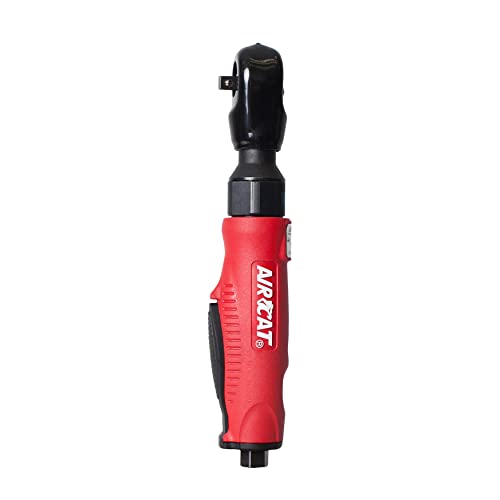
When run-down work involves larger or more reluctant fasteners, the AIRCAT 802 steps up. It produces 70 ft-lb of maximum torque with a working range of 10–50 ft-lb, and its 280 RPM free speed is the quickest in this group, so it clears long rows of bolts faster than the more deliberate tools above. The twin pawl mechanism is designed to deliver that output smoothly rather than in harsh pulses.
AIRCAT is also known for its patented quiet tuned exhaust, listed at 82 dBA for this model, which makes a real difference in a small workshop where a loud ratchet echoes off every wall. The composite housing keeps the tool comfortable in the hand, and at 10.5 inches long with a weight of about 2.75 lb, it remains a manageable everyday size. If you want one 3/8-inch ratchet with headroom for tougher jobs, this is our take for the strongest pick here.
Specs
- Drive: 3/8-inch square
- Maximum torque: 70 ft-lb
- Working torque: 10–50 ft-lb
- Free speed: 280 RPM
- Air consumption: 4 CFM, 1/4-inch NPT inlet
- Length: 10.5 inches; weight: about 2.75 lb
- Sound level: 82 dBA, quiet tuned exhaust
- ASIN: B000OAHYKA
Pros:
– Highest torque and fastest speed in this group
– Quiet tuned exhaust suits enclosed workshops
– Smooth twin pawl delivery
Cons:
– Uses more air than the lighter picks
– Extra output is wasted on delicate small fasteners
Chicago Pneumatic CP886H 1/2-Inch Air Ratchet
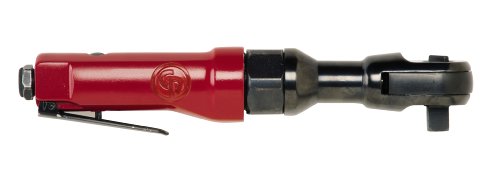
The CP886H offers a second 1/2-inch path for buyers who want a straightforward aluminum ratchet for fastening and unfastening in confined spaces. Chicago Pneumatic positions this family for jobs such as spark plug work, air conditioning systems, water pumps, and exhaust hardware, where a slim right-angle head and predictable delivery matter more than headline numbers. Output sits in the same practical band as the CP828H, at up to 50 ft-lb with a 150 RPM free speed.
In everyday terms, it feels familiar the moment you pick it up: about 2.62 lb, roughly 10.2 inches long, with an aluminum body that shrugs off workshop knocks. Having two similar 1/2-inch options here is deliberate; availability and handle feel often decide between near-equal tools.
Specs
- Drive: 1/2-inch square
- Maximum torque: 50 ft-lb
- Free speed: 150 RPM
- Housing: Aluminum
- Length: about 10.2 inches
- Weight: about 2.62 lb
- ASIN: B000M7IAZS
Pros:
– Simple, durable aluminum construction
– Good fit for exhaust, pump, and accessory work
– Predictable, controlled delivery
Cons:
– Overlaps closely with the CP828H in output
– No standout speed or torque advantage
How to choose the best air ratchet
Start with drive size. A 3/8-inch drive covers the widest range of automotive and workshop fasteners and is the right default for a first purchase. Choose 1/2-inch if you regularly work with larger hardware, and add a 1/4-inch stubby only when access problems keep slowing you down.
Match torque to the job, not the headline. Air ratchets are run-down tools, not final tightening tools. Around 45–55 ft-lb handles most routine work; 70 ft-lb adds headroom for reluctant fasteners. Always finish critical fasteners with a hand torque wrench, and break seized hardware loose by hand or with a breaker bar first, so you do not shock-load the ratchet head.
Check speed and control. Higher RPM clears long fasteners faster, but a throttle you can feather matters more on delicate work. If you seat bolts in aluminum or work near gaskets and covers, favor control over pace.
Confirm your air supply. Most tools here run at 90 psi and use roughly 3–4 CFM, with a 1/4-inch NPT inlet and a 3/8-inch hose as the common setup. A small compressor that cycles constantly will make any ratchet feel weak, so check your tank and regulator before blaming the tool.
Think about noise, weight, and upkeep. A quiet exhaust helps in a home garage, and a lighter body helps overhead. Daily oiling and clean, dry air will keep any of these tools working for years.
Frequently asked questions
Can an air ratchet replace an impact wrench?
No. The two tools do different jobs. An impact wrench delivers high, hammering torque for lug nuts and seized hardware. An air ratchet delivers lower, smoother torque for running fasteners down and off in spaces an impact gun cannot reach. Most well-equipped shops own both.
Should I tighten fasteners fully with an air ratchet?
Use the ratchet to run the fastener down snugly, then finish with a hand torque wrench to the specified value. That protects threads, gaskets, and aluminum castings, and it gives you a repeatable result the air tool alone cannot guarantee.
What compressor do I need for a pneumatic ratchet?
A compressor that holds 90 psi at the tool while delivering about 4 CFM is enough for the models in this guide. A mid-size tank reduces cycling and keeps delivery consistent during longer teardown work. Add an inline filter and regular oiling to protect the motor vanes.
Why does my air ratchet feel weak?
Low pressure at the tool, a restrictive hose, a clogged inlet screen, or dry internal vanes are the usual causes. Check the regulator setting under load, try a shorter or wider hose, clean the inlet, and add air tool oil before assuming the tool itself has failed.
Conclusion
For most workshops, the Ingersoll Rand 170G is the safest first buy: balanced, comfortable, and sized for the work that fills a typical week. The AIRCAT 802 is the pick when you want more torque and speed from a 3/8-inch tool, while the Chicago Pneumatic CP828H and CP886H cover 1/2-inch duties with durable, serviceable designs. Add the Astro 1114A stubby when tight access becomes your bottleneck. Choose by drive size and the fasteners you meet most often, feed the tool clean air at 90 psi, and any of these five will make strip-down and assembly work noticeably faster.
Related guides
More from Amazon
Programs that pair well with the guide above. Offers and eligibility are set by Amazon and may change.
A free business account with business pricing and bulk-buying tools for work, shop or home office.
Create a business accountFree shipping on eligible items, Prime Video and more. Eligible new members can start with a free trial.
Start a Prime free trialAudiobooks and podcasts to listen to on the go. Eligible new members can start with a free trial.
Try Audible freeAd-free music streaming. Eligible new subscribers can start with a free trial.
Try Music Unlimited freeAs an Amazon Associate we earn from qualifying purchases.
Write Your Review
No reviews yet. Be the first to share your experience!