Our Top Picks
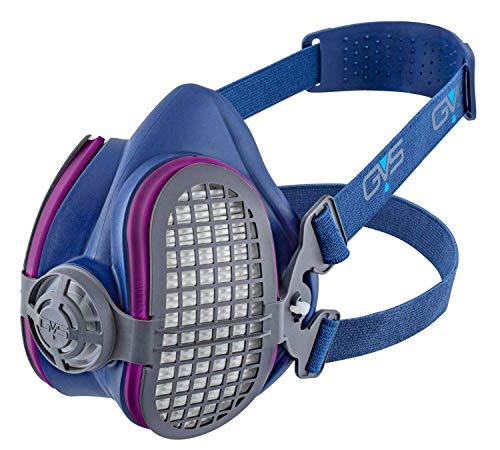 GVS SPR457 Elipse P100 Dust Half Mask Respirator1 Count (Pack of 1)5 x 4 x 4 inches0.4 PoundsCheck on Amazon


What's inside
As an Amazon Associate I earn from qualifying purchases. This post may contain affiliate links at no extra cost to you.
Most guys buy the welder first and the gear second. That order is backwards. A cheap hood and bare forearms will cost you more in one afternoon than the machine cost you, and arc burn on your eyes shows up around 2 a.m., long after you shut the shop door. This welding safety equipment checklist is built around what actually injures welders: UV radiation, spatter and slag, metal fume, and fire that starts on the other side of a wall you did not check.
Nothing here is exotic. Most of it is the boring stuff that lives on a hook by the door. The point is to stop treating PPE as a pile of loose items and start treating it as one system where every gap gets covered. Work down the list. If you cannot check a line, you are welding with a known hole in your protection.
As an Amazon Associate we earn from qualifying purchases at no extra cost to you.


What we cover
The Short Version: What Goes On Before The Arc
Here is the whole kit in one place, ranked by how fast the injury happens if you skip it.
| Item | Why It Matters | Priority |
|---|---|---|
| Auto-darkening helmet | UV burns cornea in seconds, arc flash is cumulative | Buy first |
| Leather welding gloves | Contact burns, spatter, hot stock | Buy first |
| Flame-resistant jacket or sleeves | UV skin burn, spatter through cotton | Buy first |
| Safety glasses under the hood | Slag pops when you chip, grinders throw wheels | Buy first |
| Respirator, P100 or PAPR | Manganese and zinc fume, galvanized coating | Add early |
| Leather boots, 6 inch or taller | Spatter rolls into low-cut shoes | Add early |
| Fire extinguisher, ABC and water | Sparks travel 30 feet and land in sawdust | Non-negotiable |
| Welding blanket or screen | Protects bystanders, floors and the wall behind you | Add early |
| Hearing protection | Plasma, grinders and air carbon arc are loud | Add as needed |
| Leather apron and spats | Overhead and out-of-position work | Job specific |
The right column matters. If your money is short, buy the top four, then eat the cost of the respirator next paycheck. Do not buy a leather apron before you own a decent hood.
Eyes And Face: The One Thing You Do Not Cheap Out On
Shade is not a preference, it is a function of amperage. Low-amp TIG on thin sheet, roughly 30 to 80 amps, wants shade 9 or 10. General MIG and stick in the 100 to 200 amp range wants shade 11 or 12. Heavy stick and flux-core above 250 amps wants 13 or 14. Auto-darkening hoods handle this with a dial, but the number still needs to be set correctly. Too light and you get flash burn. Too dark and you chase the puddle by feel, which produces bad welds and neck strain.
Two specs separate a real hood from junk. Switching speed should be measured in fractions of a millisecond, and the optical clarity rating should be 1/1/1/1, which is the top score for each of the four EN379 categories. Solar-assist with a replaceable battery beats a sealed unit you throw away. A large viewing window is worth real money once you weld anything that is not on a bench in front of you.
Wear safety glasses underneath, always. You lift the hood to inspect and chip, and that is exactly when slag lets go. Grinding is worse. A cracked cup wheel at 11,000 rpm does not care that your hood is on the bench.
Auto-Darkening Welding Helmet, 1/1/1/1 Optics
Filter the search by 1/1/1/1 optical clarity, shade range 9 to 13, and four arc sensors. Skip anything that hides its switching speed or does not list a replaceable battery. The mid-tier hoods from the established welding brands hold up better than the very cheapest units, which tend to fail at the headgear and the sensor cover long before the lens quits.
Skin, Hands And Feet: Cover Everything The Arc Can See
An arc is a UV lamp. Any skin in line of sight will burn like a bad day at the beach, and it does not need long. Long sleeves are the minimum. Flame-resistant cotton or leather is the standard. What you must not wear is anything with synthetic content, because polyester and nylon melt into the skin instead of charring. Check your t-shirt tag, not just your jacket.
Glove choice follows process. Stick and flux-core throw heat and spatter, so you want thick, insulated cowhide or elkskin with a long cuff. MIG sits in the middle. TIG needs thin, tight goatskin because you have to feel the filler rod, and it accepts that you will occasionally get warm. Buying one pair for all three is a compromise that makes your TIG worse and your stick less safe.
Boots need to be leather, laced tight, and at least six inches tall. Spatter rolls, finds the gap at the ankle, and melts through a low-cut sneaker instantly. Tuck pants over boots, never into them, so nothing funnels down into the laces. Cuffs and open pockets are spatter traps for the same reason.
- ✔ FR cotton jackets breathe far better than leather in summer heat
- ✔ Leather sleeves plus a bib cost less than a full jacket and cover the real hot zone
- ✔ Long-cuff gloves protect the wrist gap that shirt sleeves miss
- ✔ Split-leather boots resist spatter for years with basic care
- ✘ Synthetic-blend shirts melt into skin and must be removed from the shop
- ✘ Very cheap gloves stiffen after a few hours near heat and lose all dexterity
- ✘ Full leather jackets cause heat stress in an unconditioned shop
- ✘ Low-cut shoes are a burn injury waiting to happen, no matter the sole rating
Fume Control: The Damage You Will Not Feel Today
Welding fume is condensed metal, not smoke, and the particles are small enough to reach deep into your lungs. Mild steel fume alone contains manganese, which is a documented neurological hazard with long-term exposure. Two coatings deserve extra respect. Galvanized steel releases zinc oxide, which causes metal fume fever, a genuinely miserable flu-like reaction that hits hours after the work. Stainless releases hexavalent chromium, which is a known carcinogen. Grind the galvanizing back before you weld it, and treat stainless work as a job that requires real ventilation.
The hierarchy is simple. Move the fume away first with a fume extractor arm or a fan pulling across the bench and out, never blowing across your shielding gas from the side. Position your head outside the plume, because the column rises straight up into your hood if you lean over the joint. Then add a respirator. A half-mask with P100 cartridges is the practical minimum for regular work. A powered air purifying respirator built into a welding helmet costs several times more, but it fixes the fit-and-comfort problem that makes guys leave the half-mask hanging on the wall.
Fit matters more than filter rating. Facial hair breaks a respirator seal, and a mask that does not seal is theater. If you have a beard, a PAPR is the honest answer.
P100 Half-Mask Respirator For Welding Fume
Look for a low-profile half-mask that fits under a welding hood without pushing it off your face, plus P100 particulate filters and stocked replacement cartridges. Buy from a brand whose filters you can still find in two years. Add organic vapor cartridges only if you are also cutting or welding on painted or coated stock.
Fire Control And Housekeeping
Sparks travel 30 to 35 feet and go through gaps you did not know existed. Before an arc gets struck, sweep the floor, move solvents and aerosol cans out of the room, and check the far side of any wall or floor you are welding near. Most shop fires start out of sight and are discovered later.
Keep an ABC extinguisher within reach, not across the shop. Add a bucket of water or a pressurized water can for the smoldering-material problem, since dry chemical does not soak into cloth or wood. Welding blankets belong over anything flammable that cannot be moved. A screen protects the guy across the aisle from your arc, and secondhand flash burn is real.
Also watch the mechanical side. Torque matters on ground clamps and cable lugs. Loose connections heat up, cause voltage drop, and produce inconsistent arcs that people blame on the machine. Snug the lug hardware firmly with a wrench rather than hand-tight, and check it monthly. Never weld on a closed container or a drum that held anything, because trapped vapor and pressure turn it into a bomb.
Welding Safety Equipment Checklist FAQ
What shade lens do I need for MIG on quarter-inch steel? Quarter-inch mild steel with MIG typically runs somewhere in the 150 to 200 amp range depending on wire and transfer mode, which puts you at shade 11 to 12. Start at 11, and go darker if the arc still feels bright at the edges of your vision.
Do I really need a respirator for occasional hobby welding? For a few minutes of clean mild steel with the garage door open and a fan pulling air out, ventilation does most of the work. The moment you weld galvanized, stainless, painted stock, or you weld indoors for hours at a time, a P100 half-mask is the minimum. Fume exposure is cumulative.
Is a leather jacket or FR cotton better? Leather wins on spatter and heat, so it belongs on stick, flux-core and out-of-position work. FR cotton wins on comfort and heat stress, which makes it the jacket you will actually keep wearing for light MIG and TIG. Most shops end up owning both.
Build The Kit In Order
Hood, gloves, sleeves, glasses. Then respirator and boots. Then fire gear and screens, which are cheap relative to what they protect. Replace the lens covers and filters on a schedule instead of when they fail, and keep a spare set of everything consumable in a drawer so a torn glove does not become an excuse to weld bare-handed.
Check prices on Amazon →