
What's inside
As an Amazon Associate I earn from qualifying purchases. This post may contain affiliate links at no extra cost to you.
What we cover
Our Top Picks


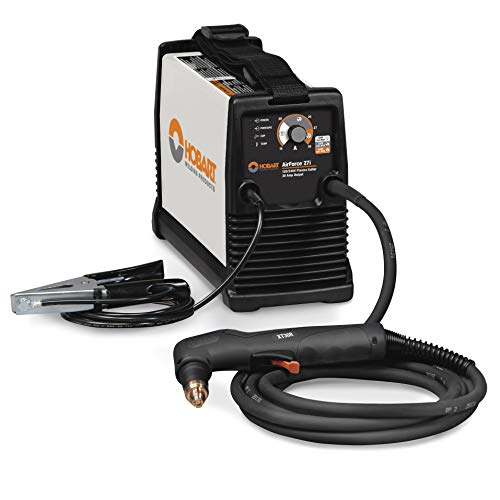


What matters when beveling plate by hand
A handheld plasma cutter can make a weld-prep bevel, but it takes more control than cutting plate straight through. The torch has to travel at a steady angle while maintaining the right standoff and speed. Too slow or too steep, and the cut can leave a ragged edge, excessive kerf, or a bevel that varies along its length. A cutter with enough capacity helps, but it will not compensate for poor torch control or a weak air supply.
For occasional bevels on mild steel around 1/4 inch thick, a 30–40 amp machine may be adequate. For frequent work on 3/8-inch plate or thicker, look for a cutter with more output and a published bevel or maximum-cut rating that matches your actual material. Manufacturers’ “maximum cut” figures usually describe a slow, less-clean cut, not a reliable production rate. Check the rated cut capacity and duty cycle, too.
As an Amazon Associate we earn from qualifying purchases at no extra cost to you.


Features worth paying for
For hand beveling, prioritize consistent output, a torch that fits your hand, and consumables that are easy to source. A machine with a 60% duty cycle at the amperage you expect to use is more useful than one that lists a high maximum amperage but overheats during repeated long cuts. Duty cycle is usually specified over a 10-minute period; 60% means six minutes cutting followed by four minutes cooling at the stated conditions.
Air quality matters. Plasma systems need clean, dry compressed air at the pressure and flow specified by the manufacturer. A small compressor that cannot keep up may cause the arc to sputter, shorten consumable life, or stop the cut. Check the cutter’s inlet requirements and the compressor’s delivered flow at pressure—not just its tank size or advertised displacement. A filter or air dryer can help, but it cannot make an undersized compressor adequate.
For a buyer comparing 40-amp plasma cutters with pilot arc, check whether the machine requires a particular outlet, plug, or air fitting. Pilot arc can help when starting on painted, rusty, or expanded metal, but it is not a substitute for clean material at a bevel edge. A drag shield or guide can improve consistency, though guides may limit access near corners and fixtures.
Which class fits your work?
| Use | Typical output class | Best fit | Main compromise |
|---|---|---|---|
| Light fabrication and occasional bevels | 30–40 amps | Thin plate, shorter cuts, modest shop power | Slower on thicker plate; less reserve for beveling |
| Regular beveling on medium plate | 45–60 amps | More capacity and faster hand cuts | Higher power and air-supply demands |
| Frequent heavy plate work | 60 amps and up | Longer, thicker cuts and production use | Cost, input-power needs, and consumable expense |
These ranges are starting points, not guarantees: cut ratings vary by machine, material, and air conditions. If the work is mostly 1/8-inch sheet with an occasional 1/4-inch bevel, buying a large machine is usually unnecessary. If you routinely bevel thick plate, extra amperage gives more speed and operating margin, but only if your electrical supply and compressor can support it.
Choosing a cutter without overbuying
Look for a manufacturer’s chart showing clean-cut capacity and duty cycle at stated input voltage. Confirm that the torch and consumables are available locally or through a dependable supplier. Generic consumables can cost less, but inconsistent electrodes and nozzles may produce an unstable arc and uneven bevels. For occasional work, a lower-cost machine may be perfectly serviceable if it has clear specifications, replacement parts, and a warranty you can use.
A 45-amp dual-voltage plasma cutter can suit a mixed home-shop workload, but dual voltage does not mean full output on either supply. Read the input-current figures: a 120-volt outlet may limit the machine to a lower amperage, while full output may require 240 volts and a suitably rated circuit. Do not size an extension cord or breaker by guesswork; follow the manual and local electrical requirements.
Be cautious with listings that emphasize an impressive maximum thickness without saying whether it is a severance cut or a clean cut. A severance rating means the machine can part the material, often slowly and with a rough edge. For a bevel that will be welded, the cleaner rating and the ability to maintain a stable arc matter more.
Making a repeatable hand bevel
Mark the bevel line, clamp the plate securely, and remove paint, heavy rust, oil, or scale where the arc will start. Set the torch angle with a simple guide or a consistent hand position; a bevel angle around 30 degrees is a common starting point for a single-bevel preparation, but the required joint geometry depends on plate thickness and the welding procedure. Do not assume that more angle is better: it removes more material and can leave too little land at the root.
Make a short test on scrap of the same thickness. Adjust travel speed and amperage according to the cut chart and the arc’s behavior. A wide, ragged groove often points to moving too slowly or holding too much angle. Incomplete penetration through the plate can mean the machine is underpowered, the air supply is sagging, or travel is too fast. Dross on the underside may indicate the wrong speed, poor air, or worn consumables; changing several variables at once makes diagnosis harder.
Keep the torch at a steady standoff and move along a straight guide when the bevel needs to be uniform. For long plate edges, a powered beveling tool or milling setup is more repeatable than a handheld plasma torch. Plasma is useful when portability, irregular shapes, or lower setup time matter more than a machined finish.
Safety and finish checks
Wear a welding helmet with a shade suitable for the cutter’s amperage, plus safety glasses, gloves, nonflammable clothing, and hearing protection. Follow the machine manual’s shade guidance; do not choose a shade based on comfort alone. Plasma cutting throws hot metal and UV radiation, so clear combustibles from both sides of the plate and keep other people out of the arc’s line of sight. Provide ventilation, especially when cutting coated or painted steel.
After cutting, remove dross and inspect the bevel with a straightedge or angle gauge. Check that the angle and root face are consistent before welding. If the joint calls for a controlled bevel or a specified root opening, verify those dimensions rather than judging the edge by appearance. A cutter can make good hand-prepped edges, but fit-up and cleanup still determine whether the weld starts from a sound joint.
Related guides
More from Amazon
Programs that pair well with the guide above. Offers and eligibility are set by Amazon and may change.
A free business account with business pricing and bulk-buying tools for work, shop or home office.
Create a business accountFree shipping on eligible items, Prime Video and more. Eligible new members can start with a free trial.
Start a Prime free trialAudiobooks and podcasts to listen to on the go. Eligible new members can start with a free trial.
Try Audible freeAd-free music streaming. Eligible new subscribers can start with a free trial.
Try Music Unlimited freeAs an Amazon Associate we earn from qualifying purchases.










Write Your Review
No reviews yet. Be the first to share your experience!