
Key takeaways
- Find the best dye penetrant kit for weld crack detection. We compare five proven systems, explain dwell times, and share tips for clean, clear results.
What's inside
As an Amazon Associate I earn from qualifying purchases. This post may contain affiliate links at no extra cost to you.
As an Amazon Associate we earn from qualifying purchases.
What we cover
Why a Dye Penetrant Kit Belongs in Every Welding Shop
A weld can look perfect and still hide a hairline crack. Surface-breaking flaws such as crater cracks, cold laps, and fine porosity often sit invisible under normal light, yet they are exactly the defects that grow under load, vibration, and thermal cycling. A dye penetrant kit solves that with simple chemistry: clean the surface, let a bright dye soak into any opening, wipe it back, then let a developer draw the trapped dye out so the flaw shows as a bold line you cannot miss.
Choosing the best dye penetrant kit means matching the system to the job. Visible red dye kits need nothing more than good light and patience, which suits shop benches and field repairs. Fluorescent systems ask for a UV lamp and a darker space, but reward you with finer sensitivity on critical parts. Below, our take on five proven options covers complete boxed kits and the individual cans experienced inspectors build sets around.
Disclosure: This post contains affiliate links. If you buy through links on this page, we may earn a commission at no extra cost to you.
Quick Picks
- Best complete kit: Magnaflux Spotcheck SK-816 — eight cans, a carry case, and the system inspectors reach for first.
- Best penetrant can: Dynaflux PHF315-16 Crack Check — vivid red dye from a long-running three-step system.
- Best grab-and-go can: BEST WELDS 905-RW200 — a single solvent-removable penetrant sized for quick weld checks.
- Best for fine flaws: Magnaflux Zyglo Fluorescent Penetrant — UV-based inspection for critical work.
- Best simple three-can set: CRC Non-Destructive Test Kit — cleaner, penetrant, and developer in one tidy package.
1. Magnaflux Spotcheck SK-816 General Purpose Kit

The SK-816 is the benchmark visible dye system, and it earns that spot by removing every excuse to skip an inspection. The plastic carrying case holds eight aerosol cans: four of SKC-S cleaner and remover, two of SKL-SP2 red penetrant, and two of SKD-S2 developer.
In practical notes from fabrication work, the SKL-SP2 dye lays down evenly and wipes back cleanly with a solvent-dampened cloth. The SKD-S2 developer dries to a bright, even white film, so red indications stand out sharply on steel, stainless, and aluminum alike. Because the system is solvent removable, it works anywhere — no water supply, no emulsion tank, no darkroom.
Specs
- Brand: Magnaflux (Spotcheck line)
- Part number: 01-5920-48 (kit SK-816)
- Contents: 4 × SKC-S cleaner/remover, 2 × SKL-SP2 penetrant, 2 × SKD-S2 developer
- Penetrant type: Type 2 visible red dye, solvent removable (Methods B, C, and D)
- Developer: SKD-S2 non-aqueous wet developer, bright white, low sulfur and low halogen
- Compliance: AMS 2644, ASTM E1417, ISO 3452, ASME Boiler and Pressure Vessel Code
- Case: Molded plastic carrying case
- Typical dwell time: 10 to 30 minutes
- ASIN: B009I2JBNI
Pros:
– Complete system in one case; nothing else to buy before the first test
– Cleaner-heavy can count matches how shops actually consume supplies
– Wide specification compliance suits code and customer work
Cons:
– Eight cans make the case bulky for tight tool bags
– Aerosol shipping rules can slow down reordering
2. Dynaflux PHF315-16 Crack Check Red Dye Penetrant

Dynaflux built its Crack Check line around one idea: a three-step visible dye method any welder can run correctly the first time. The PHF315-16 is the penetrant at the heart of that system, also sold within the DF315KIT-S four-can standard kit alongside matching cleaner and developer.
The dye itself is a bold, free-flowing red that creeps into tight toe cracks and pinhole porosity during the dwell period. The standard grade is non-flammable and free from chlorinated solvents, which makes it friendlier around stainless work and enclosed spaces, while a nuclear grade version exists for plants with stricter chemistry limits. Our take: a dependable workhorse penetrant, especially when paired with its own DNF315 developer.
Specs
- Brand: Dynaflux (Crack Check line)
- Part number: PHF315-16
- Product type: Visible red dye penetrant, aerosol can
- Method: Solvent removable, Methods B and C
- System: Three-step process with Crack Check cleaner and developer cans
- Grades: Standard non-flammable grade; nuclear grade also available
- Chemistry: Non-flammable grade free from chlorinated solvents
- Works on: Welds, castings, forgings, and alloys
- ASIN: B00GL9PO28
Pros:
– Strong, high-contrast red color that reads well in ordinary shop light
– Non-flammable standard grade suits mixed-material shops
– Matches the DF315KIT-S kit cans for easy restocking
Cons:
– Sold as a single can here, so cleaner and developer come separately
– Flammable nuclear grade demands careful storage and handling
3. BEST WELDS 905-RW200 Solvent Removable Penetrant
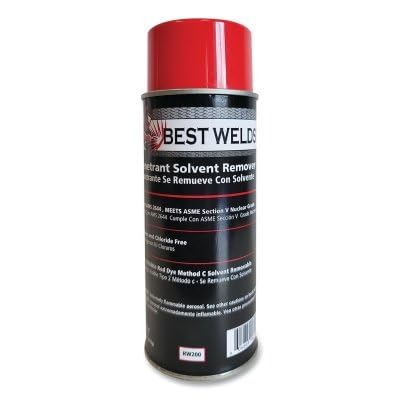
Not every check justifies dragging out a full kit. The BEST WELDS 905-RW200 is a single 12.5 oz can of solvent-removable penetrant aimed at quick weld verification — a pass over a repaired joint before it leaves the bench, or a spot check on a suspect seam during maintenance rounds. The fine spray lays the dye down evenly without flooding the joint, keeping the later wipe-back step fast and tidy.
Practical notes point to quick cleanup and sharp indications on carbon steel and stainless. It will not replace a documented three-can procedure on code work, but as a screening tool it earns its shelf space.
Specs:
– Brand: BEST WELDS
– Part number: 905-RW200
– Product type: Solvent-removable visible penetrant, aerosol can
– Can size: 12.5 oz (370 ml)
– Formulation: Solvent based; excess removed with solvent on a cloth
– Intended use: Weld inspection and general crack checks
– Application: Fine, even spray pattern for controlled coverage
– ASIN: B0CB6WZSJL
Pros:
– Single can format is easy to keep in a truck box or maintenance cart
– Even spray and quick solvent cleanup keep small checks fast
– Generous can size covers many spot inspections
Cons:
– Needs a separate developer to complete the inspection process
– Solvent fumes call for solid ventilation in enclosed areas
– Better suited to screening than to heavy-duty documented testing
4. Magnaflux Zyglo Fluorescent Penetrant

When the part is critical — a lifting lug, a pressure boundary, a rotating component — visible dye may not be sensitive enough. Zyglo is Magnaflux’s fluorescent penetrant family, and this aerosol brings that sensitivity to the bench without a full dip-tank line. Under a UV-A lamp in a darkened area, indications glow bright yellow-green, revealing finer, tighter cracks than red dye typically shows.
The trade-off is discipline. Fluorescent inspection needs controlled lighting, a suitable UV source, and careful background management so stray dye does not mask real findings. For shops stepping up from visible dye on high-value work, though, it is the natural next rung, with a sharper eye for hairline fatigue cracks at weld toes.
Specs
- Brand: Magnaflux (Zyglo line)
- Product type: Fluorescent dye penetrant, aerosol
- Penetrant type: Type 1 fluorescent
- Inspection light: UV-A lamp required (sold separately)
- Viewing conditions: Darkened inspection area for best contrast
- Method: Use with matched Zyglo cleaner/remover and developer
- Best for: Fine, tight surface cracks on critical parts
- ASIN: B00FG74TPE
Pros:
– Higher sensitivity than visible red dye systems
– Glowing indications are easy to spot and photograph under UV light
– Trusted line for aerospace-style and critical component work
Cons:
– Requires a UV lamp and a darkened space, adding setup gear
– Technique-sensitive; sloppy removal raises background and hides flaws
5. CRC Non-Destructive Test Kit
CRC packages the classic three steps — cleaner, penetrant, and developer — into one straightforward kit aimed at smaller shops and field crews. There is no case full of spares and no fluorescent gear to manage: clean the joint, spray the red dye, give it time, wipe back, mist on the developer, and read the result.
Performance sits comfortably in general-purpose territory. On clean, dry steel it flags cold laps, surface porosity, and toe cracks reliably, and a new technician can run a sound test after one supervised round. Treat it as a screening and verification tool for everyday fabrication rather than final certification on critical joints, and it does its job well.
Specs
- Brand: CRC
- Product type: Three-part non-destructive test kit
- Contents: Cleaner, visible red dye penetrant, and developer aerosols
- Penetrant type: Type 2 visible dye, solvent removable
- Process: Clean, dwell, wipe back, develop, inspect in normal light
- Best for: Small shops, maintenance teams, and field screening
- ASIN: B0FJ7XV9WV
Pros:
– All three steps in one package; easy to learn and teach
– No UV lamp or special lighting needed
– Compact kit suits service trucks and small benches
Cons:
– Fewer cans than full-size kits, so busy shops restock sooner
– General-purpose sensitivity, not aimed at critical certification work
How to Choose the Best Dye Penetrant Kit
Start with the inspection type. Visible red dye (Type 2) works in normal light and suits most weld checks in fabrication and repair. Fluorescent penetrant (Type 1) needs a UV lamp and darkness but finds tighter flaws, so save it for critical parts where a missed crack carries real consequences.
Next, look at what the kit contains. A balanced set carries more cleaner than penetrant or developer, because cleaner is consumed at pre-cleaning, removal, and final cleanup. Check the removal method too: solvent-removable systems (Method C) are the most portable, while water-washable penetrants suit benches with water access.
Chemistry limits matter on sensitive alloys. For stainless steel, nickel alloys, and nuclear or aerospace work, confirm low sulfur and low halogen content and look for AMS 2644 or ASTM E1417 compliance on the label. Finally, respect dwell time: most visible dye systems want 10 to 30 minutes of contact before removal, and rushing that step is the most common reason a test misses a real crack. Store cans cool and out of direct sun, and wear gloves and eye protection — these are solvent products, and they behave like it.
Frequently Asked Questions
How long should penetrant dwell before I wipe it off?
For most visible dye systems, 10 to 30 minutes is the working window. Tight cracks and cooler parts benefit from the longer end; follow the dwell range printed on the can for the product in hand.
Can dye penetrant testing find cracks below the surface?
No. Penetrant testing only reveals flaws that break the surface. Subsurface defects call for other methods, such as ultrasonic or radiographic testing, so treat a clean result as proof of a sound surface, not a sound interior.
Does penetrant testing work on aluminum and stainless steel?
Yes. Because it relies on capillary action rather than magnetism, it works on ferrous and non-ferrous metals alike, plus non-porous ceramics and some plastics — which makes it the go-to surface method where magnetic particle testing cannot be used.
What ruins a penetrant test most often?
Poor cleaning. Paint, oil, slag, and wire-brush smearing can seal a crack shut before the dye ever reaches it. Clean thoroughly, let the surface dry fully, and never spray remover directly on the part — apply it to the cloth instead.
Conclusion
For most welding shops, the Magnaflux SK-816 remains the safest single purchase: a complete, compliant, eight-can system for bench work and field verification alike. The Dynaflux Crack Check penetrant and the BEST WELDS can cover restocks and quick screening, the CRC kit gives small crews an easy entry point, and Zyglo stands ready when the work demands fluorescent sensitivity. Whichever best dye penetrant kit you choose, the method rewards patience — clean well, dwell fully, read the developer film carefully, and the cracks will tell you where they are.
Related guides
More from Amazon
Programs that pair well with the guide above. Offers and eligibility are set by Amazon and may change.
A free business account with business pricing and bulk-buying tools for work, shop or home office.
Create a business accountFree shipping on eligible items, Prime Video and more. Eligible new members can start with a free trial.
Start a Prime free trialAudiobooks and podcasts to listen to on the go. Eligible new members can start with a free trial.
Try Audible freeAd-free music streaming. Eligible new subscribers can start with a free trial.
Try Music Unlimited freeAs an Amazon Associate we earn from qualifying purchases.






Write Your Review
No reviews yet. Be the first to share your experience!