
Key takeaways
- Compare the best fence insulators for T-posts, wood posts and corners, from high-strain hardware to screw-in rings, tape stand-offs and safety caps.
What's inside
As an Amazon Associate I earn from qualifying purchases. This post may contain affiliate links at no extra cost to you.
As an Amazon Associate we earn from qualifying purchases.
An electric fence is only as reliable as the small parts holding the hot wire off the posts. When an insulator cracks or lets a wet wood post soak up the pulse, the whole line weakens and livestock soon learn the boundary is negotiable. Good insulators keep the conductor clear of posts, stand up to sun and frost, and hold wire, rope, or tape at a steady height.
This guide compares five picks for the jobs a workshop, barn, or smallholding faces: a strain insulator for corners, a long-arm stand-off for adding a hot wire to an existing fence, a bulk screw-in ring set for wood-post runs, a safety cap that also insulates the top wire, and a compact corner set for polywire turns. Each pick explains where it fits and where it does not.
Disclosure: This post contains affiliate links. If you buy through links on this page, we may earn a commission at no extra cost to you.
What we cover
Quick picks
- Best for corners and ends: Gallagher High Strain Insulator, 25-Pack — steel frame and UV-stabilized polymer for anchor points.
- Best stand-off for tape and rope: Tandefio 25-Piece Stand-Off Screw-In Insulator Set — long arm holds tape, rope, and wire clear of wood posts.
- Best bulk set for wood posts: Ranch Choice 100-Piece Screw-In Ring Insulator Set — self-tapping rings plus a socket tool.
- Best for T-post tops: DoubleFill 24-Piece T-Post Safety Cap and Insulator Set — caps the post top and insulates the top wire.
- Best compact corner set: JBT 12-Piece Corner Post Insulator Set — small pack for polywire turns.
1. Gallagher High Strain Insulator, 25-Pack
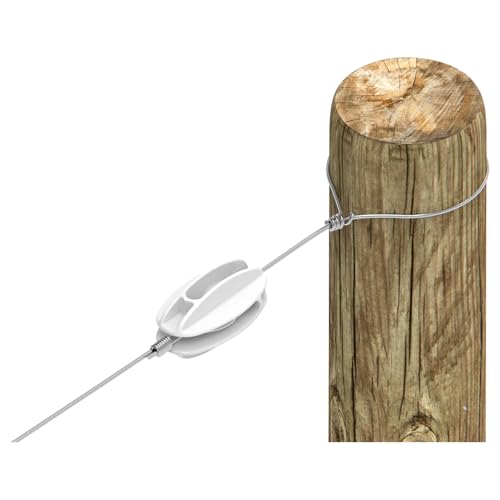
Corners, ends, and gate posts carry the pull of the whole fence, and that is where a light line-post clip gives up. The Gallagher High Strain Insulator is built for those anchor points on permanent, high-tensile fencing. A galvanized steel frame carries the load while the UV-stabilized polymer body keeps the wire electrically separate from the post.
In our take, this is the pick where a failure would slacken an entire run: end assemblies, corner turns, and dips. It works with wood and steel post configurations using standard mounting hardware, supplied separately, so have bolts or lag fixings on hand. For line posts it is more insulator than you need — save it for strain points.
Specs
- Brand: Gallagher
- Model / part number: G67814
- Pack size: 25 high strain insulators
- Frame: galvanized steel, built for high-tensile wire
- Body: UV-stabilized polymer
- Package weight: about 2.3 lb; dimensions 10.2 x 7.1 x 3.5 in
- ASIN: B077RZ13FW
Pros:
– Steel frame takes corner loads that crack plain plastic fittings
– Polymer body resists sun damage on exposed anchor posts
– Suited to permanent high-tensile builds, not just temporary lines
Cons:
– Mounting hardware is not included
– Heavier and bulkier than a line-post job requires
2. Tandefio 25-Piece Stand-Off Screw-In Insulator Set

Adding one hot wire to an existing fence is a common workshop job, and a stand-off insulator is the tidy way to do it. This Tandefio set uses a long arm that screws into a wood post and holds the conductor well away from the timber and any existing wire behind it. That clearance gives the pulse a clean air gap even when the wood is damp.
The head accepts tape, rope, and wire, suiting mixed lines where a visible tape strand runs above a wire strand. Our practical notes: pilot holes help in dry hardwood, and an arm this long should go into sound timber, not a post end or split rail, where it can lever loose.
Specs
- Brand: Tandefio
- Model: CLO-Tandefio-902
- Pack size: 25 insulators
- Materials: PP plastic head with galvanized steel screw
- Overall length: about 8.9 in; screw length about 6.6 in
- Conductor fit: tape, rope, and electric wire
- Post fit: wood posts and stakes, screw-in by hand
- ASIN: B0CTT3PDR1
Pros:
– Long stand-off keeps a hot wire clear of an existing fence
– One head shape handles tape, rope, and wire
– Screw-in fitting needs no separate nails or staples
Cons:
– Wood posts only; no T-post fitting in this set
– Long arm can lever in soft or split timber if over-tightened
3. Ranch Choice 100-Piece Screw-In Ring Insulator Set

Long wood-post runs eat insulators, and fitting them one hammer blow at a time is slow work. This Ranch Choice set leans into volume and speed: one hundred black ring insulators with self-tapping threads, plus a socket tool for an electric drill so each ring drives home in seconds. The ring shape lets you slip wire and polywire into place after the rings are set.
Our take: this is the practical pick for pasture subdivision and long boundaries where post count is high and the conductor is wire or polywire, not wide tape. These are line-post fittings, not corner solutions — keep strain on proper corner hardware. Check a few rings before a big day out; with bulk sets, consistency is the thing to confirm early.
Specs
- Brand: Ranch Choice
- Model: Insulator-B100
- Pack size: 100 insulators, plus 1 insulator socket tool
- Style: screw-in ring insulator for wood posts, self-tapping thread
- Color: black
- Conductor fit: steel wire, aluminum wire, and polywire
- Package weight: about 2.5 lb; dimensions 10.7 x 10.4 x 2.4 in
- ASIN: B0D9NXFLMY
Pros:
– Bulk count suits long runs and leaves spares for repairs
– Drill driving is much faster than hand fitting
– Ring entry lets wire be added without unthreading a whole line
Cons:
– Ring opening suits wire and polywire, not wide tape
– Line-post duty only; corners still need strain hardware
4. DoubleFill 24-Piece T-Post Safety Cap and Insulator Set

The top of a studded T-post is a sharp edge waiting for a horse, a cow, or a gloved hand to find it. This DoubleFill set combines two jobs in one molding: a safety cap covering the post top, and an insulator holding the top wire clear of the steel. In our take, caps are worth fitting while the fence is being built, not after an injury.
You get twenty-four black pieces, enough for a modest paddock line plus spares. Because the cap also carries the top strand, that strand’s height is fixed by the molding, so plan spacing around it and use snap-on insulators below. Confirm fit on your post weight first — T-post profiles vary, and a cap that rocks helps nobody.
Specs
- Brand: DoubleFill
- Pack size: 24 insulators with T-post safety caps
- Style: safety topper cap with built-in wire-holding insulator
- Color: black
- Package weight: about 3.23 lb; dimensions 12.32 x 9.8 x 5.55 in
- ASIN: B0D9QLB1LP
Pros:
– Covers the sharp T-post top while insulating the top wire
– One piece to fit, no separate cap and clip to track
– Pack size suits a paddock line with spares left over
Cons:
– Top strand height is fixed by the cap molding
– Post profile fit should be checked before a bulk fit-out
5. JBT 12-Piece Corner Post Insulator Set

Not every fence needs corner hardware by the sack. For a small paddock, a garden line, or a repair kit in the truck, this twelve-piece JBT set covers the turns and terminations of a polywire fence in one small pack. The insulators are shaped for corner duty, where the fitting sees sideways pull instead of a straight pass-through load.
In our take, the sensible use is polywire and light wire corners on modest fences: chicken runs, allotment plots, grazing cells, and short-run ends. For a long, high-tensile cattle perimeter, step up to the steel-framed strain insulator at the top of this guide.
Specs
- Brand: JBT
- Model: JBT-Jyz-suozi-12pcs
- Pack size: 12 corner post insulators
- Color: black
- Use: corner posts for polywire electric fencing
- Package weight: about 7 oz; dimensions 6.89 x 5 x 1.42 in
- ASIN: B096XF6MFN
Pros:
– Small pack matches small fences and repair kits
– Corner shape handles direction changes better than a line clip
– Light, compact pack is easy to keep in a vehicle or barn box
Cons:
– Twelve pieces will not stretch to a large multi-corner layout
– Aimed at polywire duty rather than heavy high-tensile corners
How to choose the right fence insulators
Match the insulator to the post first. Wood posts take screw-in, nail-on, or pinlock fittings that bite into timber. Steel T-posts take snap-on, pinlock, or cap fittings shaped to the studded profile. Round posts need screw-tight or clamp styles. A loose fitting will move, wear, and eventually let the wire touch steel or wet wood.
Then match it to the conductor. Wire and polywire sit happily in rings, clips, and pinlocks. Polyrope needs a wider, smoother seat so strands do not fray. Polytape needs a flat holder that stops twisting; forcing tape into a wire ring causes early failure. High-tensile wire adds load too, so corners need strain hardware, not line clips.
Separate line duty from corner duty. Line insulators hold a wire up and keep it clear. Corner, end, and gate insulators carry the sideways pull of the whole run. Using line fittings at corners is the most common insulator mistake. Build corners with strain hardware, then fill the straights with lighter fittings.
Think about sun, water, and clearance. UV-stabilized plastics last far longer in open sun than plain, shiny plastic, which turns brittle. A longer stand-off helps where animals lean on a fence, where an offset wire protects an older fence, or where wet vegetation brushes the line. Keep spares on the shelf so one cracked insulator never leaves a line down for a week.
Count before you order. Work out posts per run and strands per post, add corners and gates, then add a margin for spares. Mixing pack sizes by job beats buying one style in bulk and forcing it into every position.
Frequently asked questions
Can I use the same insulators on wood posts and T-posts?
Only if the fitting is made for both, such as a pinlock design that snaps to a T-post and nails to timber. Most are post-specific: screw-in rings need wood to bite into, and snap-on clips need T-post studs.
How many insulators do I need for a fence?
Count one insulator per strand per post, then add corner and end hardware for every turn, gate, and termination. Add a small spare stock so a cracked fitting can be swapped the same day.
Why does my fence lose strength even though the energizer is working?
The usual culprit is leakage at the posts: a cracked insulator, a wire touching wet wood, or tape twisted against a steel post can drain pulses along the line. Walk the fence and check damaged or slipped insulators first, especially at corners and stand-offs. Replacing a handful of tired insulators often restores a line that seemed to need a new energizer.
Are plastic insulators strong enough for high-tensile wire?
On line posts, a good UV-stabilized plastic insulator handles high-tensile wire well, because the load passes mostly straight through. At corners and ends, choose strain hardware with a steel frame or wrap-around design, since those points carry the full pull of the run.
Conclusion
The best fence insulators are matched to their post, conductor, and position on the line. Use the Gallagher pack where corners carry real pull, the Tandefio stand-offs where a hot wire needs clearance, and the Ranch Choice rings along long wood-post runs. Cap T-post tops with DoubleFill where animals or people work close to the line, and keep the JBT set for polywire turns and repairs. Buy by job, keep spares in the workshop, and your fence will hold its pulse with far less weekend repair work.
Related guides
More from Amazon
Programs that pair well with the guide above. Offers and eligibility are set by Amazon and may change.
A free business account with business pricing and bulk-buying tools for work, shop or home office.
Create a business accountFree shipping on eligible items, Prime Video and more. Eligible new members can start with a free trial.
Start a Prime free trialAudiobooks and podcasts to listen to on the go. Eligible new members can start with a free trial.
Try Audible freeAd-free music streaming. Eligible new subscribers can start with a free trial.
Try Music Unlimited freeAs an Amazon Associate we earn from qualifying purchases.
Write Your Review
No reviews yet. Be the first to share your experience!