What's inside
As an Amazon Associate I earn from qualifying purchases. This post may contain affiliate links at no extra cost to you.
The short answer: the best spool gun is the one that your welder can actually drive, that suits the wire you plan to feed, and that feels balanced in your hand after a long bead. A spool gun puts a small wire spool and a motor right at the torch, so soft aluminum wire only has to travel a few inches instead of being pushed through a long liner where it tends to kink and bird-nest. For most hobbyists, that means a gun made for the exact port or plug on their machine, or a machine built with a spool gun connection in mind. Matching the gun to the welder matters far more than chasing a feature list.
This guide does not rank products or quote performance figures. It explains how spool guns work, which types exist, what to check on your machine before ordering, how to set up and maintain one, and where beginners go wrong. Always confirm current specifications and the manufacturer’s instructions for both the gun and the welder before you buy or connect anything.
What we cover
Our Top Picks
Contents
- What a spool gun does and why aluminum needs one
- Spool gun types compared
- Compatibility: what to check on your welder
- Wire, gas and spool size
- Setup and first-bead tips
- Buyer checklist
- Mistakes to avoid
- Safety: electricity, gas, fumes and hot metal
- Frequently asked questions
- Bottom line
What a spool gun does and why aluminum needs one
A conventional MIG setup keeps the wire spool inside the welder and pushes the wire down a cable and liner to the contact tip. Steel wire is stiff enough to handle that trip. Aluminum wire is soft, and a long push through a liner can make it buckle, snag or tangle behind the drive rolls. The result is an erratic arc and a lot of frustration.
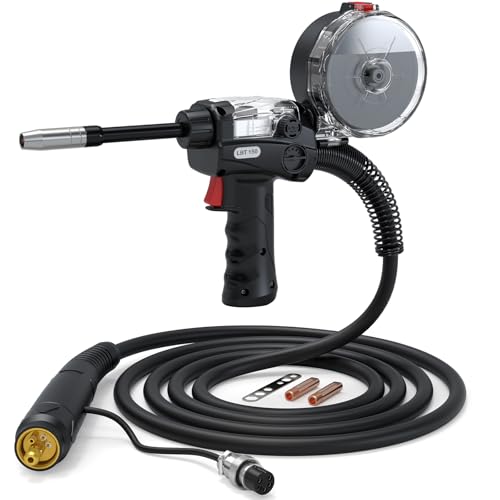
A spool gun moves the problem. The spool sits on or beside the gun, and a small motor in the handle feeds the wire only a short distance. The machine supplies power and shielding gas, but wire feeding is handled at the torch. That shorter path is the whole point.
Where spool guns are useful
People usually reach for one when they want to weld aluminum sheet, tubing or castings for boat repairs, trailer work, custom fabrication or garage projects. Some also use a spool gun to feed other soft or specialty wires, or simply to avoid swapping the main wire spool for occasional jobs.
Spool gun types compared
The table below summarizes the common categories. Each row links to a section that explains who it suits. No row is a recommendation of any specific product.
| Type | Typically suits | Main trade-off |
|---|---|---|
| Gun for a machine’s spool gun port | Owners whose welder already has a dedicated connection | Only works with the models it was designed for |
| Spool-gun-ready multiprocess welder | Buyers choosing a machine and gun together | You commit to that ecosystem |
| Adapter or universal-style gun | Owners of welders without a native port | Needs careful wiring and control checks |
| Push-pull gun | Frequent or long-run aluminum work | More complex equipment and usually a different machine |
| Standard gun with a liner | Occasional, light aluminum work with the right setup | More feeding problems with soft wire |
Gun made for a machine’s spool gun port
Many MIG welders include a connector or panel input meant for a matching spool gun. When the welder and gun are designed as a pair, the control wiring, trigger signal and power arrangement are already worked out. This is usually the simplest route for a beginner, because there is little to improvise.
The catch is exact compatibility. Connectors that look similar are not always interchangeable, and a gun from one product line may not work with another. Check the welder’s manual for the gun it lists, and match the part descriptions, not just the shape of the plug.
Spool-gun-ready multiprocess welders
Some multiprocess machines are sold with a spool gun, or with a clearly documented spool gun option. If you do not own a welder yet and know you want aluminum capability, this can be tidier than assembling a system later. You get one set of instructions, one support path and a gun that was designed for the machine.
Weigh the whole package, not just the gun. Look at the processes the machine supports, the input power it needs from your outlet or circuit, and whether the included accessories fit your plans. The welder has to suit your electrical supply before any of the rest matters.
Adapter or universal-style spool guns
Some guns are marketed as working with a range of welders through an adapter or by connecting into the existing gun connection. They can be a budget-friendly way to add capability to a machine without a native port, but they ask more of the buyer. You need to confirm how the trigger, motor control and gas connection are handled and whether your welder’s controls support the arrangement.
If the listing is vague about which machines are supported, treat that as a warning. Ask the seller, read the instructions and confirm with the welder manufacturer’s documentation where possible. Do not modify wiring in a welder unless you are qualified, because welders contain high-energy circuits.
Push-pull guns
A push-pull gun uses a motor in the gun along with a drive in the machine, so wire is pulled and pushed together. It handles longer cable runs more gracefully than a basic liner setup and can suit people who weld aluminum often. These systems are usually part of a more serious machine and a bigger budget.
For a home workshop, a push-pull gun can be more than you need. It makes sense if aluminum is a regular part of the work and you want a longer reach without moving the welder constantly.
Standard MIG gun with a liner
You can feed aluminum through a standard gun if you set it up with the right liner, drive rolls and tip, and keep the cable short and straight. For short, occasional jobs this can work. Expect to be more careful, because any bend in the cable raises the odds of feeding trouble.
If you find yourself fighting wire jams every time, a dedicated gun is the logical next step. Browse current spool guns for MIG welders and filter by your welder’s connection type before you compare anything else.
Compatibility: what to check on your welder
This is the step that decides whether a purchase succeeds. Spool guns are not universal accessories, and a mismatch can range from a gun that will not run to equipment that is damaged.
Read the manual first
Open your welder’s manual and look for a section on spool guns or optional accessories. It may name the supported gun and describe how it connects. If the manual says nothing, contact the manufacturer before you buy.
Connector and control type
Check the shape and pin layout of the connection, how the trigger signal is sent, and whether the welder has a switch or setting to select the spool gun. Some machines require you to change an internal or panel setting so the machine feeds from the gun instead of from its own spool.
Power, voltage and duty considerations
Aluminum often calls for more heat input than steel of a similar thickness. Look at what your welder’s rating plate and manual say about its output and the supply it needs. Your breaker, circuit and extension cord setup should be suitable for the welder in the first place. If you are unsure, an electrician can advise on the circuit.
Gas connection
Aluminum MIG welding uses an inert shielding gas, not the mixes common for steel. Check the regulator, hose and fittings you already own, and confirm they suit the gas the wire maker recommends. Gas arrangements differ between machines, so follow the instructions for yours.
Wire, gas and spool size
The gun is only one part of the system. The wire you feed has to match the drive rolls and contact tip, and the spool has to fit the gun’s mount.
Wire type and diameter
Aluminum wire comes in different alloys and diameters, and each project may call for a specific one. The base metal and the wire’s recommended use should guide the choice. Check the gun’s listing for which wire diameters it supports and buy the matching tips and rolls.
Drive rolls and tips
Soft wire is easily crushed by the wrong drive roll or grooves meant for steel. Use rolls designed for aluminum and a contact tip sized for the wire. An oversized tip can cause erratic arcs, while a worn one may feed poorly. Keep a few MIG contact tips and nozzles in the correct size on hand, and check that spare rolls and a replacement trigger are available before you commit. Look for a spool of aluminum MIG wire that matches your gun’s stated wire size and spool dimensions.
Shielding gas
Use the shielding gas the wire maker and welder instructions recommend. Do not assume the gas left over from steel work is appropriate. Cylinders, regulators and flow meters should be rated for the gas in use, secured upright and checked for leaks.
Setup and first-bead tips
Every gun has its own assembly steps, so treat these as general principles and follow the included instructions.
Before you weld
- Unplug the welder and turn off the gas before you connect or swap any gun or accessory.
- Load the spool so it unwinds in the direction shown in the instructions, and let the wire pass cleanly through the guide, rolls and tip.
- Set drive tension firmly enough to feed but not so tight that it flattens the wire.
- Select the spool gun mode on the machine if it has one.
Prep the metal
Aluminum forms an oxide layer that melts at a different temperature from the metal underneath, so cleaning matters. Remove oil, dirt and the surface oxide with tools used only for aluminum, so you do not carry steel particles onto the work. Weld soon after cleaning.
Practice on scrap
Use offcuts of the same alloy and thickness, start from the settings in your manual or the wire maker’s chart, and adjust in small steps.
Buyer checklist
Run through these points before you click buy. Each one is something you can verify from the listing, the manual or the manufacturer.
- You have confirmed the gun is listed as compatible with your exact welder model, not just the same brand.
- You know the connector type, control method and any settings your machine needs.
- Your welder’s output and your electrical supply suit aluminum work at the thickness you plan to weld.
- You have the right shielding gas, regulator and fittings for aluminum.
- The listing names the supported wire diameter and spool size, and you have matching rolls and tips.
- You can reach spare parts, such as tips, nozzles and drive rolls.
- The weight, cable length and handle layout suit your hands and your usual positions.
- You have read the return policy in case the gun does not match your machine.
- You have appropriate protective gear and ventilation arranged.
Mistakes to avoid
Assuming all spool guns fit all welders
This is the most common and most expensive error. Similar plugs can carry different signals. Confirm compatibility in writing from the manual or the manufacturer.
Using steel drive rolls and tips
Rolls and tips for steel wire can crush or snag aluminum. Swap in parts designed for soft wire and keep the wire path clean.
Skipping cleaning
Oxide, oil and contamination cause porous, ugly welds. Clean the metal with dedicated tools immediately before welding.
Running the wrong gas
Gas that works for steel is not automatically suitable for aluminum. Confirm what the wire and machine instructions call for.
Over-tightening drive tension
Too much pressure deforms soft wire and makes feeding worse. Increase tension gradually until the wire feeds reliably, then stop.
Ignoring the circuit
Adding a spool gun does not change what your outlet can deliver. Use a supply that suits the welder as specified in its documentation, and do not rely on a worn or undersized extension cord.
Safety: electricity, gas, fumes and hot metal
Welding aluminum carries the same core hazards as other arc welding, and some are easy to underestimate. This section is general guidance, not a replacement for the manuals or for training.
Electrical
- Disconnect power before opening the machine, changing the gun or inspecting connections.
- Do not modify welder wiring or bypass any interlock unless you are qualified to do so.
- Inspect cables and connectors for damage and replace worn parts.
- Keep the work area dry and do not weld while standing in water or on damp ground.
Shielding gas
- Secure cylinders upright and protect valves from impact.
- Use a regulator designed for the gas and check connections for leaks.
- Close the cylinder valve when you finish, and make sure the space has fresh air because escaping gas can displace the air you breathe.
Fumes and ventilation
Welding produces fumes and gases that can harm your lungs. Aluminum welding also produces intense light and fine fume. Use effective local fume extraction and good general ventilation, and consider respiratory protection suited to the work. Check current guidance from your local safety authority or the equipment manufacturer. Never weld in a closed, unventilated space, and take extra care with cleaning chemicals or coated metals, which can release additional hazardous fumes.
Light, heat and sparks
Wear a proper welding helmet, flame-resistant clothing, gloves and sturdy footwear. Aluminum arcs are bright, and exposed skin can be burned by radiation. Remove flammable materials from the area and keep a suitable extinguisher nearby. Hot metal looks the same as cold metal, so mark or move finished work.
Frequently asked questions
What is a spool gun used for?
A spool gun mounts a small wire spool at the torch and feeds wire with a motor in the handle. It is mainly used for soft wire such as aluminum, which tends to jam when pushed through a long cable.
Can I use a spool gun on any MIG welder?
No. Compatibility depends on the connector, control signals and machine design. Check the welder’s manual and the gun’s listing, and ask the manufacturer if anything is unclear.
Do I need a special gas for aluminum?
Aluminum MIG welding generally uses an inert shielding gas rather than the mixes common for steel. Confirm the recommendation from the wire maker and the welder manual before you buy a cylinder.
Is a spool gun better than a push-pull gun?
Neither is better in every case. A spool gun is often simpler and more affordable for hobby use, while a push-pull system suits frequent work and longer reach. Your machine and workload decide.
Can I weld aluminum with a standard MIG gun?
It is possible with the right liner, rolls, tip and a short, straight cable, especially for light, occasional work. Feeding problems are more likely than with a dedicated gun.
Why does my aluminum wire keep tangling?
Common causes include the wrong drive rolls, too much tension, a worn or oversized tip, a kinked cable or a dirty wire path. Work through those causes one at a time using your manual.
How should I clean aluminum before welding?
Remove oil and dirt, then remove the surface oxide with tools reserved for aluminum, and weld soon after. Follow the recommendations from the wire maker for your alloy.
Is welding aluminum safe indoors?
It can be done indoors only with proper ventilation, fume extraction, fire precautions and suitable personal protection. If you cannot control fumes and fire risks, do not weld there.
Bottom line
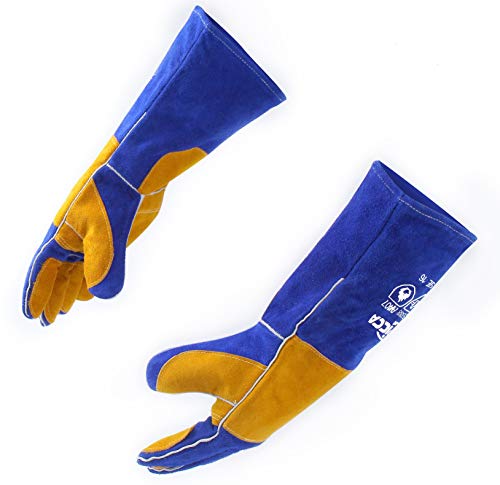
Pick the spool gun that your welder is documented to support, match the wire, rolls, tips and gas to the gun, and favor comfort and available spare parts over extra features. Check current specifications and instructions before you order, and keep ventilation and protective gear at the center of your setup. A good pair of TIG/MIG welding gloves is a sensible companion purchase.
Disclosure: As an Amazon Associate, we earn from qualifying purchases. Links marked as sponsored may earn us a commission at no extra cost to you.
