What's inside
As an Amazon Associate I earn from qualifying purchases. This post may contain affiliate links at no extra cost to you.
The best full face welding helmet for most fabricators is the Lincoln Electric Viking 3350 for its wide optical view and balanced everyday protection; choose the 3M Speedglas G5-01 when powered-air respirator compatibility matters more than low weight, or a Miller Digital Infinity when a large, easy-to-read control display is your priority.
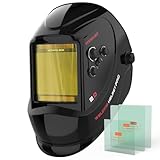
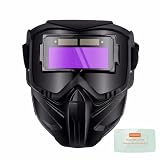
A full face welding helmet should do more than darken the arc. It needs to cover the forehead, cheeks, chin, and sides of the face, while leaving enough room for safety glasses, a respirator, and hearing protection. The right choice depends on how much coverage you need, which welding processes you use, and whether the helmet must work with a separate respiratory system.
As an Amazon Associate we earn from qualifying purchases at no extra cost to you.


What we cover
Full-face welding helmet comparison
| Helmet | Lens shade range | Viewing area | Approx. weight | Respirator and hearing-protection compatibility | Best suited to |
|---|---|---|---|---|---|
| Lincoln Electric Viking 3350 | Shade 5–13, with light-state shade 3 | About 3.74 × 1.78 in | About 1.4 lb / 635 g | Fits many half-mask respirators and earmuffs, but verify clearance; not a powered-air system by itself | Frequent MIG, TIG, and stick welding |
| Miller Digital Infinity | Shade 5–13, with light-state shade 3 | About 3.74 × 2.62 in | About 1.6 lb / 725 g | Good internal room for glasses and compact respirators; hearing protection must be checked for headband interference | Users who want a very large viewing window and simple digital controls |
| 3M Speedglas G5-01 | Typically shade 5, 8–13 depending on configuration | About 3.66 × 1.68 in | About 1.4–1.6 lb / 635–725 g before some accessories | Designed for compatible 3M Speedglas respiratory systems, including Adflo configurations; accepts hearing-protection options in the system | Long shifts, grinding, and work requiring respiratory protection |
| ESAB Sentinel A60 | Shade 5–13, with light-state shade 3 | About 3.86 × 2.44 in | About 1.4 lb / 635 g | Usually accommodates glasses and some respirators; check the specific respirator manufacturer’s clearance guidance | Fabricators wanting broad peripheral visibility |
Published dimensions and weights can vary with headgear, battery, lens cover, and accessories. Treat the figures as comparison points rather than a substitute for the current manufacturer specification sheet.
How the leading choices differ
Lincoln Viking 3350: the balanced everyday option
The Viking 3350 is a strong general-purpose full face welding mask for a shop that moves between MIG, TIG, flux-core, and stick work. Its 3350 lens rating is associated with a bright light state and clear optics, which helps when positioning a tungsten electrode or inspecting a joint before striking an arc. The 5–13 range covers common welding currents, although very low-amperage TIG work may benefit from a helmet with especially fine shade adjustment.
Its shell gives good front and side facial coverage without the bulk of a powered-air helmet. The main limitation is accessory space: a bulky half-mask respirator, glasses, and earmuffs can compete for room around the nose, cheeks, and headgear. Try the complete combination before buying if you weld in a dusty environment.
Miller Digital Infinity: the visibility-first choice
The Digital Infinity stands out for its unusually tall viewing area and large digital control interface. The extra vertical view is useful when following a long weld or working in an awkward position, while the four-sensor design helps reduce nuisance flashing when the arc is partly blocked.
The trade-off is size. A larger viewing window and deeper shell can feel heavier during overhead work, and the headgear may need more careful adjustment to stop the front from creeping downward. It is a good fit for experienced welders who value visibility over the smallest possible profile.
3M Speedglas G5-01: the respiratory-protection specialist
The G5-01 makes the most sense when a welding helmet must be part of a respiratory-protection setup rather than a standalone face shield. Depending on configuration, it can be paired with a 3M Adflo powered air-purifying respirator. That combination supplies filtered air through the helmet and can also support hearing-protection accessories designed for the system.
It is not the economical choice for occasional repairs because the helmet, air unit, filters, batteries, and replacement parts increase ownership cost. It is also important to distinguish a powered-air welding system from a basic full-face welding mask: the helmet alone does not provide respiratory protection. Respirator selection should follow the hazard assessment, workplace rules, and the manufacturer’s instructions.
ESAB Sentinel A60: broad peripheral awareness
The Sentinel A60 uses a distinctive shell and large lens area that many users find helpful for seeing the workpiece, clamps, and nearby tools without lifting the helmet. It suits fabrication benches where peripheral awareness matters, particularly during setup and grinding.
As with other large helmets, check clearance with safety glasses, hearing protection, and any respirator before committing. A helmet can have excellent optical coverage yet become uncomfortable if its rear headgear presses against earmuff bands or a respirator strap.
Choosing by your actual work situation
| Your situation | Most sensible direction | Why |
|---|---|---|
| Occasional home repairs, limited budget | Quality auto-darkening helmet in the $100–$250 range | Prioritize compliant optical performance, replaceable outside covers, and comfortable headgear over premium displays |
| Weekly MIG or stick fabrication | Lincoln Viking 3350 or ESAB Sentinel A60 | Wide coverage, broad shade range, and better visibility reduce repeated helmet lifting |
| Frequent TIG or low-amperage work | Helmet with precise digital shade and sensitivity controls | Fine adjustment helps avoid an unnecessarily dark view during low-current starts |
| Dust, coatings, stainless, or prolonged respiratory concern | 3M Speedglas G5-01 with an appropriate compatible respirator system | Designed around respiratory integration, but requires a substantially larger budget |
| Overhead work or long shifts | Light, well-balanced shell with adjustable delay and sensitivity | Balance and reduced neck strain matter more than the largest possible window |
Coverage, shade, and airflow: what to inspect
A true full-face welding helmet should overlap the sides of the face and extend below the chin when the head is tilted forward. Look for a smooth shell without exposed gaps around the lens frame. Side windows can improve awareness, but they may increase reflected light and make replacement parts more expensive.
For most arc welding, a variable shade range around 5–13 is practical. Use the shade recommended for the welding current and process rather than choosing the darkest setting automatically. The light state, commonly shade 3, affects how easily you can see the joint before and after the arc.
Passive airflow is not the same as filtration. Vents can reduce heat and fogging, but they do not remove welding fumes. If a helmet has poor ventilation, anti-fog safety eyewear, a clean lens cover, and better shop extraction may help; they do not replace suitable respiratory controls.
Compatibility with respirators and hearing protection
Test the complete setup in this order: safety glasses, respirator, helmet, and hearing protection. Turn your head, nod forward, and raise the helmet repeatedly. Watch for the respirator sealing surface being displaced, earmuff cushions losing contact, or the helmet striking the respirator body.
A half-mask respirator generally fits more easily than a full-face respirator beneath a welding helmet, but it still needs correct fit and clearance. Powered-air systems are often more comfortable for extended work, yet they add a belt unit, hose, battery, filters, and charging requirements. Never assume that a welding helmet itself filters fumes.
Ownership costs and maintenance
Lens covers usually wear first. Grinding sparks, spatter, and abrasive dust can turn a clear cover cloudy long before the auto-darkening cartridge fails. Keep several replacement covers available and change one when scratches or pitting interfere with the weld pool.
Clean the shell with mild soap and water, and wipe the lens with a soft lint-free cloth. Do not use solvents, abrasive cleaners, or compressed air directly on seals and electronics. Inspect the headgear for cracked ratchets, stretched straps, and loose pivot screws; poor balance often comes from worn headgear rather than the shell itself.
For a simple ownership estimate, a $300 helmet used 150 times per year for three years costs about $0.67 per use before replacement covers and batteries: $300 divided by 450 uses. A $150 occasional-use helmet used 20 times per year for three years costs $2.50 per use. The expensive helmet becomes easier to justify when comfort prevents lifting the hood, but only if its consumables and accessories fit your budget.
Bottom line
Choose the Lincoln Viking 3350 for the best all-round balance, the Miller Digital Infinity for maximum viewing area, the 3M Speedglas G5-01 for integrated powered-air respiratory protection, and the ESAB Sentinel A60 for broad peripheral visibility. Whatever you select, verify the shade range, replacement-cover availability, and fit with your respirator and hearing protection. A welding mask full face design is useful only when it stays comfortable, seals or clears correctly with the rest of your protective equipment, and is maintained before the lens becomes damaged.