What's inside
- Quick Answer: Which Welder Generator Combo Should You Buy?
- What Actually Matters When Comparing a Welder and Generator Combo
- Top Welder Generator Combo Picks Compared
- Matching the Combo to the Job
- MIG Welder Generator Combo vs. Stick-Only: The Wire-Feed Question
- Runtime Math: What a Tank of Fuel Actually Buys You
- Ownership Realities: What Wears Out First
- Decision Matrix
- FAQ
- Related Guides
- Quick Answer: Which Welder Generator Combo Should You Buy?
- What Actually Matters When Comparing a Welder and Generator Combo
- Top Welder Generator Combo Picks Compared
- Matching the Combo to the Job
- MIG Welder Generator Combo vs. Stick-Only: The Wire-Feed Question
- Runtime Math: What a Tank of Fuel Actually Buys You
- Ownership Realities: What Wears Out First
- Decision Matrix
- FAQ
- Related Guides
As an Amazon Associate I earn from qualifying purchases. This post may contain affiliate links at no extra cost to you.
What we cover
- Quick Answer: Which Welder Generator Combo Should You Buy?
- What Actually Matters When Comparing a Welder and Generator Combo
- Top Welder Generator Combo Picks Compared
- Matching the Combo to the Job
- MIG Welder Generator Combo vs. Stick-Only: The Wire-Feed Question
- Runtime Math: What a Tank of Fuel Actually Buys You
- Ownership Realities: What Wears Out First
- Decision Matrix
- FAQ
- Related Guides
Quick Answer: Which Welder Generator Combo Should You Buy?
The best welder generator combo for most users is a mid-size diesel or gas engine drive delivering 9,000–12,000 watts of generator power with at least 200–250 amps of welding output — that’s enough to run a 7018 rod at full capacity while simultaneously powering grinders, lights, or a compressor. For occasional repair work on a truck or trailer, a lighter gas-powered unit around 200 amps does the job; for daily pipeline or structural work, step up to a diesel engine drive with a 60–100% duty cycle at your working amperage.
What Actually Matters When Comparing a Welder and Generator Combo
Manufacturer spec sheets bury the numbers that determine real performance. Here’s what each spec means in practice:
As an Amazon Associate we earn from qualifying purchases at no extra cost to you.


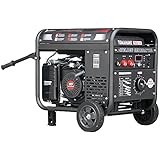
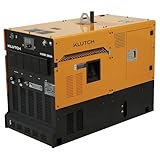
- Welding output (amps): 200 amps handles most stick and MIG repair work with 1/8″ rods and light fabrication. 250+ amps is needed for 5/32″ 7018s, carbon arc gouging, or heavy plate.
- Duty cycle: The percentage of a 10-minute window the machine can weld at a given amperage. A “40% at 225A” machine needs 6 minutes of rest for every 4 minutes of welding — fine for farm repair, frustrating on a production job. Look for 60–100% at your intended amperage.
- Generator wattage: Split into peak (starting) and continuous power. A 4.5″ angle grinder pulls roughly 1,200W running but can surge past 2,000W on startup. If you plan to weld and run tools at the same time, remember that welding at full amperage usually cuts available auxiliary power significantly — check the “auxiliary power while welding” figure, not just peak watts.
- Fuel type: Gasoline is cheaper upfront and lighter. Diesel offers roughly 30–40% better fuel economy under load, longer engine life, and is often required on commercial and refinery jobsites where gasoline is restricted.
- Weight and footprint: Gas units start around 200 lbs; diesel engine drives commonly exceed 500–700 lbs. Anything over ~600 lbs is effectively trailer or truck-bed permanent.
Top Welder Generator Combo Picks Compared
| Model / Type | Weld Output | Duty Cycle | Continuous Generator Power | Fuel | Weight | Best For |
|---|---|---|---|---|---|---|
| Miller Bobcat 260 (gas) | 260A stick/MIG | 60% @ 260A | ~9,500W | Gas | ~290 lbs | Mobile repair, farm/ranch |
| Lincoln Ranger 260MPX (gas) | 260A multi-process | 60% @ 260A | ~9,500W | Gas | ~280 lbs | Fabrication + jobsite power |
| Miller Bobcat 200 Air Pak (diesel) | 200A + compressor | 100% @ 200A | ~5,500W | Diesel | ~750 lbs | Service trucks, daily use |
| Lincoln Ranger 305D (diesel) | 300A+ multi-process | 100% @ 300A | ~9,000–10,000W | Diesel | ~700+ lbs | Structural, pipeline, commercial |
| Champion-style gas combo (~200A) | 140–200A stick/MIG | 20–40% @ max amps | 4,000–7,000W | Gas | 150–250 lbs | Occasional repairs, tight budgets |
Matching the Combo to the Job
Mobile Repair and Farm/Ranch Work
If you’re fixing gates, implements, and trailer hitches a few times a week, a gasoline unit around 260 amps is the sweet spot. Machines like the Miller Bobcat 260 and Lincoln Ranger 260MPX give you MIG, stick, and scratch-start TIG in one package, plus enough generator capacity to run a grinder and work light simultaneously. Gas engines at this size typically burn 0.8–1.2 gallons per hour under a moderate welding load, so a 7–11 gallon tank delivers a full workday of intermittent use.
Fabrication Shop Backup or Remote Jobsites
A generator welder combo pulling double duty — welding plus site power — needs higher continuous wattage. Prioritize the “power while welding” spec: some units drop to 2,000–3,000W of auxiliary power at full weld output, which won’t run a compressor. Budget combos in this category often advertise 7,000W peak but only sustain it with the welder idle.
Daily Commercial and Pipeline Use
Diesel engine drives earn their weight penalty here. A 100% duty cycle at 300 amps means you can weld 5/32″ 7018 all day without thermal shutdown. Diesel units routinely log 10,000+ operating hours with proper maintenance — often double a comparable gas engine — and many commercial jobsites prohibit gasoline equipment outright.
Budget and Occasional Use
A generator and welder combo in the entry gas category (roughly $1,500–$3,000 market range, versus $4,000–$6,500 for premium gas engine drives and $9,000+ for diesel) makes sense if you weld a few times a month. Accept the lower duty cycle and plan your welds in shorter beads.
MIG Welder Generator Combo vs. Stick-Only: The Wire-Feed Question
Many buyers specifically want a generator MIG welder combo for faster, cleaner repairs. Key differences to know:
- Stick-only combos are simpler and cheaper — the weld output goes straight to the electrode holder. No feeder, no gas bottle.
- Multi-process engine drives (Bobcat, Ranger MPX lines) include CV output for wire feeders, letting you run MIG or flux-cored through a suitcase or built-in feeder. Flux-cored wire is the practical choice outdoors — shielding gas blows away in wind above ~5 mph.
- Add-a-feeder route: Any combo with CV output can power a voltage-sensing portable feeder. This is the most common mig welder generator combo setup on service trucks.
Runtime Math: What a Tank of Fuel Actually Buys You
Spec sheets list runtime at 50% load, which is optimistic for welding. A realistic estimate for a gas engine drive:
Tank size × fuel consumption at welding load = welding hours. Example: an 11-gallon tank at roughly 1.0 gal/hr under a 200-amp stick load gives about 11 hours of engine-on time — but if your duty cycle is 60%, that’s around 6.5 hours of actual arc time. Diesel units stretch this further: a 300-amp diesel engine drive sips closer to 0.6–0.7 gal/hr at the same duty, and idles down automatically between welds on models with auto idle.
A common mistake is running the tank to empty at elevation or in cold weather, where fuel delivery degrades — keep a 2-gallon reserve in practice.
Ownership Realities: What Wears Out First
- Brushes and slip rings (on brushed designs) typically need inspection every 500–1,000 hours; brushless designs cost more but eliminate this.
- Air filters and oil are the life-or-death items — dusty jobsites kill small engines fast. Change oil every 100 hours, not the automotive interval you’re used to.
- Fuel system: Gas units suffer carburetor gumming if left sitting with fuel — drain or add stabilizer if the machine sits more than 60 days. This is the single most common failure on occasional-use combos.
- Battery: Electric-start units need a maintained battery; a dead battery strands a pull-start-incapable diesel.
- Consumables: Budget for contact tips, nozzles, and electrode holders — these wear on a welder and generator combo exactly as they would on a shop machine.
Decision Matrix
| Your Situation | Recommended Type | Target Specs |
|---|---|---|
| Weekend farm repairs, truck-mounted, under $4,000 | Gas combo, 200–260A | 60% duty @ 200A+, 8,000W+ aux |
| Daily service truck work | Diesel engine drive | 100% duty @ 200–300A, fuel-efficient |
| Jobsite power + occasional welding | Gas multi-process | High “power while welding” rating |
| Outdoor MIG/flux-cored welding | Generator MIG welder combo w/ CV output | Feeder-ready, flux-cored capable |
| Budget under $2,000, light use | Entry gas stick/MIG combo | Accept 20–40% duty cycle |
FAQ
Can I weld and run power tools at the same time?
Yes, but check the auxiliary power rating while welding — it often drops to 2,000–4,000W at full weld output. A grinder and light are fine; a 5 HP air compressor usually is not.
Is a welder generator combo worth it over separate units?
If you need field welding, yes — one engine, one fuel tank, one service schedule. If your generator needs are for a jobsite and welding stays in the shop, two dedicated machines offer better duty cycle per dollar.
Gas or diesel?
Under ~300 operating hours per year, gas wins on cost. Above that, diesel’s fuel savings and engine longevity pay back the premium within a few seasons.