
What's inside
As an Amazon Associate I earn from qualifying purchases. This post may contain affiliate links at no extra cost to you.
What we cover
Our Top Picks
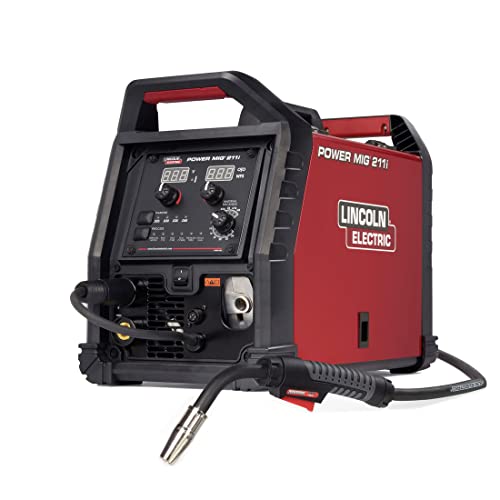



Choosing a process for fence repairs
For outdoor steel fence repairs, the choice between MIG and stick welding usually comes down to access, wind, steel thickness, and how clean the joint can be made. MIG is easier to control on clean, thin tubing and can be quick for repeated repairs. Stick is more tolerant of outdoor breezes, rusty surfaces, and awkward locations, though it takes more practice to make neat welds.
Neither process makes a sound repair on paint, rust, or galvanized coating. Remove coatings and contamination from the weld area, fit the parts tightly, and use a welding process suited to the metal thickness. A weak repair often comes from poor preparation or a bad fit-up, not from choosing the “wrong” process.
As an Amazon Associate we earn from qualifying purchases at no extra cost to you.

MIG vs. stick at a glance
| Factor | MIG | Stick |
|---|---|---|
| Best fit | Clean, thin tubing and repeatable bench work | Field repairs, thicker steel, and less-than-perfect surfaces |
| Wind | Shielding gas can blow away; use only in still air or sheltered space | Generally handles outdoor breezes better |
| Setup | Welder, wire, and usually a gas cylinder | Welder and electrodes; no shielding-gas cylinder |
| Thin steel | Usually easier to control with suitable wire and settings | More risk of burn-through, especially on small tubing |
| Cleanup | Less slag; remove spatter and inspect the bead | Chip slag and brush between passes |
| Learning curve | Often easier for short, consistent welds | Requires control of arc length and electrode handling |
When MIG makes sense
MIG is a strong choice for common fence materials such as square or round tubing around 16 to 11 gauge (roughly 1.5 to 3 mm), especially when the parts can be cleaned and positioned securely. Its continuous wire feed makes short fillet welds and tacks straightforward. A small wire-feed machine can be a sensible purchase for a homeowner doing several clean repairs, provided it has enough output for the steel being joined.
For mild steel, solid wire with shielding gas generally makes a cleaner weld than gasless flux-core wire, but the gas is a liability outdoors. Even a moderate breeze can disrupt shielding and leave porosity: small holes or voids that weaken the weld. Move the job indoors or behind a safe windbreak rather than turning up the gas flow to compensate. Excessive flow can create turbulence and make shielding worse.
For a first repair on clean, thin fence tubing, consider a MIG welder with gas capability. Check the machine’s rated output and duty cycle, not just its advertised maximum amperage. A 20% duty cycle at a stated current means the machine needs about eight minutes of cooling after two minutes of welding within a ten-minute period.
When stick makes sense
Stick is often the more practical field option when the fence is exposed to wind, the repair is away from a power outlet, or the steel is moderately thick. The process creates its own shielding, so it does not depend on a gas cloud staying around the arc. It is also useful on steel that is less pristine, though rust, paint, and scale still need to be removed from the joint.
Its main drawback on fences is heat control. Thin tubing can melt away before a beginner has time to correct a long arc or pause. A small-diameter electrode and low, suitable amperage help, but do a test on scrap of similar thickness first. For many general repairs, 3/32-inch electrodes are easier to manage on lighter steel than 1/8-inch rods. Follow the electrode maker’s amperage range and the welder’s instructions; one setting does not suit every rod and joint.
A basic DC inverter stick welder can be a reasonable buy for occasional outdoor repairs, especially if you already know how to strike an arc. Stick is not automatically better on rusty fence metal: welding through contamination can trap inclusions and produce a lumpy bead that looks substantial but has poor fusion.
Prepare the fence and make the repair
First check whether the post, rail, or panel is sound enough to repair. If the steel is deeply corroded, split along a seam, or paper-thin around the break, a small bead may not restore useful strength. Replace the damaged section or add a properly fitted reinforcement rather than welding onto metal that crumbles under a wire brush.
Remove paint, rust, galvanizing, and dirt at least 1/2 to 1 inch (about 12 to 25 mm) back from the weld area, using a grinder or suitable abrasive. Galvanized steel needs particular care: heating zinc coating creates hazardous fumes. Avoid breathing them, work with strong ventilation, and remove the coating around the joint before welding. If you cannot control the fumes safely, do not weld the galvanized part yourself.
Clamp the pieces in their final position and make short tacks on opposite sides to reduce distortion. On thin tubing, use brief weld segments rather than holding a long bead in one place. Let the area cool between segments; repeated overheating can burn through the wall or pull a gate out of alignment. If a hole opens, stop, let the metal cool, and reassess the fit and settings instead of trying to bridge the gap with more filler.
After welding, remove stick slag and inspect both sides where accessible. Look for cracks, visible holes, undercut along the toe, or a bead sitting on top without tying into the base metal. A neat appearance alone does not prove strength. Grind only as much as needed for fit or finish; grinding a sound weld flat can remove useful material.
Weather, safety, and corrosion protection
Keep the work dry. Welding wet steel or working in rain raises shock and arc-control risks; postpone the repair if you cannot keep yourself, cables, and equipment dry. Wear a correctly rated welding helmet, gloves, flame-resistant clothing, and eye protection for grinding. Keep sparks away from dry grass, leaves, and fuel, and check for smoldering material after the job.
Once the steel has cooled and been cleaned, restore protection on bare metal with a suitable primer and exterior paint. A weld can be structurally sound and still become a rust starting point if left exposed. For a fence that carries a gate or protects a fall hazard, or for badly corroded structural posts, use a qualified welder rather than relying on a quick patch.
Related guides
More from Amazon
Programs that pair well with the guide above. Offers and eligibility are set by Amazon and may change.
A free business account with business pricing and bulk-buying tools for work, shop or home office.
Create a business accountFree shipping on eligible items, Prime Video and more. Eligible new members can start with a free trial.
Start a Prime free trialAudiobooks and podcasts to listen to on the go. Eligible new members can start with a free trial.
Try Audible freeAd-free music streaming. Eligible new subscribers can start with a free trial.
Try Music Unlimited freeAs an Amazon Associate we earn from qualifying purchases.








Write Your Review
No reviews yet. Be the first to share your experience!