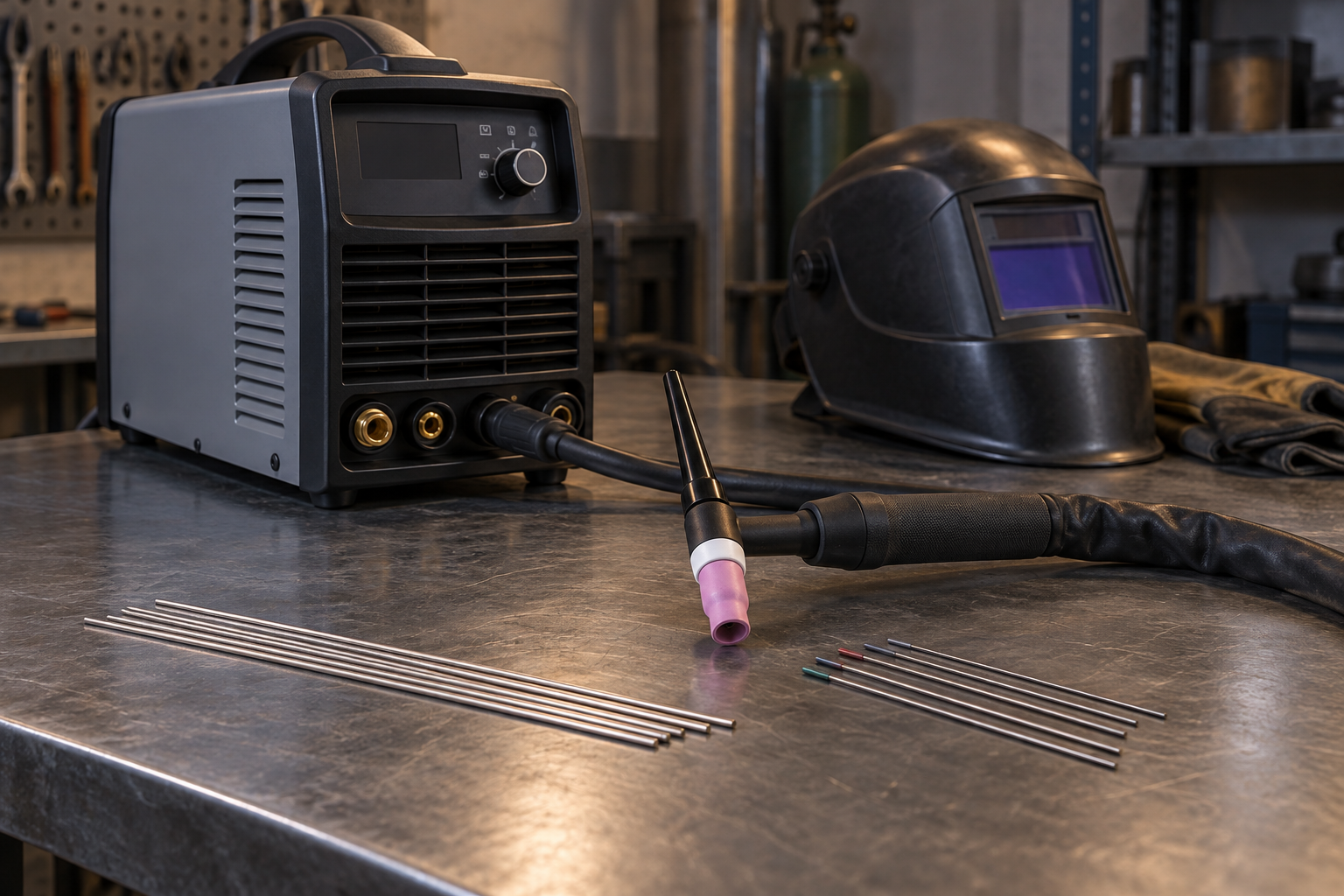
How to TIG Braze Steel with Silicon Bronze Filler Rod
TIG brazing steel with silicon bronze uses a TIG torch to melt the filler rod while keeping the steel below its melting point. Done well, it makes a low-distortion joint…
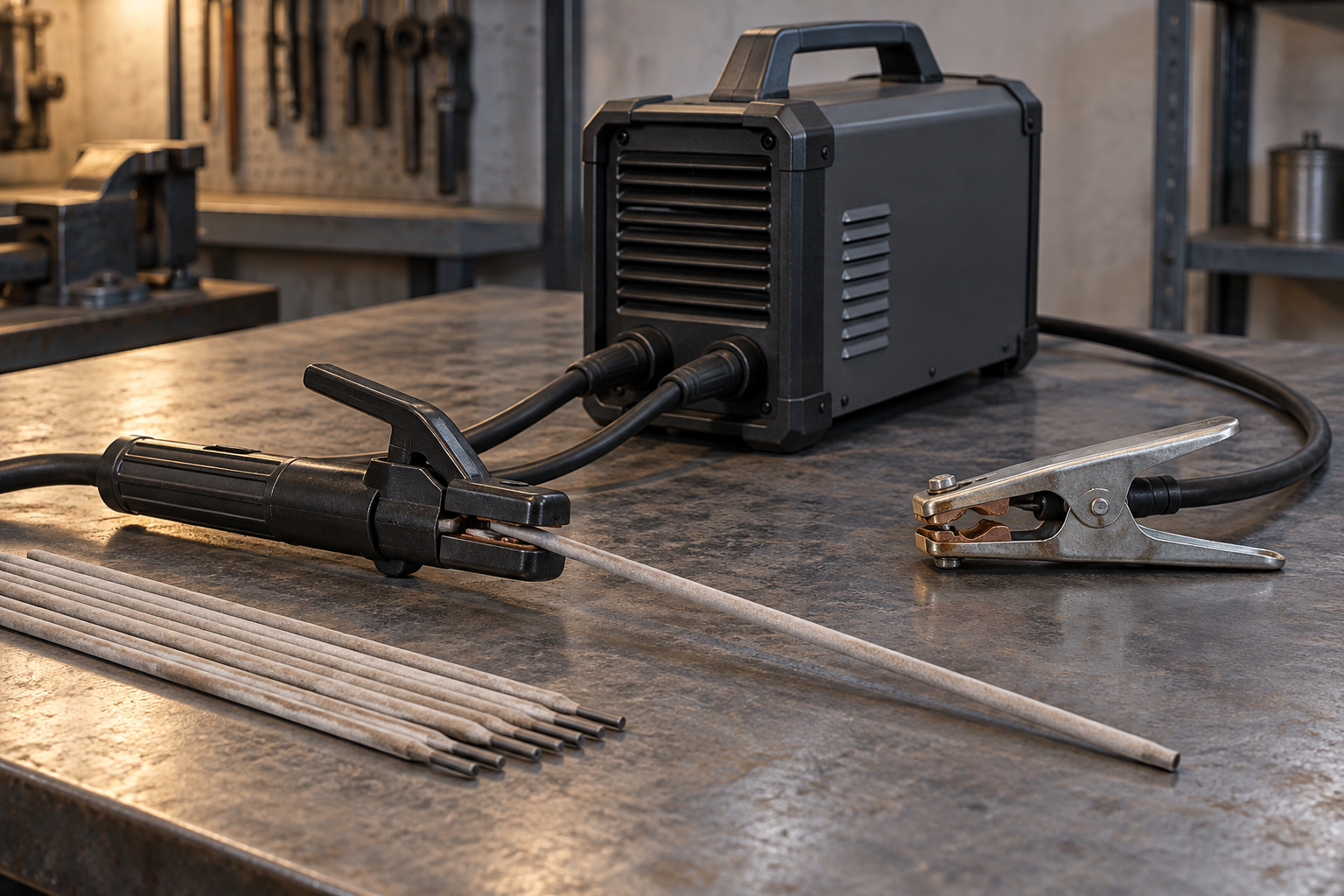
Choosing a stick welder for thick structural steel Thick steel does not automatically call for a huge welder. The right machine depends on joint design, electrode size, power supply, and…
Why heat tint matters Heat tint is the straw, purple, blue, or gray discoloration that forms beside a stainless steel TIG weld. It comes from oxidation while the hot metal…
Scope and safety A TIG root pass on thin-wall stainless pipe is a fit-up and heat-control job. The goal is a continuous, fully fused root with an even internal bead—not…
Porosity in an aluminum TIG weld shows up as small holes, pinholes, or cavities in the bead. A few surface pores can point to contamination; a cluster or a pore…
A TIG foot pedal and torch-mounted amperage control both let you vary welding current while you work. The useful difference is where the control sits and how you use it:…
Sharp tungsten preparation is one of the small jobs that makes a large difference in DC TIG welding. A correctly ground electrode starts more easily, holds a stable arc, and…
Thin aluminum panels distort because aluminum spreads heat quickly, then expands and contracts dramatically as the weld cools. The solution is not simply turning down the amperage. You need a…
Stainless steel turns dull gray and crumbly on the back when hot metal reacts with oxygen. Welders call this sugaring. It weakens the root, traps contamination, and can ruin a…
When a stainless part has no material tag, choosing TIG filler is a risk-management decision, not a guessing game. A rod that works on common 304 stainless can crack, corrode,…