
What's inside
As an Amazon Associate I earn from qualifying purchases. This post may contain affiliate links at no extra cost to you.
Aluminum engine covers are thin, awkwardly shaped castings, often contaminated with oil. That makes them a tougher TIG repair than their size suggests. A suitable welder needs stable low-amp control, AC output for aluminum, and enough power for the cover’s thicker ribs or mounting bosses. But even the right machine cannot compensate for oil trapped in porous casting or a crack that has not been properly cleaned and prepared.
As an Amazon Associate we earn from qualifying purchases at no extra cost to you.


What we cover
Our Top Picks
 TOOLIOM 6-in-1 AC/DC TIG Welder with Pulse200A Aluminum ACDC TIG Welder10 x 2 x 50 inches28 poundsCheck on Amazon


What the repair demands
Most aluminum covers call for AC TIG. AC helps disrupt the oxide layer on aluminum while the electrode supplies heat to the work. Look for adjustable AC balance and frequency if your budget allows: balance helps tune cleaning action against penetration, while higher frequency can make the arc narrower and more controllable. These controls are useful, not magic; a basic AC TIG welder can still repair a cover if its arc is steady and the joint is prepared well.
Thin sections may be around 2–3 mm, while ribs and bosses can be much thicker. A machine that starts reliably at low amperage matters for the thin areas; a useful upper range around 200 amps gives more headroom for heavy sections and heat-sinking castings. Check the machine’s duty cycle, too. A 200-amp rating does not mean it can weld continuously at 200 amps. For occasional repairs, a modest duty cycle is usually acceptable if you work in short passes.
Welder options at a glance
| Machine type | Best fit | Main trade-off |
|---|---|---|
| AC/DC TIG, roughly 200 amps | Regular aluminum repairs and mixed shop work | Costs more; needs a separate shielding-gas setup and TIG accessories |
| Entry-level AC TIG | Occasional cover repairs and hobby use | May have limited AC adjustments, lower duty cycle, or less refined arc control |
| DC-only TIG | Steel and stainless work | Not the right choice for conventional aluminum TIG repair |
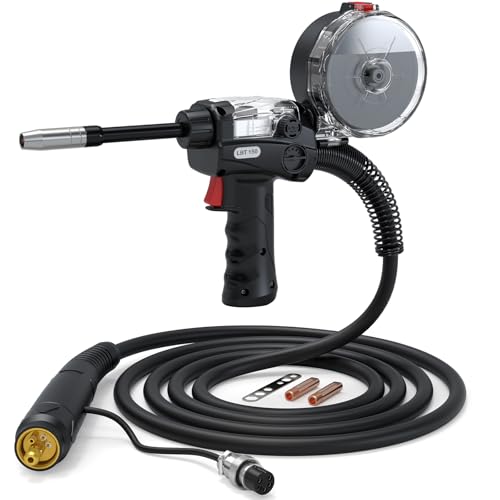
| MIG welder with spool gun | Faster aluminum work on accessible joints | Less precise on small, thin, irregular castings |
For a repair-focused shop, an AC/DC TIG welder around 200 amps is the most versatile choice. If you weld aluminum only once in a while and can accept fewer adjustments, an entry-level AC TIG welder can be enough. Verify the input voltage, plug, amperage range, and included torch before buying; “TIG-ready” does not always mean the machine includes everything needed to start.
Features worth paying for
Prioritize a stable arc at low amperage, foot-pedal compatibility, and a usable AC balance adjustment. A pedal is especially helpful because you can reduce current as the casting heats up, rather than stopping abruptly or overheating the thin edge. AC frequency adjustment is a plus for precise control, but it should come after dependable starts, clear controls, and a supportable warranty.
Also budget for the complete setup: a cylinder of 100% argon, regulator or flowmeter, suitable torch consumables, filler rod, and a welding helmet with a reliable shade control. A commonly used starting range for torch gas flow is about 15–20 cubic feet per hour, adjusted for the cup and draft conditions. Excessive flow can create turbulence and pull air into the shielding gas. Match filler alloy to the casting and service conditions; a common filler is not automatically right for every unknown aluminum alloy. If the cover is safety-critical or the casting alloy is uncertain, consult a qualified repair shop rather than guessing.
Preparation matters more than extra power
Remove the cover from the engine and strip away oil, gasket material, paint, and sealant well beyond the crack. Wash and degrease it, then mechanically clean the weld area with a dedicated stainless brush. Aluminum oxide reforms quickly, so clean just before welding. Do not use a brush that has been used on steel; embedded contamination can spoil the weld.
Oil is a major failure mode. Cast aluminum can hold it below the surface, where heat brings it back into the weld pool. The result may be smoke, porosity, black deposits, and a weak, leaky repair. Repeated cleaning and controlled preheating may help, but a heavily oil-soaked casting can remain unsuitable for welding. If the puddle keeps bubbling or contaminating after proper cleaning, stop and reassess instead of burying the defect under more filler.
Set the cover so the joint is comfortable to reach and can be welded in a controlled position. Use short tacks to keep the crack from moving, and avoid concentrating heat on a thin flange. A long, hot pass can distort a sealing face or open the crack farther. For a through-crack, assess whether it needs a stop-drill, a groove, or access from both sides; the right preparation depends on crack shape and cover thickness.
When another process makes sense
TIG is usually the better tool for a small, visible repair where access is tight and heat input needs close control. A MIG welder with a compatible spool gun can be a sensible lower-cost or faster option for larger, accessible joints, but the wire feed and larger puddle make tiny cast features less forgiving. A spool gun is not a substitute for preparing oily casting.
Do not choose a DC-only TIG machine expecting to weld aluminum by simply changing the rod. For ordinary aluminum TIG work, AC is the practical requirement. If the cover is cracked at a bearing seat, mounting point, or highly stressed location, or if it must hold oil under pressure, the consequences of a failed repair may outweigh the savings. In those cases, compare professional welding, replacement, or a specialist’s assessment before buying a machine just for one job.
Related guides
More from Amazon
Programs that pair well with the guide above. Offers and eligibility are set by Amazon and may change.
A free business account with business pricing and bulk-buying tools for work, shop or home office.
Create a business accountFree shipping on eligible items, Prime Video and more. Eligible new members can start with a free trial.
Start a Prime free trialAudiobooks and podcasts to listen to on the go. Eligible new members can start with a free trial.
Try Audible freeAd-free music streaming. Eligible new subscribers can start with a free trial.
Try Music Unlimited freeAs an Amazon Associate we earn from qualifying purchases.









Write Your Review
No reviews yet. Be the first to share your experience!