What's inside
- In this guide
- What a plasma cutter does
- Types of plasma cutters
- Cut capacity: clean cut versus severance
- Power input and your electrical supply
- Air supply and compressor requirements
- Features worth paying for
- Torches, consumables, and running costs
- Matching a cutter to your work
- Safety and setup
- Common mistakes
- Who should choose what
- Buying checklist
- Frequently asked questions
- Conclusion
As an Amazon Associate I earn from qualifying purchases. This post may contain affiliate links at no extra cost to you.
The short answer: the best plasma cutter for a home shop is one whose clean cut capacity covers the thickest metal you cut regularly, whose power requirement matches your outlets, and whose air needs match your compressor. For most hobbyists cutting sheet and plate steel, a compact inverter plasma cutter with a pilot arc, a drip-free air supply, and readily available consumables is the practical choice. If you plan to cut rusty, painted, or expanded metal, pilot arc starting is worth having. This guide shows how to read the specifications and decide, so you can evaluate any model on your own terms.
What we cover
- In this guide
- What a plasma cutter does
- Types of plasma cutters
- Cut capacity: clean cut versus severance
- Power input and your electrical supply
- Air supply and compressor requirements
- Features worth paying for
- Torches, consumables, and running costs
- Matching a cutter to your work
- Safety and setup
- Common mistakes
- Who should choose what
- Buying checklist
- Frequently asked questions
- Conclusion
Our Top Picks
 YESWELDER Auto Darkening Welding Helmet 1/1/1/1 True Color3.64 x 1.67"1 x 1 x 1 Inches1 PoundsCheck on Amazon
In this guide
- What a plasma cutter does
- Types of plasma cutters
- Cut capacity: clean cut versus severance
- Power input and your electrical supply
- Air supply and compressor requirements
- Features worth paying for
- Torches, consumables, and running costs
- Matching a cutter to your work
- Safety and setup
- Common mistakes
- Who should choose what
- Buying checklist
- FAQ
- Conclusion
What a plasma cutter does
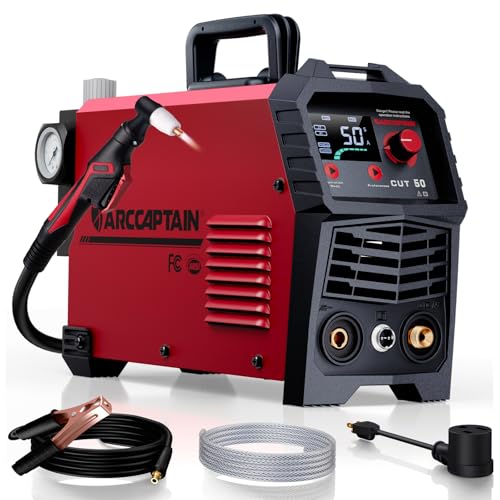
A plasma cutter forces compressed gas, usually air in a home shop, through a small nozzle while an electric arc heats it to the point where it becomes plasma. The jet is hot and fast enough to melt conductive metal and blow the molten material out of the cut. It works on steel, stainless steel, and aluminum, and on other conductive metals as well. It cuts faster and with less heat spread than an oxy-fuel torch on thin and medium sheet, produces a narrow kerf, and does not need fuel gases, which simplifies setup for many hobbyists.
Plasma is not the right tool for everything. It needs conductive material, so it will not cut wood, plastic, or glass. It leaves a hot, sometimes beveled edge that usually needs light grinding before welding. It makes noise, bright light, and fumes. And its performance depends heavily on a clean, dry air supply, which surprises many first-time buyers. Understanding these trade-offs up front prevents disappointment.
Types of plasma cutters
Compact inverter cutters for light work
These are small, light units that plug into a household circuit and cut thin to moderate steel. They suit sheet metal, brackets, signs, auto body panels, and general shop jobs. They are portable and usually the least expensive way into plasma. Their limits are lower cut thickness and duty cycle, and some require a separate compressor.
Dual-voltage cutters
Dual-voltage machines run from a lower-voltage household circuit or a higher-voltage dedicated one. On the higher voltage they generally deliver more output and thicker cutting. They fit a shop that may grow or move, but remember that capacity differs between the two modes, so check each rating.
Built-in compressor cutters
Some units include a small air compressor in the same housing, which removes the need for a separate air source. They are convenient and portable, though heavier, and the internal compressor may limit cutting time and air quality. They suit people who have no compressor or who need to cut away from the shop.
Higher-output shop cutters
Larger machines cut thicker plate at higher speeds and have better duty cycles. They need more power and more air. They also cost more and weigh more. They make sense for those who regularly cut heavy material or do production-style work.
| Type | Typical power | Typical use | Strength | Limitation |
|---|---|---|---|---|
| Compact inverter | Household circuit | Sheet and light plate | Portable and affordable | Limited thickness and duty cycle |
| Dual-voltage | Household or dedicated circuit | Mixed light and medium work | Flexible as needs grow | Lower output on low voltage |
| Built-in compressor | Household or dual | Mobile and no-compressor shops | All-in-one convenience | Weight, air quality, run time |
| Higher-output shop cutter | Dedicated circuit | Thicker plate, frequent use | Speed and capacity | Cost, power and air needs |
Cut capacity: clean cut versus severance
Most specifications list two thicknesses. The clean cut rating is the thickness the machine can cut with a good edge at a reasonable travel speed. The severance rating is the maximum it can part the metal, usually at slow speed with a rough edge. Beginners should plan around the clean cut number. If you regularly cut material near the severance limit, you will fight slow travel, heavy dross, and fast consumable wear.
Treat any stated thickness as a rough guide: it assumes mild steel, correct air pressure, fresh consumables, and appropriate travel speed. Stainless and aluminum often cut thinner than steel on the same machine, so check whether the manufacturer lists them. Also consider your typical work. A shop that mostly cuts sheet and thin plate rarely needs a high-output machine, whereas one that cuts thick structural pieces will be limited by a small cutter. Choose a machine whose clean cut rating comfortably exceeds your regular needs, which gives headroom and longer consumable life.
Power input and your electrical supply
Your outlets are a deciding factor. Compact cutters are built to run on a household circuit but may demand a high-capacity breaker, and they may trip it if other loads share the circuit. Higher-output machines require a dedicated higher-voltage circuit like those used for large appliances. Consider these points.
- Check the circuit rating and plug type. Match the machine’s requirements to what is installed, and have a licensed electrician add or upgrade circuits.
- Avoid long, thin extension cords. They cause voltage drop and can overheat. If you must use one, choose a heavy-gauge cord rated for the load and keep it short.
- Watch generator use. Inverter equipment can be sensitive to power quality, so follow the manual and use a properly sized generator.
- Read dual-voltage specs carefully. Cut capacity and duty cycle on the lower voltage are lower than on the higher voltage.
Air supply and compressor requirements
Plasma cutters consume compressed air continuously while the arc is on. Two numbers matter: the pressure and the volume of flow, usually expressed as cubic feet per minute at a given pressure. If the compressor cannot supply the required flow, the pressure drops and the cut quality suffers. Some small compressors can only run a plasma cutter for a short time before the tank empties and the motor runs continuously. As a rule, match the compressor to the cutter’s requirement with some margin, and read the manual for the required settings.
Air quality is just as important. Moisture and oil in the air shorten consumable life, cause sputtering arcs, and ruin cuts. Use a dryer or filter at the machine, drain the compressor tank regularly, and keep the hose in good condition. In humid climates, additional water separation can make a noticeable difference. Some cutters include built-in filter regulators, which is helpful, but they do not remove all moisture. If you cut a lot, consider a dedicated drying setup.
Hose and fitting size matter. Restrictive quick-connects or long thin hoses reduce flow. Use fittings and hose that match the machine’s inlet and the required flow. Keep the regulator accurate, because both too little and too much pressure harm cut quality and consumable life.
Features worth paying for
- Pilot arc. A pilot arc starts a small arc inside the torch without touching the workpiece, so you can cut through rust, paint, and expanded or grated metal. Touch-start (contact start) machines are simpler and often cheaper but do not handle dirty or gapped material as well.
- Adjustable output. Being able to lower current for thin sheet reduces warping and dross. Check that the low end is actually usable.
- Gauge and regulator on the unit. A visible pressure gauge makes setup repeatable.
- Torch design and cable length. A comfortable torch with a reasonable cable length helps you reach the work. Check whether replacement torches and cables are available.
- Thermal and safety interlocks. Look for overheating protection and a safety that prevents the arc from firing when the shield cup is loose.
- Portability. Weight, handle placement, and a shoulder strap matter if you move the machine around.
- Warranty and parts support. Plasma torches use consumables and wear parts, so confirm that spares will be easy to buy.
Torches, consumables, and running costs
Plasma cutters have ongoing costs that rarely appear on the box. The electrode and nozzle wear with every cut, and the shield cup, swirl ring, and torch head age as well. Worn consumables produce ragged cuts, excess dross, and an arc that wanders or fails to start. Replace the electrode and nozzle as a pair, inspect them regularly, and keep spares on hand. Consumable life drops if you pierce often, if the air is wet, if you cut near the machine’s limit, or if you start and stop the arc repeatedly.
Before buying, check that consumables are widely available and what they cost, and consider whether generic parts exist. The cost of a machine is only part of what you pay; the cost of keeping it cutting well is the rest.
Good habits extend consumable life. Keep the torch at the correct standoff or drag with a shield cup, use the right pressure, pierce at the edge when possible, and let the post-flow run so the torch cools.
Matching a cutter to your work
Sheet metal and art projects. Thin sheet needs low current, a stable arc, and clean air. Consider using a straightedge or template to guide the torch. Expect to grind edges lightly and watch for warping.
Fabrication and repair. Brackets, gussets, and plate shapes in mild steel are a natural fit for a mid-sized cutter. Look for good duty cycle and pilot arc.
Auto body and restoration. Controlled cuts on thin panels matter, and heat spread should be minimal. A compact cutter with fine control is often enough. Cut away from fuel systems and remove anything flammable or heat-sensitive first.
Farm and demolition. Rusty, dirty, and thick metal favors a pilot arc and higher output. Prepare for slag and spatter, and be careful about hidden containers, coatings, and materials that may release harmful fumes.
| Work | Material | Priority feature | Cutter type to consider |
|---|---|---|---|
| Sheet and art | Thin steel, stainless, aluminum | Low-amp stability and clean air | Compact inverter |
| General fabrication | Mild steel plate | Pilot arc and duty cycle | Dual-voltage or mid-sized |
| Auto body | Thin panels | Fine control, minimal heat | Compact inverter |
| Farm and salvage | Rusty, thick, dirty | Pilot arc, higher output | Higher-output shop cutter |
| Mobile jobs | Varies | Portability, own air | Built-in compressor |
Safety and setup
Eye and face protection. The plasma arc is intensely bright. Use a welding or plasma-rated helmet or goggles with an appropriate shade, as the manual specifies. Do not rely on ordinary sunglasses or safety glasses alone.
Skin and clothing. Wear flame-resistant clothing, leather gloves, sleeves, and sturdy boots. Hot sparks and molten metal spray out the bottom of the cut, so keep pant legs over boots and avoid synthetic fabrics that melt.
Fire prevention. Plasma throws sparks and dross a long way. Clear flammables, including sawdust, rags, solvents, and aerosol cans, from the area, and keep an extinguisher within reach. Never cut containers that held fuel or chemicals, and never cut closed vessels or pressurized parts. Check behind and below the work for combustibles, and look over the area after cutting for smoldering.
Fumes and ventilation. Cutting generates fumes and fine particles. Galvanized, painted, plated, and unknown metals can release harmful fumes. Cut in a well-ventilated space or use extraction, and consider appropriate respiratory protection.
Electrical safety. The torch carries high voltage at the tip. Never touch the nozzle area when the machine is powered, replace consumables only with the machine unplugged or powered down as the manual instructs, and keep the work clamp on clean metal near the cut. Inspect cables and keep them dry.
Compressed air. Compressed air systems are under pressure. Use rated hoses and fittings, drain tanks as directed, and wear eye protection when connecting lines.
Common mistakes
- Buying by severance rating. Plan around clean cut capacity.
- Underestimating air needs. A weak compressor leads to poor cuts and constant waiting.
- Ignoring moisture. Wet air eats consumables and wrecks arcs. Install filtration and drain regularly.
- Cutting too fast or too slow. Fast travel makes the arc lag and fail to cut through; slow travel makes wide, messy kerfs and heavy dross.
- Wrong standoff. Holding the torch too high or too low changes the cut angle and shortens consumables.
- Using worn consumables. Replace them when cuts degrade rather than pushing on.
- Neglecting the ground. A weak work clamp connection causes the arc to fail to transfer.
- Cutting unknown material. Identify coatings and containers before you start.
Who should choose what
The casual home user who cuts sheet and the occasional bracket will be served by a compact inverter cutter, a modest compressor with a good filter, and patience. The fabricator who cuts mild steel plate regularly should look at dual-voltage or higher-output machines with a pilot arc. The restorer prioritizes fine control and low heat. The farm or salvage user faces dirty and thick metal, so pilot arc and capacity matter most. The mobile user with no air source may value a built-in compressor despite its weight. The apartment or rental dweller should check fire, noise, ventilation, and lease rules before cutting at all.
Buying checklist
- Write down the thickest metal you cut regularly.
- Compare that against the clean cut rating, not the severance rating.
- Check which metals the manufacturer lists.
- Check the circuit and plug available where you will cut.
- Read the capacity at each voltage if the cutter is dual-voltage.
- Check the air flow and pressure requirement against your compressor.
- Plan air filtration and water separation.
- Decide whether you need a pilot arc.
- Check duty cycle at the current you will use.
- Confirm that torch, cables, and consumables are available.
- Budget spare electrodes, nozzles, and shield cups.
- Budget a helmet or goggles, gloves, clothing, and hearing protection.
- Prepare a fireproof cutting surface and clear surroundings.
- Arrange ventilation or extraction.
- Read the warranty and return policy.
Frequently asked questions
Do I need an air compressor for a plasma cutter?
Most do, unless the unit includes its own compressor. The compressor must supply the required flow and pressure continuously. Read the machine’s manual and size the compressor with some margin.
Can a plasma cutter cut aluminum and stainless steel?
Generally yes, because both are conductive, though stated capacities are often lower than for mild steel. Check the manufacturer’s ratings for each metal.
What is the difference between clean cut and severance?
Clean cut is the thickness the machine can cut with a good edge at normal speed. Severance is the maximum it can part the metal, usually slowly and roughly. Plan around the clean cut rating.
Do I need a pilot arc?
It helps when cutting rust, paint, or expanded and grated metal, and it makes starting easier. Contact-start machines can work on clean, solid sheet, but they can be less forgiving.
Can I run a plasma cutter on a household outlet?
Some compact models are designed for it, with lower output than higher-voltage machines. Check the circuit rating and avoid sharing the circuit with other heavy loads.
Why is my cut rough or full of dross?
Common causes are wet air, worn consumables, incorrect travel speed, wrong standoff, or incorrect pressure. Check these one at a time, starting with air quality and consumables.
Is plasma cutting safe in a garage?
It can be, with precautions: clear flammables, ventilate, wear proper protective gear, and keep an extinguisher nearby. Check local rules and insurance, and never cut containers that held fuel or chemicals.
How long do plasma consumables last?
It varies widely with air quality, current, piercing frequency, and technique. Inspect them often and replace them when cuts degrade. Clean, dry air extends life noticeably.
Conclusion
The best plasma cutter for a home shop fits your metal, your power, and your air supply. Work from the thickest regular cut to a clean-cut rating with headroom, confirm your circuit, and make sure your compressor and filtration can keep up. Choose a pilot arc if your metal is rusty or irregular, and budget for consumables and protective gear. Practice on scrap, keep your consumables fresh, and respect fire, fumes, and electrical hazards. With a well-matched setup, a plasma cutter becomes one of the most useful tools in a home shop.
When you are ready to compare equipment, consider browsing plasma cutters, plasma torch consumables, inline air filters and dryers, and welding helmets.
Disclosure: As an Amazon Associate, we earn from qualifying purchases. This means we may receive a small commission if you buy through links on this page, at no extra cost to you.
