
Our Short List of 3

- Model: Tacky Double Haul, TDHFB-BO, Burnt Orange
- Dimensions: 7 x 3.75 x 1 inches
- Weight: 8 ounces
- Capacity: up to 287 flies

- Type: two-sided waterproof fly box
- Sizes in range: 4.1 x 3 x 1.2 inches up to 7.3 x 4.6 x 1.5 inches
- Mid size (C): 5.9 x 3.8 x 1.77 inches, holds up to 234 flies
- Shell: ABS plastic, clear double lids
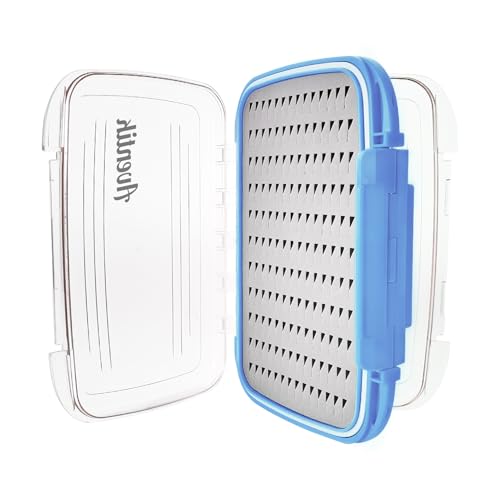
- Model: H18-003, Size C, Blue
- Dimensions: 7.32 x 4.56 x 1.57 inches
- Weight: 12.3 ounces
- Shell: polycarbonate, clear double lids
All 4 Picks at a Glance
| Product | Specs | Action |
|---|---|---|
| Fishpond Tacky Double Haul Fly Box |
| Check price on Amazon |
| Maxcatch Two-Sided Waterproof Fly Box |
| Check price on Amazon |
| Aventik Waterproof Clear Fly Box, Double-Sided, Size C |
| Check price on Amazon |
 SF Super Slim Fly Box |
| Check price on Amazon |
Key takeaways
- Compare the best fly box options for trout and streamers, from silicone pads to waterproof foam storage, and learn how to choose capacity and pocket fit.
As an Amazon Associate I earn from qualifying purchases. This post may contain affiliate links at no extra cost to you.
As an Amazon Associate we earn from qualifying purchases.
A good fly box does three jobs at once. It protects delicate hackle and wings from being crushed in a vest or pack, keeps hooks from rusting after a wet day, and lets you find the right pattern in seconds while fish are rising. A poor box does the opposite: foam tears, lids pop open, and you open it on the bank to a tangled pile.
The best fly box depends on what you carry. Trout anglers fishing small dries and nymphs need dense, slim storage for a shirt pocket. Streamer and saltwater anglers need depth and foam that grips big hooks without ripping. Boat anglers need capacity above all else. Below we compare five proven designs and explain how to match the box to your fishing.
Disclosure: This post contains affiliate links. If you buy through links on this page, we may earn a commission at no extra cost to you.
Quick picks
- Best all-round silicone box: Fishpond Tacky Double Haul — huge capacity, magnetic closure
- Best waterproof value: Maxcatch Two-Sided Waterproof — clear lids, gasket seal, floats
- Best for streamers and boat days: Cliff Outdoors Bugger Beast — deep slit foam, big patterns
- Best clear double-sided box: Aventik Waterproof Clear, Size C — clear lids, buoyant shell
- Best slim pocket box: SF Super Slim — half-inch profile for midges and nymphs
The five boxes compared
Fishpond Tacky Double Haul Fly Box
- Model: Tacky Double Haul, TDHFB-BO, Burnt Orange
- Dimensions: 7 x 3.75 x 1 inches
- Weight: 8 ounces
- Capacity: up to 287 flies
Our take: this is the box for an angler who wants one case for a full day of changing hatches. Instead of foam, it uses Fishpond’s patented silicone anchoring pads on both sides. Push the hook bend into a slit and the silicone grips firmly, yet the pad does not tear, stretch, or absorb water like foam can. Load nymphs on one side and dries on the other.
The recycled polycarbonate shell has a latchless magnetic closure, so it opens with one hand and has no latch to snap in cold weather. It is water resistant rather than sealed, so dry it open at home after a soaking. The low profile suits standard trout flies; bushy terrestrials and long streamers feel cramped.
Pros:
– Silicone pads hold flies securely and outlast foam
– Very high capacity for a pocket-size box
– One-handed magnetic opening
Cons:
– Water resistant only, not a sealed waterproof box
– Shallow depth crushes bulky streamers and big terrestrials
Maxcatch Two-Sided Waterproof Fly Box
- Type: two-sided waterproof fly box
- Sizes in range: 4.1 x 3 x 1.2 inches up to 7.3 x 4.6 x 1.5 inches
- Mid size (C): 5.9 x 3.8 x 1.77 inches, holds up to 234 flies
- Shell: ABS plastic, clear double lids
Our take: if you wade deep, fish in rain, or simply drop things, this is the sensible workhorse. It opens on both sides, with clear lids so you can scan both faces before unclipping anything. A full gasket seal keeps water out during a dunking, and the sealed case floats, so you can grab it before the current takes it.
Inside, high-density easy-grip foam holds dries, nymphs, and smaller streamers. Sizes run from a tiny pocket box to a large version. In our practical notes the latches felt less refined than premium boxes and the slits are shallow for the longest streamers, but the protection is hard to beat.
Pros:
– True gasket seal and buoyant if dropped
– Clear lids on both sides for fast pattern choice
– Four sizes, from midge box to full-day selection
Cons:
– Foam slits are shallow for long or heavily dressed streamers
– Latches feel basic compared with premium boxes
Cliff Outdoors Bugger Beast Fly Box
Our take: every other box here lives in a pocket. This one lives in the boat bag. The Bugger Beast was designed for large streamers, poppers, and saltwater patterns that do not fit in slim trout boxes. Both inner faces carry Cliff’s signature slit blue foam, which grips a hook when you back it into a slot and releases cleanly — no ripping, even with big barbed hooks.
The bright yellow shell is easy to spot in a cluttered boat, and the handle and slide locks suit gloved hands. Choose the Jr. for a boat bag and the full-size Beast as a single home for a streamer collection. It is not sealed, so after a soaking, dry your flies to protect the hooks.
Specs
- Model: Bugger Beast (also available as Bugger Beast Jr.)
- Bugger Beast Jr.: 10 x 6.5 x 2.75 inches
- Bugger Beast: 13.5 x 9 x 3 inches
- Capacity: up to about 300 flies, depending on pattern size
- Insert: slit blue foam on both sides
- Shell: stiff molded plastic, yellow, with carry handle
- Closure: dual slide locks
- Water protection: not waterproof, spray resistant only
- ASIN: B017Y7YP4S
Pros:
– Deep foam swallows articulated streamers and saltwater patterns
– Grips big hooks without tearing, season after season
– High-visibility shell and handle for boat fishing
Cons:
– Far too large for a vest or shirt pocket
– No gasket seal, so flies need drying after a soaking
Aventik Waterproof Clear Fly Box, Double-Sided, Size C
- Model: H18-003, Size C, Blue
- Dimensions: 7.32 x 4.56 x 1.57 inches
- Weight: 12.3 ounces
- Shell: polycarbonate, clear double lids
Our take: Aventik’s H18 is the clear-lidded all-rounder for anglers who organise by sight. Both lids are transparent, the easy-grip foam makes loading tiny flies less fiddly, and the layout keeps nymphs on one face and dries on the other. The shell feels solid, the box floats, and Size C fits a sling pack or big vest pocket.
It has no silicone pads, so if you swap the same flies daily, check the foam slits now and then and rotate patterns. This model stands in for a hinted brand whose current boxes we could not find in a verifiable listing; the Aventik covers the same waterproof, double-sided role.
Pros:
– See the full selection through both lids
– Solid, floating, waterproof build for wading and boats
– Holds a full-day mix of dries and nymphs
Cons:
– Heavier than the slim boxes in this guide
– Foam will eventually loosen with very heavy daily use
SF Super Slim Fly Box
- Model: Super Slim Fly Box, clear lid
- Small: 5 x 3.5 x 0.6 inches, holds up to 70 flies
- Large: 7.4 x 4.3 x 0.6 inches, holds up to 156 flies
- Shell: ABS plastic, transparent lid
Our take: sometimes the best fly box is the one you forget you are carrying. The SF Super Slim is about half an inch thick, with a clear lid and a foam board that suits midges, small nymphs, and compact dries. It slides into a shirt pocket or the flat pocket of a sling where a deeper box would bulge while you cast.
A silicone seal keeps splashes out and the box is buoyant, which matters mid-river with cold fingers. The trade-off is headroom: bushy hoppers and streamers will not fit, so treat it as a focused second box. This pick also stands in for a hinted premium brand we could not verify in a current listing.
Pros:
– Ultra-slim profile disappears into small pockets
– Clear lid makes hatch matching fast
– Tidy home for midges and small nymphs
Cons:
– No headroom for bulky dries, terrestrials, or streamers
– Single foam face limits total capacity
How to choose the best fly box for you
Start with your flies, not the box. If most patterns are size 14 to 22 dries and nymphs, a slim silicone or foam box gives the neatest storage and best pocket fit. If you fish streamers, bass bugs, or saltwater patterns, depth and foam grip matter more, and a deeper box like the Bugger Beast or the Aventik protects them instead of crushing them.
Choose your insert material. Silicone pads grip hooks firmly, do not absorb water, and resist tearing for years — ideal if you change flies often. Slit foam is lighter and excellent for big hooks, which is why boat boxes still use it. Magnetic pads and compartments suit tiny midges that are hard to push into any slit.
Decide on water protection. A gasket-sealed, floating box is worth it if you wade deep, fish from a kayak or boat, or fish in steady rain. A water-resistant magnetic box is fine for fair-weather pocket carry. Either way, never store a box closed and wet: open it on the bench, let flies dry fully, and check for rust.
Think in systems. Two smaller, labelled boxes — dries in one, nymphs in the other — are faster on the water than one large box and spread the risk if one is lost. Keep backup patterns in the workshop, so restocking takes minutes.
FAQs
How many flies should a fly box hold?
For most trout days, 100 to 250 flies across one or two boxes is plenty — a few sizes of each key pattern rather than every variation you own. Guides and boat anglers often carry far more. If a box feels overstuffed, flies get crushed and harder to find, so step up a size or split the selection.
Is silicone better than foam in a fly box?
Silicone holds hooks securely, does not tear or take a permanent set, and does not soak up water, so it lasts longer under heavy use. Foam is lighter, gentle on delicate patterns, and grips large streamer hooks exceptionally well. Pick silicone for small to medium trout flies you swap often, and foam for big patterns.
Do I need a waterproof fly box?
You need one if the box may be submerged — deep wading, boat fishing, kayaking, or heavy rain. A sealed, floating box protects hooks from rust and can be recovered. For short bank sessions in dry weather, a water-resistant box is usually enough, if you dry it open afterwards.
How should I store fly boxes at home?
Store boxes open in a dry place until flies are completely dry, then close them away from heat and sunlight, which fade materials and weaken foam. Keep working boxes separate from backup storage so you can see what needs replacing.
Conclusion
The best fly box matches your patterns, your pockets, and your water. Choose the Tacky Double Haul for durable silicone storage in one slim case, the Maxcatch for a sealed, floating, clear-lidded box, the Cliff Bugger Beast when streamers need real depth, the Aventik for clear double-sided waterproof storage, and the SF Super Slim when a light midge and nymph box is all the day calls for. Organise them well, dry them properly, and your flies will be ready every time you open the lid.
Related guides
More from Amazon
Programs that pair well with the guide above. Offers and eligibility are set by Amazon and may change.
A free business account with business pricing and bulk-buying tools for work, shop or home office.
Create a business accountFree shipping on eligible items, Prime Video and more. Eligible new members can start with a free trial.
Start a Prime free trialAudiobooks and podcasts to listen to on the go. Eligible new members can start with a free trial.
Try Audible freeAd-free music streaming. Eligible new subscribers can start with a free trial.
Try Music Unlimited freeAs an Amazon Associate we earn from qualifying purchases.
Write Your Review
No reviews yet. Be the first to share your experience!