What's inside
- Corded vs. Cordless vs. Pneumatic: Core Differences
- Collet Size and Accessory Compatibility
- Speed Control and Why It Matters for Metal
- Tool Length: Short Body vs. Extended Reach
- Air Consumption: Will Your Compressor Keep Up?
- Which Die Grinder Should You Buy? Decision Matrix
- Durability and Ownership Realities
- How to Choose for Your Shop Setup
- Corded vs. Cordless vs. Pneumatic: Core Differences
- Collet Size and Accessory Compatibility
- Speed Control and Why It Matters for Metal
- Tool Length: Short Body vs. Extended Reach
- Air Consumption: Will Your Compressor Keep Up?
- Which Die Grinder Should You Buy? Decision Matrix
- Durability and Ownership Realities
- How to Choose for Your Shop Setup
As an Amazon Associate I earn from qualifying purchases. This post may contain affiliate links at no extra cost to you.
The best die grinder for metalwork depends on your shop power: choose pneumatic if you have a compressor that can sustain 20+ CFM, corded electric for continuous heavy grinding without air, and cordless for portability and tight-space work where runtime matters more than peak power.
As an Amazon Associate we earn from qualifying purchases at no extra cost to you.


What we cover
- Corded vs. Cordless vs. Pneumatic: Core Differences
- Collet Size and Accessory Compatibility
- Speed Control and Why It Matters for Metal
- Tool Length: Short Body vs. Extended Reach
- Air Consumption: Will Your Compressor Keep Up?
- Which Die Grinder Should You Buy? Decision Matrix
- Durability and Ownership Realities
- How to Choose for Your Shop Setup
Corded vs. Cordless vs. Pneumatic: Core Differences
All die grinders spin carbide burrs, mounted points, and flap wheels at high RPM to deburr, port, and shape metal, but the power source determines torque curve, weight, noise, and where the tool is practical. A die grinder tool in any form is a high-speed rotary tool with a collet, not a chuck, so accessory shank size and speed control matter more than raw power alone.
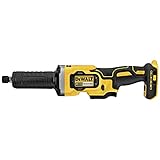
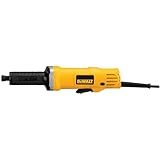
| Spec | Pneumatic (e.g., Ingersoll Rand 301B, Chicago Pneumatic CP875) | Corded Electric (e.g., Makita GD0601, Metabo GE 950 G Plus) | Cordless (e.g., Milwaukee M18 FUEL 2984-20, DeWalt DCG426 20V MAX) |
|---|---|---|---|
| Weight (tool only) | 0.85 – 1.1 lbs (0.39 – 0.5 kg) | 3.5 – 4.2 lbs (1.6 – 1.9 kg) | 2.1 – 3.8 lbs with 5.0Ah battery (0.95 – 1.7 kg) |
| Length | 6.2 – 7.5 in short body / 10 – 13.5 in extended | 12.5 – 15.2 in | 12.0 – 14.5 in |
| No-load Speed | 22,000 – 30,000 RPM | 10,000 – 29,000 RPM (variable on premium models) | 15,000 – 25,000 RPM (3-5 speed settings) |
| Collet Size Standard | 1/4 in (6.35mm), 1/8 in optional | 1/4 in (6.35mm) | 1/4 in and 1/8 in included (Milwaukee, DeWalt) |
| Power Requirement | 4 – 6 CFM @ 90 PSI average, 20 – 25 CFM peak | 3.5 – 6.5 Amp, 120V AC | 18V/20V 5.0Ah battery = 20-35 min continuous under load |
| Noise | 85 – 96 dB(A) without muffler | 78 – 84 dB(A) | 77 – 83 dB(A) |
| Typical Market Range (2026) | $50 – $180 | $90 – $220 | $140 – $280 (bare tool), $250 – $400 (kit) |
Pneumatic die grinders dominate in auto body, fabrication, and foundry work because they are lightest per RPM and tolerate stalls without motor damage. Corded electric models hold speed better under heavy pressure and do not require air treatment. Cordless die grinders have closed the gap since 2022, but their electronic speed control will reduce RPM under load to protect the battery and motor.
Collet Size and Accessory Compatibility
Most die grinders for metalwork use a 1/4-inch collet, which accepts the majority of carbide burrs (double-cut, single-cut, aluminum-cut), 2-inch Roloc discs, and mounted grinding stones. 1/8-inch collets are essential for fine detail work, engraving burrs, and small diamond points.
Look for these details when buying:
- Dual-collet kits: Milwaukee, Makita, and some Ingersoll Rand models include both 1/4-inch and 1/8-inch collets. If a pneumatic model only ships with 1/4-inch, a matching 1/8-inch collet is typically $8-$15 from the same brand. Using a 1/4 to 1/8 adapter sleeve is not recommended for high-RPM metalwork, as it increases runout.
- Collet type: Threaded collet nuts with 3-slit collets hold better than 4-slit types at 25,000+ RPM. Check that the wrench flats are accessible. Quick-change collet systems on electric models save time but add 0.5 inch of length.
- Shank length: Standard burr shank is 1/4-inch diameter x 1 inch long. Extended die grinders need burrs with 2.5 to 6-inch shanks for reaching inside tubing or cylinder heads. Long shanks at 25,000 RPM amplify vibration, so use the shortest shank that reaches the work.
If you only buy one size, get 1/4-inch. If you do porting, die making, or jewelry-scale deburring on steel, ensure 1/8-inch support from the start.
Speed Control and Why It Matters for Metal
More RPM is not always better. Hardened steel and stainless need lower speed and higher pressure with sharp carbide burrs to prevent glazing, while aluminum needs high speed with lubrication to avoid loading.
- Pneumatic: Speed is regulated by a throttle lever and inline regulator. Feathering gives true variable speed, but the tool will slow 15-30% under load unless your line pressure is stable at 90 PSI at the tool.
- Corded variable-speed: Models like the Metabo GE 950 G Plus (2,500-27,000 RPM) and Makita GD0603 use electronic dials that maintain set speed under load. This is ideal for using flap wheels (rated 13,000-15,000 RPM max) and surface conditioning discs without burning.
- Cordless: Most use stepped electronic control (e.g., 15k / 17.5k / 20k / 25k RPM). The tool holds RPM until battery voltage sags or thermal protection engages. You get repeatability but less fine feathering than air.
For mixed metalwork, choose variable speed between 8,000 and 25,000 RPM. Single-speed 25,000-30,000 RPM tools are cheaper but will overspeed 2-inch and 3-inch accessories and shorten burr life on steel.
Tool Length: Short Body vs. Extended Reach
Die grinders come in two body lengths, and length changes balance, control, and application.
- Short body (6-8 inches pneumatic, 12-13 inches electric): Best for deburring edges, gasket surface cleaning, weld dressing, and working on a bench. Closer center of gravity reduces wrist fatigue and gives better control for freehand shaping.
- Extended / long-neck (10-14 inches): Essential for inside frame rails, exhaust ports, and deep tube ID grinding. The extra length dampens high-frequency vibration but makes the tool more prone to bending thin-shank burrs if you apply side load.
Many shops keep one of each in pneumatic because the cost is low, while electric buyers often choose a single mid-length cordless to cover most jobs.
Air Consumption: Will Your Compressor Keep Up?
This is where buyers miscalculate. Die grinders are among the hungriest air tools. A typical 1/4-inch pneumatic die grinder is rated at 4-6 CFM average and 20-25 CFM at free speed.
Compressor ratings are given in SCFM at 90 PSI. A small 20-gallon, 2 HP compressor delivers about 4-5 SCFM at 90 PSI. That will run a die grinder for 30-60 seconds before pressure drops below 80 PSI, causing the tool to bog and lose cutting efficiency.
Worked example:
You have a 60-gallon compressor rated 11.5 CFM @ 90 PSI with a 3.7 HP motor. You want to run a Chicago Pneumatic CP875 rated 22 CFM free speed / 5 CFM average.
- Duty cycle matters: average 5 CFM assumes 15 seconds on, 15 seconds off. Continuous porting draws closer to 12-15 CFM.
- 11.5 CFM supply – 13 CFM demand = -1.5 CFM deficit. The tank will deplete in about 7-9 minutes of continuous grinding, then the motor will run 100% and pressure will still fall.
- Result: you need at least 15-18 CFM @ 90 PSI for uninterrupted pneumatic grinding, which typically means a 60-80 gallon two-stage or a 5+ HP rotary screw.
If your compressor is under 13 CFM @ 90 PSI, electric or cordless will actually cut faster over a work session because there is no waiting for pressure recovery. Factor in air treatment: die grinders need clean, dry air and 2-3 drops of air tool oil daily. Moist air causes vane wear and rust on the rotor within weeks.
Which Die Grinder Should You Buy? Decision Matrix
| Your Situation | Best Fit | Why |
|---|---|---|
| You have a 60+ gallon compressor (15+ CFM @ 90 PSI), work in a fixed bay | Pneumatic short + extended set | Lowest tool weight, lowest replacement cost, tolerates dust and stalls |
| Small garage, 20-30 gallon compressor, occasional weld cleanup | Corded electric variable-speed | No compressor upgrade needed, holds speed on 2-inch discs, runs all day |
| Mobile repair, farm, field, or no 120V nearby | Cordless 18V/20V brushless | Portability and no hose drag; carry two 5.0Ah batteries for 45-60 min work |
| Fine porting, mold finishing, detail deburring | Cordless or pneumatic with 1/8-inch collet + variable speed below 15k RPM | Low runout and low speed prevents chatter on small burrs |
| Budget under $120, need it now | Pneumatic (if air is adequate) or corded single-speed | Lowest entry cost; corded single-speed covers most 1/4-inch burrs |
Durability and Ownership Realities
Product listings rarely explain what actually fails on die grinders.
- Pneumatic wear points: Vanes, front and rear bearings, and the collet nut threads wear first. Vanes last 300-600 hours in clean air, less than 100 hours with wet air or no oil. Symptoms are slow startup and low free speed. A vane and bearing rebuild kit is $18-$35 and takes 20 minutes.
- Electric wear points: Carbon brushes on brushed models (still sold in corded) last 150-300 hours; brushless cordless and premium corded models eliminate this. The collet and armature bearings take abuse from side-loading. Never use a die grinder as a cutoff tool with side pressure on a 3-inch wheel; it overheats the collet and bends the spindle.
- Cordless wear points: Battery heat, not the motor, is the limiter. Continuous grinding pulls 25-35A from an 18V pack. If the pack is hot to hold after use, you are cutting too long per pass. Let it cool 10 minutes and use a second pack. Expect 400-600 charge cycles before capacity drops to 80%.
- Common mistakes: Running burrs faster than their rated RPM, not dressing mounted stones, reusing dull carbide burrs that force you to push harder and stall any drive type, and using impact sockets or unregulated 120 PSI line pressure on pneumatic tools, which blows seals.
- Cleaning: Blow out the collet and shaft with dry air after each session, wipe the body, and store without a burr clamped. For pneumatic, add an in-line filter/regulator/lubricator within 10 feet of the tool and drain the tank daily. For electric, keep vents clear of steel dust, which is conductive and shortens electronic speed controls.
Consumables add up: a quality 1/4-inch double-cut carbide burr ($12-$25) lasts 20-50 hours on mild steel if you do not overheat it, but only 2-5 hours on Inconel or hardened tool steel. Budget for burrs, not just the tool.
How to Choose for Your Shop Setup
If you are setting up die grinders from scratch in 2026, match the tool to infrastructure, not just price. Measure your usable CFM at the tool, not the compressor label, and subtract 20% for hose loss on 25-foot 1/4-inch hose. If you work mostly at a bench with 120V available, a variable-speed corded 1/4-inch die grinder tool with electronic speed hold covers 80% of metalwork. Add a cordless for off-bench and in-vehicle work, and keep pneumatic only if your compressor genuinely supports it. For heavy daily use in a pro shop, owning all three types is common, with pneumatic for rough stock removal, corded for controlled finishing, and cordless for convenience.
FAQ
Can I use router bits in a die grinder? No. Router bits are not balanced for 25,000 RPM in a metal-cutting collet system and have different cutting geometry. Use only burrs and points rated for die grinder speed.
Are electric die grinders more powerful than pneumatic? Electric models maintain torque better under load with electronic feedback, so they feel more powerful when your compressor is marginal. A well-fed pneumatic grinder has similar cutting power but is lighter, so operator fatigue is lower.
How long does a cordless die grinder run on one battery? With a 5.0Ah 18V/20V battery under typical metal deburring load, expect 20-35 minutes of trigger time. Grinding with heavy pressure or large flap wheels draws more current and can cut runtime to 12-18 minutes. A 6.0Ah or 8.0Ah High Output pack adds 20-40% runtime and runs cooler.