Read more about the article How to Choose MIG Wire Diameter for Structural Steel
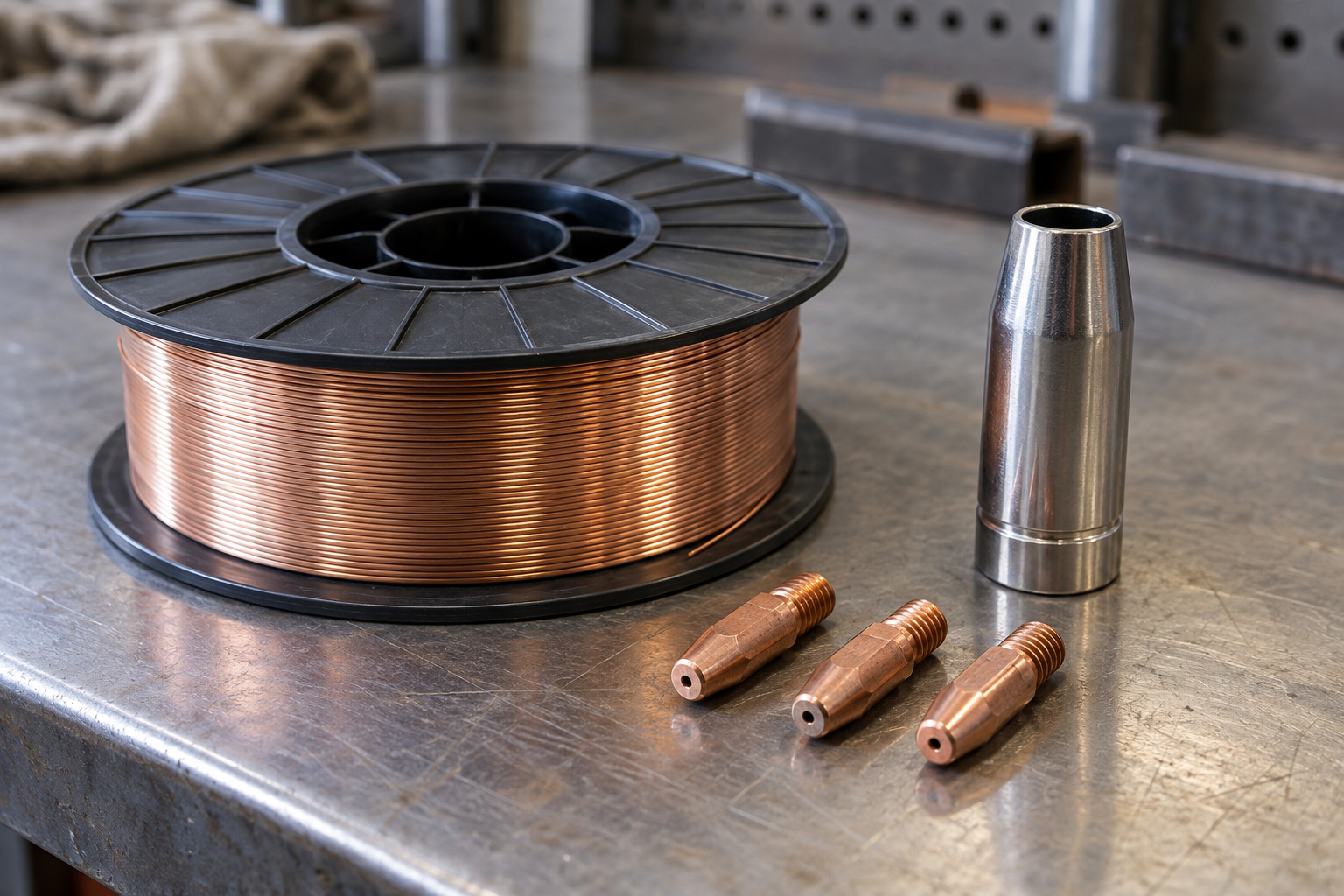
AI-generated editorial illustration of mig wire and tips. Representative context; not a specific product, tested result or step-by-step diagram.

How to Choose MIG Wire Diameter for Structural Steel

Choosing MIG wire diameter for structural steel is mainly a balance between required weld size, steel thickness, welding position, and the output of your machine. A larger wire deposits metal…

Continue ReadingHow to Choose MIG Wire Diameter for Structural Steel
Read more about the article How to MIG Weld Vertical-Up Fillet Joints
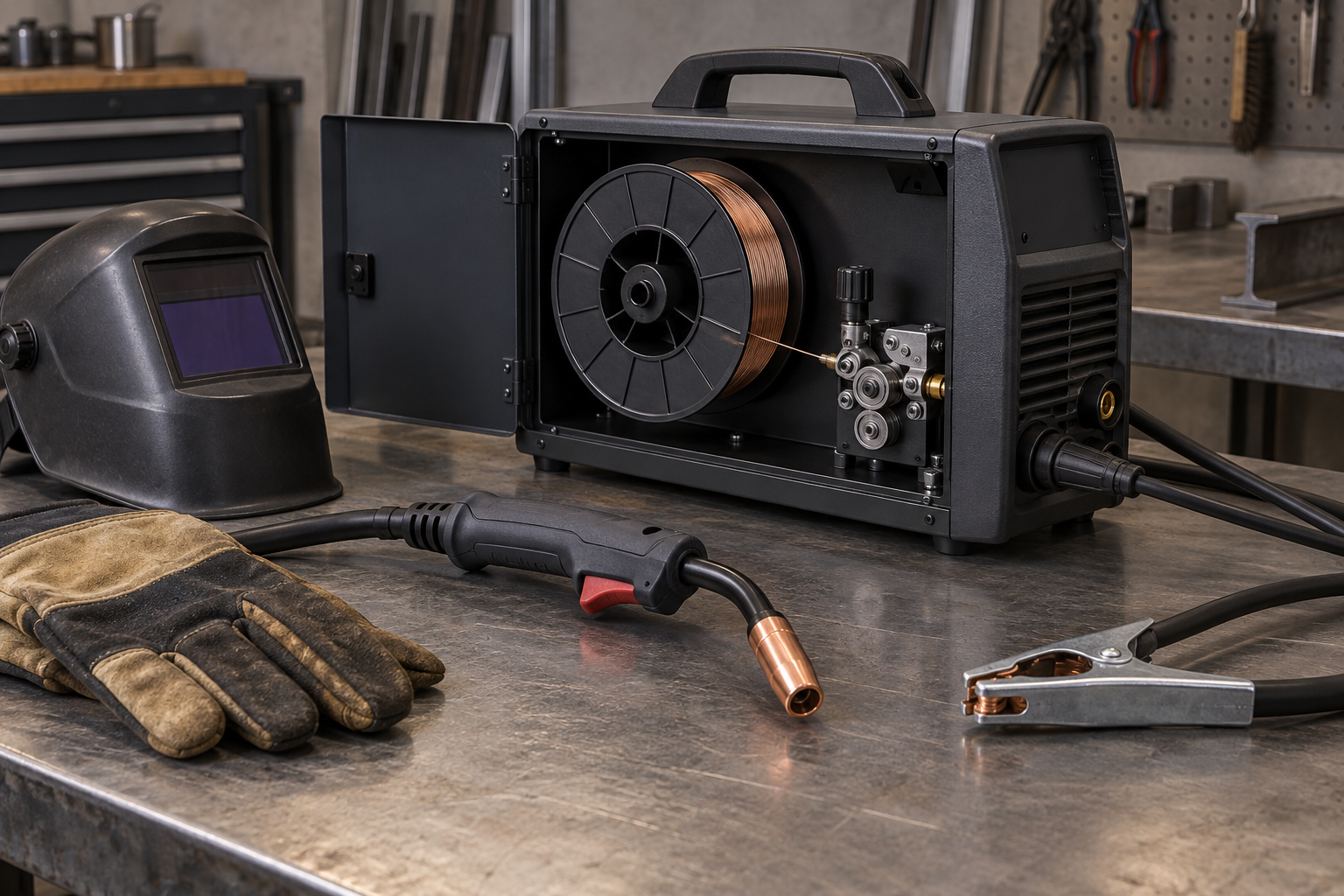
AI-generated editorial illustration of mig welder. Generic context, not an exact product photograph or engineering drawing.

How to MIG Weld Vertical-Up Fillet Joints

Vertical-up fillet welds are slower and less forgiving than flat or horizontal welds, but MIG makes them manageable when the settings, gun angle, and travel speed are controlled. The goal…

Continue ReadingHow to MIG Weld Vertical-Up Fillet Joints
Read more about the article How to Set MIG Polarity for Solid and Flux-Cored Wire
AI-generated editorial illustration of mig welder. Generic context, not an exact product photograph or engineering drawing.

How to Set MIG Polarity for Solid and Flux-Cored Wire

The short answer For most solid MIG wire, set the machine to electrode positive (DCEP): the wire feeder’s torch connection is positive, and the work clamp is negative. For self-shielded…

Continue ReadingHow to Set MIG Polarity for Solid and Flux-Cored Wire
Read more about the article How to MIG Weld Lap Joints on Galvanized Steel
AI-generated editorial illustration of mig welder. Generic context, not an exact product photograph or engineering drawing.

How to MIG Weld Lap Joints on Galvanized Steel

Lap joints are one of the simplest MIG welding joints, but galvanized steel adds a serious complication: the zinc coating produces hazardous fumes when heated. Good results depend less on…

Continue ReadingHow to MIG Weld Lap Joints on Galvanized Steel
Read more about the article How to Reduce Porosity in Gas-Shielded MIG Welds
AI-generated editorial illustration of mig welder. Generic context, not an exact product photograph or engineering drawing.

How to Reduce Porosity in Gas-Shielded MIG Welds

What porosity is—and why shielding gas matters Porosity is gas trapped in solidifying weld metal. It can show up as scattered pinholes, a line of pores, or a cavity exposed…

Continue ReadingHow to Reduce Porosity in Gas-Shielded MIG Welds
Read more about the article How to Troubleshoot Birdnesting in a MIG Wire Feeder
AI-generated editorial illustration of mig welder. Generic context, not an exact product photograph or engineering drawing.

How to Troubleshoot Birdnesting in a MIG Wire Feeder

What birdnesting is Birdnesting is a tangle of MIG wire that piles up between the drive rolls and the gun liner instead of feeding through the gun. It usually happens…

Continue ReadingHow to Troubleshoot Birdnesting in a MIG Wire Feeder
Read more about the article How to Prevent Burn-Through When MIG Welding Sheet Steel
AI-generated editorial illustration of mig welder. Generic context, not an exact product photograph or engineering drawing.

How to Prevent Burn-Through When MIG Welding Sheet Steel

Burn-through happens when the weld puddle melts through the sheet before you can move away or add enough metal to bridge the opening. The usual causes are too much heat…

Continue ReadingHow to Prevent Burn-Through When MIG Welding Sheet Steel
Read more about the article How to MIG Weld Overhead Joints Without Excessive Drooping
AI-generated editorial illustration of mig welder. Generic context, not an exact product photograph or engineering drawing.

How to MIG Weld Overhead Joints Without Excessive Drooping

Overhead MIG welding is difficult because gravity pulls the molten pool away from the joint. Too much heat or a slow travel speed can turn that pull into a hanging…

Continue ReadingHow to MIG Weld Overhead Joints Without Excessive Drooping