Read more about the article How to Use TIG Pulse Settings on Thin Metal
AI-generated editorial illustration of tig welder. Generic context, not an exact product photograph or engineering drawing.

How to Use TIG Pulse Settings on Thin Metal

Pulse TIG can make thin sheet easier to control, but it does not prevent burn-through by itself. The useful settings depend on the metal, thickness, joint, tungsten, and how quickly…
Continue ReadingHow to Use TIG Pulse Settings on Thin Metal
Read more about the article How to Set AC Balance for TIG Welding Aluminum
AI-generated editorial illustration of tig welder. Generic context, not an exact product photograph or engineering drawing.

How to Set AC Balance for TIG Welding Aluminum

AC balance controls how much of each TIG cycle cleans the aluminum versus how much heats the work. Set it too far toward cleaning and the tungsten can overheat; set…

Continue ReadingHow to Set AC Balance for TIG Welding Aluminum
Read more about the article How to Tune MIG Welding Voltage for Short Arcs
AI-generated editorial illustration of mig welder. Generic context, not an exact product photograph or engineering drawing.

How to Tune MIG Welding Voltage for Short Arcs

Short-arc MIG welding is forgiving, portable, and useful on mild steel, but voltage settings are easy to misread. Too little voltage gives a short, harsh arc with poor wetting. Too…

Continue ReadingHow to Tune MIG Welding Voltage for Short Arcs
Read more about the article How to Sharpen a Tungsten Electrode for DC TIG
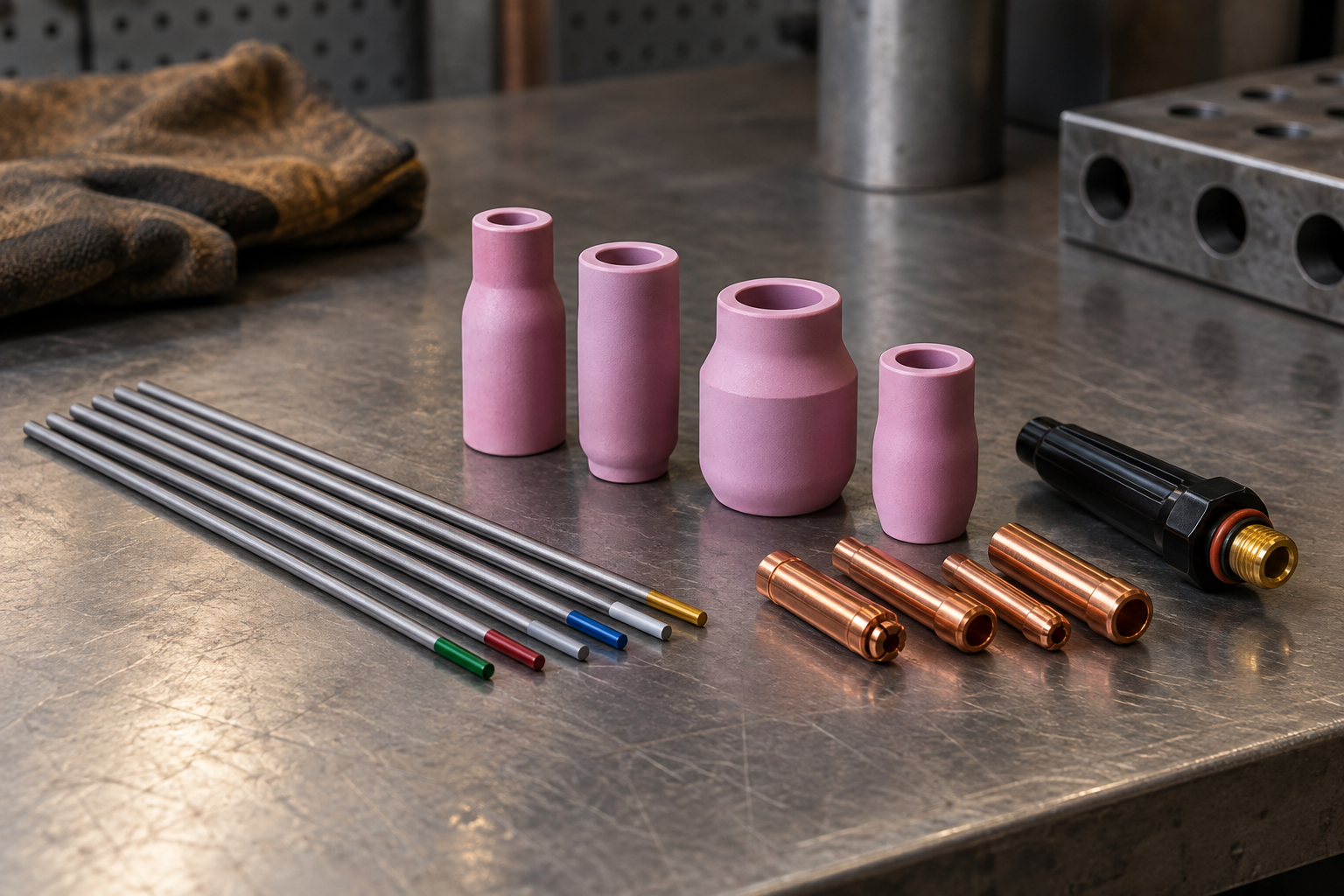
AI-generated editorial illustration of tig tungsten and cups. Representative context; not a specific product, tested result or step-by-step diagram.

How to Sharpen a Tungsten Electrode for DC TIG

A correctly ground tungsten electrode helps a DC TIG arc start cleanly and stay where you point it. The basic method is simple: use a dedicated grinder, grind lengthwise to…

Continue ReadingHow to Sharpen a Tungsten Electrode for DC TIG
Read more about the article How to Set TIG Amperage for Thin Stainless Steel
AI-generated editorial illustration of tig welder. Generic context, not an exact product photograph or engineering drawing.

How to Set TIG Amperage for Thin Stainless Steel

Starting amperage for thin stainless steel For thin stainless, begin around 30–40 amps for 0.5 mm sheet, 40–55 amps for 0.8 mm, and 55–75 amps for 1.2 mm. These are…

Continue ReadingHow to Set TIG Amperage for Thin Stainless Steel
Read more about the article How to Use Run-In and Burnback Controls on a MIG Welder
AI-generated editorial illustration of mig welder. Generic context, not an exact product photograph or engineering drawing.

How to Use Run-In and Burnback Controls on a MIG Welder

Run-in and burnback controls change what happens at the start and end of a MIG weld. Run-in can reduce the wire-feed speed briefly as you begin, helping avoid a hard…

Continue ReadingHow to Use Run-In and Burnback Controls on a MIG Welder
Read more about the article How to Select Contact Tips for Different MIG Wire Sizes
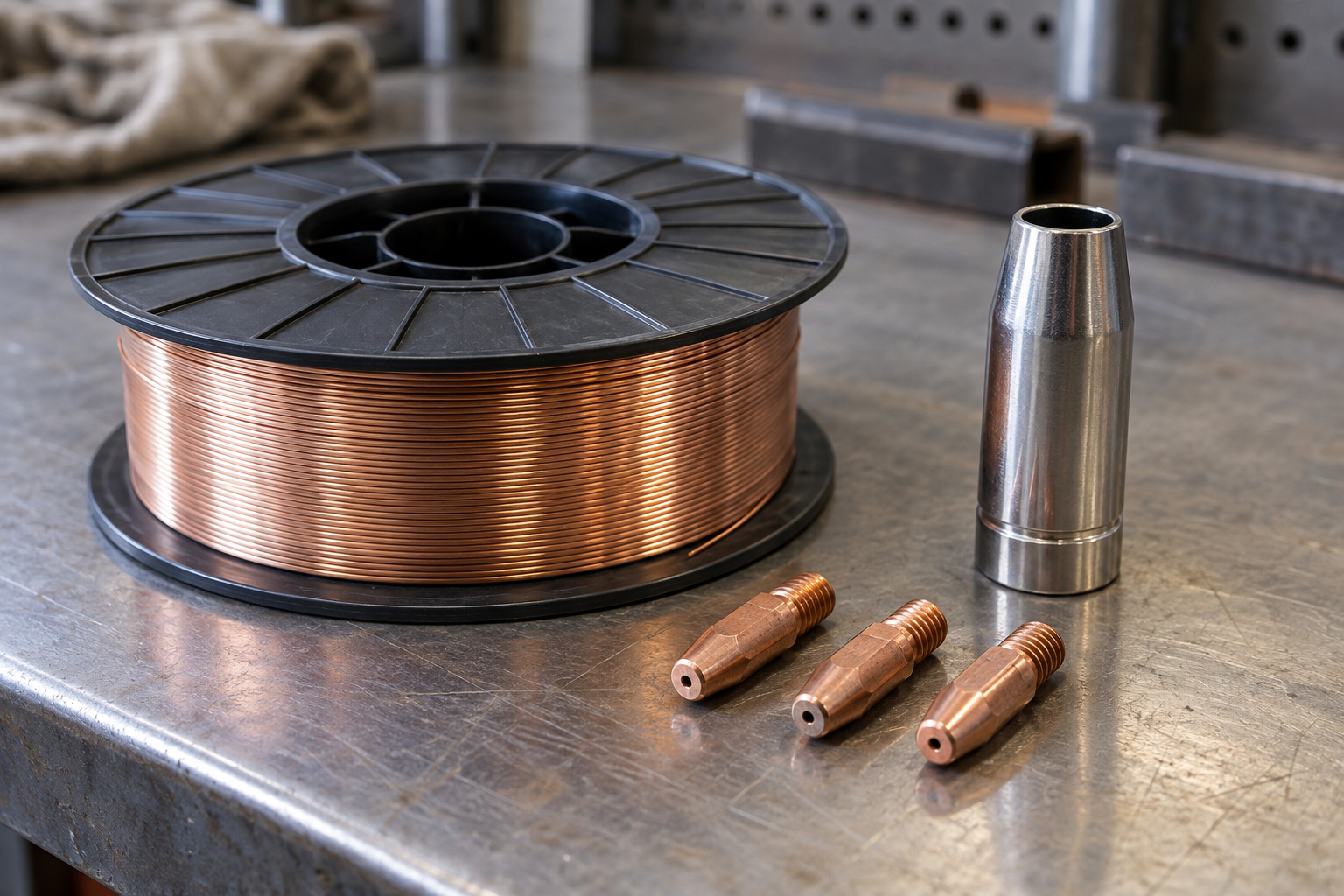
AI-generated editorial illustration of mig wire and tips. Representative context; not a specific product, tested result or step-by-step diagram.

How to Select Contact Tips for Different MIG Wire Sizes

The contact tip is a small part, but a poor fit can cause erratic wire feed, burnback, or an unstable arc. Choose a tip marked for the wire’s actual diameter—not…

Continue ReadingHow to Select Contact Tips for Different MIG Wire Sizes
Read more about the article How to MIG Weld Steel Tubing Without Distortion
AI-generated editorial illustration of mig welder. Generic context, not an exact product photograph or engineering drawing.

How to MIG Weld Steel Tubing Without Distortion

Distortion is one of the most common problems when MIG welding steel tubing. The heat from the arc expands the metal, and the cooling weld contracts it. On thin-wall tube,…

Continue ReadingHow to MIG Weld Steel Tubing Without Distortion