
What's inside
As an Amazon Associate I earn from qualifying purchases. This post may contain affiliate links at no extra cost to you.
Thick steel pipe rewards a stick welder with real output, a stable arc, and enough duty cycle to finish a joint without constant thermal shutdowns. It also exposes weak machines quickly: low open-circuit voltage can make the arc difficult to restart, undersized leads heat up, and an inverter that claims 200 amps may deliver far less at the duty cycle you need.
For most pipe work, the practical target is a machine that delivers 160 to 250 amps, accepts 1/8-inch and 5/32-inch electrodes, and runs from a dependable 240-volt circuit or suitably sized generator. A basic 120-volt welder can handle repair work and thinner wall pipe, but it is a poor choice for repeated passes on heavy wall material.
As an Amazon Associate we earn from qualifying purchases at no extra cost to you.



What we cover
Our Top Picks
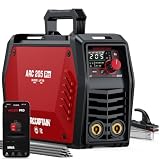
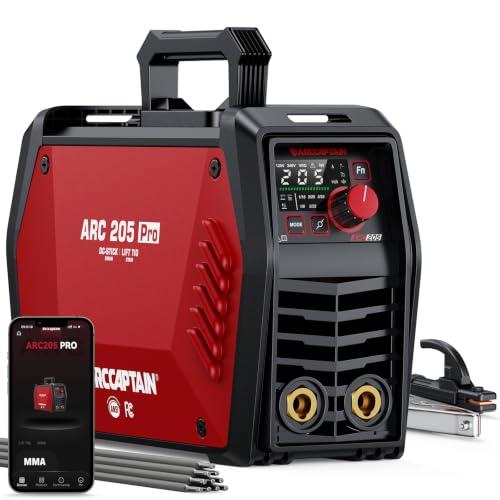
 YESWELDER 205Amp Stick Welder Digital Inverter IGBT ARCARC-205DS15.35 x 13.07 x 7.8 inches8.8 poundsCheck on Amazon



What to Look for in a Stick Welder
Output is only one part of the specification. A welder rated at 200 amps may have a 20% duty cycle at that output, meaning it can weld for two minutes in a ten-minute period before needing to cool. Look for at least 30% duty cycle at your intended amperage; 40% to 60% is more comfortable for long pipe joints and multiple passes.
For thick steel, a machine with a 240-volt input usually gives you more usable power and better arc stability. Dual-voltage models are convenient if you also work on household circuits, but check the output at 120 volts. Many machines lose substantial capacity on 120 volts and may be limited to 1/8-inch rods.
DC output is generally easier for pipe welding because it produces a smoother arc and simpler starts. AC capability still matters in some situations, especially when welding with certain electrodes or using a long extension lead. A DC-only welder is adequate for most mild-steel fabrication, while an AC/DC machine offers more flexibility for field repairs and difficult electrodes.
Best Welder Types for Thick Pipe
| Welder type | Best use | Main advantage | Trade-off |
|---|---|---|---|
| 120V inverter stick welder | Light repair and smaller pipe | Portable and inexpensive | Limited amperage and duty cycle |
| 240V inverter stick welder | General thick-steel pipe work | Good arc control and portability | Needs a suitable circuit or generator |
| AC/DC transformer welder | Shop and farm welding | Durable, simple, and tolerant of abuse | Heavy and less convenient to transport |
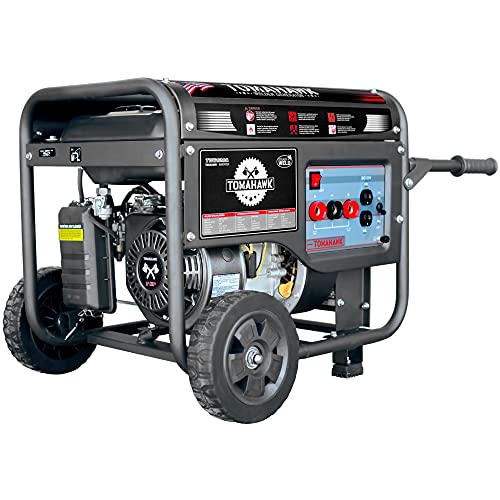
| Engine-driven stick welder | Remote pipe and field work | No utility power required | Expensive, noisy, and maintenance-heavy |
For most buyers, a 240V AC/DC inverter stick welder is the best balance. It is light enough to carry, usually has useful amperage above 200 amps, and can run 6010, 6011, 7018, and stainless electrodes depending on its specifications.
A transformer machine is still a good buy when it will stay in a shop. It has fewer electronic components to damage, tolerates dusty conditions, and often provides a steady arc at moderate amperage. The downside is weight: a traditional 250-amp unit may weigh well over 100 pounds, so it is not an attractive choice for work on a pipeline, trailer, or construction site.
If you routinely weld away from mains power, compare engine-driven stick welder generators. They cost much more than an inverter, but they eliminate long extension cords and can provide dependable output in the field. For occasional outdoor work, renting one is often cheaper than buying.
Amperage and Electrode Choices
Electrode selection determines much of the machine size you need. A 1/8-inch 6010 or 6011 commonly runs around 75 to 125 amps. A 1/8-inch 7018 is often used around 90 to 140 amps. A 5/32-inch 7018 may require roughly 130 to 190 amps, depending on the joint, position, and manufacturer’s range. Always follow the electrode package rather than treating these numbers as fixed rules.
6010 and 6011 are useful for root passes because they dig through light contamination and produce a penetrating arc. Not every inverter supports 6010 well; some are designed primarily for 6011 and 7018. If open-root pipe welding matters, confirm that the machine specifically lists 6010 capability or has a suitable arc-force setting.
7018 produces a strong, clean fill and cap, but it needs dry storage. Damp low-hydrogen electrodes can contribute to porosity, worm tracks, cracking, and unreliable weld strength. For critical work, use fresh rods stored according to the electrode manufacturer’s instructions. For ordinary non-code repairs, 7018AC rods are often more forgiving with smaller machines.
Do not buy a 300-amp welder simply because the pipe is thick. Thick wall pipe is usually completed with multiple passes, not one oversized pass. Excessive amperage can undercut the edges, wash away the root, enlarge the heat-affected zone, and cause distortion. A stable 200-amp machine with proper joint preparation is often more useful than a poorly controlled 300-amp unit.
Pipe Preparation and Welding Practice
Clean the bevel and at least 1 inch on both sides of the joint. Remove paint, oil, scale, and moisture. For heavy wall pipe, a 60- to 75-degree included bevel with a controlled root face and root gap is common, but the correct dimensions depend on the procedure and pipe thickness. Poor fit-up cannot be rescued by a more powerful welder.
Use short, evenly spaced tacks and check alignment before starting the root. Keep the arc length close to the electrode diameter. Excessive arc length causes spatter, porosity, and an unstable puddle. Between passes, chip and wire-brush all slag. Trapped slag is a common cause of elongated inclusions and pinholes, especially in corners and at tie-ins.
For a demanding pipe joint, plan on a root, one or more fill passes, and a cap. Let the work cool enough to control distortion, but maintain the required interpass temperature if a welding procedure specifies one. Preheating may be necessary on thick, high-carbon, or restrained steel; use a temperature crayon or infrared thermometer rather than guessing by appearance.
Practical Buying Recommendations
A cheaper 120-volt inverter is fine for brackets, thin-wall tubing, farm repairs, and occasional 1/8-inch electrodes. It becomes frustrating when you need repeated 5/32-inch rods, long welds, or a hot start after the machine has reached its thermal limit.
For a general shop or serious home user, choose a 200-amp dual-voltage stick welder with clearly published duty-cycle figures, 6010 support if required, and properly sized electrode and work leads. For frequent structural or production pipe work, step up to a 250-amp-class machine with a higher duty cycle and a reliable 240-volt supply.
Finally, budget for a quality auto-darkening helmet, leather gloves, flame-resistant clothing, hearing protection, and ventilation. Stick welding produces intense ultraviolet light, hot slag, and significant fumes. Inspect the finished weld for undercut, visible porosity, incomplete fusion, and cracks; for pressure, structural, or code work, use the required qualified procedure and inspection method rather than relying on appearance alone.
Related guides
More from Amazon
Programs that pair well with the guide above. Offers and eligibility are set by Amazon and may change.
A free business account with business pricing and bulk-buying tools for work, shop or home office.
Create a business accountFree shipping on eligible items, Prime Video and more. Eligible new members can start with a free trial.
Start a Prime free trialAudiobooks and podcasts to listen to on the go. Eligible new members can start with a free trial.
Try Audible freeAd-free music streaming. Eligible new subscribers can start with a free trial.
Try Music Unlimited freeAs an Amazon Associate we earn from qualifying purchases.







Write Your Review
No reviews yet. Be the first to share your experience!