
What's inside
As an Amazon Associate I earn from qualifying purchases. This post may contain affiliate links at no extra cost to you.
What we cover
Our Top Picks
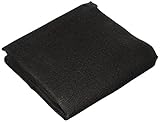
 3' X 3' Tillman Panoxidized Felt Back Welding3 ft. x 3 ft.36 x 36 x 0 inches1.3 PoundsCheck on Amazon
 Steiner 321-6X6 Side Split Cowhide Leather Welding Blanket6' x 6'15 x 12 x 2.5 inches7.9 PoundsCheck on Amazon


Choosing a welding blanket
A welding blanket is a barrier for sparks, spatter and brief contact with hot work—not a substitute for clearing the area or shielding people. It can protect nearby cables, painted surfaces, machinery and combustible materials, but only if the fabric suits the job and the blanket is positioned securely. A blanket marked flame-resistant may still scorch, melt or catch fire under sustained heat.
Start with the process and direction of the sparks. MIG and stick welding can throw hot spatter well beyond the immediate joint; grinding and plasma cutting may send sparks farther still. TIG generally produces less spatter, but the workpiece, filler and nearby surfaces can remain hot. For overhead work, a wall hanging or blanket laid flat may not keep sparks from dropping behind it.
As an Amazon Associate we earn from qualifying purchases at no extra cost to you.


Materials and ratings
Fiberglass is a common affordable choice for general shop shielding. It resists flame and handles intermittent sparks, but can fray with wear, and loose fibers may irritate skin. Some blankets have a silicone coating that reduces shedding and improves handling, though the coating itself can be damaged by heat or sharp edges.
Silica and other high-temperature fabrics are intended for harsher exposure, but the material name alone does not tell you how well a finished blanket will perform. Check the manufacturer’s temperature limit, whether it describes continuous or intermittent exposure, and any stated welding or spark test. A temperature rating is not a promise that the fabric can sit against hot metal indefinitely.
For a basic MIG repair with a few sparks reaching a nearby cabinet, a lower-cost fiberglass blanket can be adequate. For frequent stick welding, heavy spatter, overhead work or protection near expensive equipment, choose a heavier blanket with a clearly stated use and rating. If the product listing gives no useful specifications, treat that uncertainty as a drawback rather than assuming “welding blanket” means suitable for every job.
Compare blanket options
| Type | Best suited to | Trade-offs |
|---|---|---|
| Lightweight fiberglass | Occasional, low-spatter work and simple surface protection | Affordable and easy to drape; more vulnerable to holes, fraying and edge damage |
| Coated fiberglass | Regular shop use where handling and fiber shedding matter | Often easier to clean and handle; coating can wear or be damaged by concentrated heat |
| Heavy or high-temperature fabric | Repeated spatter, demanding positions and higher-value equipment nearby | More durable for suitable tasks, but heavier and usually harder to position; still not fireproof |
Compare thickness and weight as well as material. A heavy blanket can provide a more durable barrier, but it may be difficult to drape over a machine without slipping. A very light sheet is easier to move but may lift in a draft or tear at a sharp corner. Look for reinforced edges or grommets if you need to hang it, and use hooks or clamps rated for the setup rather than relying on tape.
Choose a size and set it up safely
Measure the area you need to cover, then allow overlap around the edges. A blanket that barely covers the equipment can leave a gap where sparks pass through. For a small bench, a sheet around 3 by 4 feet may be manageable; larger work or a floor-to-wall barrier may call for a bigger blanket or several overlapping sections. Check the actual dimensions before buying.
Keep the blanket away from the arc and avoid laying it directly on hot work. Do not fold it so sparks collect in a pocket, and do not drape it over vents, moving parts or equipment that must stay cool. Secure it so it cannot slide into the weld or sag onto the workpiece. When shielding a wall, cover the lower area too: sparks can bounce off the floor and reach behind an otherwise well-placed screen.
Move flammable liquids, rags, cardboard and dust from the area instead of trying to cover them. Keep an appropriate fire extinguisher accessible, and check both sides of the blanket and the space behind it after welding. A hidden ember can smolder after the arc is off. Follow local fire-safety rules and the blanket maker’s instructions, especially for overhead work or prolonged exposure.
What to buy for your job
For a home shop doing occasional MIG or TIG work, a modest fiberglass blanket with stated dimensions and use limits is often enough for protecting a nearby surface from stray sparks. Browse fiberglass welding blankets and check the listing for weight, edge finish and heat guidance before comparing prices.
If sparks land repeatedly, the blanket will be handled often, or it must hang as a barrier, look at coated or reinforced options. A silicone-coated welding blanket can be easier to manage, but inspect the coating regularly for cracks, peeling or heat damage. For severe exposure, compare products sold specifically for high-temperature welding protection rather than relying on a generic heat-resistant label.
Before buying, confirm that the blanket is large enough, suitable for the process, and supported by usable product specifications. Consider whether you need a portable sheet or a curtain with attachment points. A cheap blanket is a reasonable choice for light, occasional shielding if you inspect it and replace it when damaged. It is a poor bargain if its rating is unclear or it has holes, frayed edges or hardened, charred areas.
Inspect and replace
Before each use, look for pinholes, tears, exposed fibers, burned-through spots and damaged stitching. Hold the blanket up to the light if you suspect a small hole. Replace it when sparks can pass through, when damage is growing, or when it no longer stays securely in place. Do not patch a damaged area with ordinary tape or assume a scorched patch remains protective.
Store the blanket clean, dry and folded loosely, away from oils and solvents. Keep a separate blanket for grinding or dirty work if contamination is a concern. A welding blanket is useful, but it is one layer in a safe setup: clear combustibles, use a proper welding screen when people may be exposed to arc light, and stay nearby to monitor the area.
Related guides
More from Amazon
Programs that pair well with the guide above. Offers and eligibility are set by Amazon and may change.
A free business account with business pricing and bulk-buying tools for work, shop or home office.
Create a business accountFree shipping on eligible items, Prime Video and more. Eligible new members can start with a free trial.
Start a Prime free trialAudiobooks and podcasts to listen to on the go. Eligible new members can start with a free trial.
Try Audible freeAd-free music streaming. Eligible new subscribers can start with a free trial.
Try Music Unlimited freeAs an Amazon Associate we earn from qualifying purchases.









Write Your Review
No reviews yet. Be the first to share your experience!