
Key takeaways
- Find the best metal files for weld cleanup and fitting work, including Nicholson mill, half-round, and axe files plus a needle file set for detail.
What's inside
- Quick Answer
- How to Choose
- Nicholson 12-Inch Mill Single Cut Bastard File, Carded (21842NN)
- Nicholson 16-Inch Half-Round Double Cut Coarse File (05307N)
- Nicholson 8-Inch Rectangular Axe File (06706NN)
- Nicholson 12-Inch Half-Round Single Cut Fine File (05158N)
- TEKTON 6655 Needle File Set, 10-Piece
- Who Should Skip It
- FAQ
- Final Verdict
As an Amazon Associate I earn from qualifying purchases. This post may contain affiliate links at no extra cost to you.
Power tools get the glory, but files finish the work. A file cleans up a weld toe, fits a tab into a slot, breaks an edge a grinder would gouge, and shaves a high spot until two parts seat together. It makes no sparks, no noise, and no heat, and it removes metal only where you push it, which is why experienced fabricators keep a rack of them within arm’s reach.
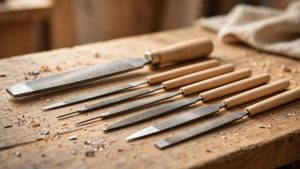
This guide covers five files that handle the core jobs in a welding and fabrication shop: a mill file for flat work, two half-round files for curves in coarse and fine cuts, an axe file for edges and tool maintenance, and a needle file set for detail work. Cut, coarseness, and shape are the choices to understand.
As an Amazon Associate, we earn from qualifying purchases.
What we cover
- Quick Answer
- How to Choose
- Nicholson 12-Inch Mill Single Cut Bastard File, Carded (21842NN)
- Nicholson 16-Inch Half-Round Double Cut Coarse File (05307N)
- Nicholson 8-Inch Rectangular Axe File (06706NN)
- Nicholson 12-Inch Half-Round Single Cut Fine File (05158N)
- TEKTON 6655 Needle File Set, 10-Piece
- Who Should Skip It
- FAQ
- Final Verdict
Quick Answer
The Nicholson 12-inch mill bastard file is the bench standard for draw filing welds and edges. The 16-inch half-round coarse file moves metal fast on curves, the 12-inch half-round fine file finishes them, the Nicholson axe file handles edges and tools, and TEKTON’s needle set covers detail work.
How to Choose
Learn the coarseness ladder. File teeth are graded, from roughest to finest: coarse, bastard, second-cut, and smooth. Coarse and bastard files remove metal quickly for shaping and heavy cleanup. Second-cut and smooth files leave a finer finish for fitting and final passes. Most shops need one fast file and one finishing file in each shape they use.
Single cut versus double cut. Single-cut files have one row of parallel teeth; they shear metal cleanly and are the choice for draw filing, sharpening, and smooth finishes. Double-cut files add a second crossing row, which breaks chips and cuts faster on flat stock, at the cost of a rougher surface. Mill files are single cut; many flat and half-round shop files are double cut.
Match the shape to the surface. Flat and mill files handle flat faces and outside edges. A half-round file works flat on one face and curved on the other, so it reaches inside radii, holes, and pipe saddles. Round, square, and three-square profiles serve slots and corners, while needle files shrink the whole idea down for dies, small parts, and tight detail.
Length, handles, and care. Longer files cut more per stroke and suit big work; shorter files give control on small parts. Always fit a handle to the tang, both for comfort and because a bare tang is a puncture hazard. Clean teeth with a file card, store files so they do not rattle against each other, and push on the forward stroke only, since dragging backward dulls teeth.
Nicholson 12-Inch Mill Single Cut Bastard File, Carded (21842NN)
If a shop owns one file, it is usually this one. The mill file is a flat, single-cut file tapered slightly in width and thickness, and the bastard grade sits in the middle of the coarseness ladder: fast enough to level a weld toe or true an edge, fine enough to leave a surface that needs little more work. The 12-inch length gives a long, controlled stroke for draw filing across wide faces.
This is the file for the classic fabrication tasks: flattening, edge breaking, fitting plates, and cleaning up after the grinder without rounding everything over. Nicholson’s American-pattern teeth are consistent, and the carded version hangs on a shop pegboard as it comes. Buy it first, use it daily, and build the rest of the rack around what it cannot do.
Specs
| Spec | Value |
|---|---|
| Length | 12 inches |
| Shape | Mill, flat |
| Cut | Single cut |
| Coarseness | Bastard |
| Model | 21842NN |
Nicholson 16-Inch Half-Round Double Cut Coarse File (05307N)
This is the heavy remover of the group. Sixteen inches of double-cut, coarse-grade teeth on a half-round profile takes metal off fast, and the long body lets you lean into the stroke on big work. The flat face handles straight edges and faces, while the rounded back works inside curves: pipe saddles, enlarged holes, and radiused transitions on brackets and frames.
Coarse double-cut teeth leave a rough surface, so this file starts jobs rather than finishing them. It is the tool you grab after the torch or plasma cutter to knock a wavy cut line down to the scribe mark before finer files take over. Shops that build with tube and pipe will use the curved face constantly. Pair it with the fine half-round below and the two cover most curved work a fab shop sees.
Specs
| Spec | Value |
|---|---|
| Length | 16 inches |
| Shape | Half-round |
| Cut | Double cut |
| Coarseness | Coarse |
| Model | 05307N |
Nicholson 8-Inch Rectangular Axe File (06706NN)
The axe file is the shop utility player. Its rectangular body is built for maintaining edges: axes, mower blades, shovels, and the other ground tools a fabrication shop also owns, plus general edge work on stock where a compact file is easier to control than a long one. At 8 inches, it fits in a toolbox drawer or a truck box and goes to the work instead of waiting at the bench.
In the fab shop it earns its keep on deburring, edge dressing, and quick touch-ups away from the main bench. The shorter length gives up stroke speed on big flat work, so it complements rather than replaces the mill file. Every shop ends up with a file like this riding along for site work; this Nicholson is the durable version of that idea.
Specs
| Spec | Value |
|---|---|
| Length | 8 inches |
| Shape | Rectangular |
| File type | Axe file |
| Model | 06706NN |
| Brand | Nicholson |
Nicholson 12-Inch Half-Round Single Cut Fine File (05158N)
Where the coarse half-round starts the job, this one finishes it. The single-cut teeth in a fine grade shave metal in thin, controlled amounts and leave the smoothest surface of any file here, which makes it the choice for final fitting: easing a tenon into a mortise, refining a radius, or putting the last finish on a curved edge before paint.
The half-round profile still gives you a flat face and a curved face in one tool, and the 12-inch length balances stroke length with control on medium parts. Single-cut teeth also draw file beautifully along an edge. If your work involves visible joints, fitted parts, or surfaces that get coated, this is the file that makes the difference between rough and finished. It removes metal slowly by design; reach for it last, not first.
Specs
| Spec | Value |
|---|---|
| Length | 12 inches |
| Shape | Half-round |
| Cut | Single cut |
| Coarseness | Fine |
| Model | 05158N |
TEKTON 6655 Needle File Set, 10-Piece
Needle files shrink the file rack down to detail scale. This 10-piece TEKTON set covers the small profiles, flat, round, half-round, square, triangular, and their variants, sized for work that a bench file cannot enter: cleaning up small holes, refining slots and keyways, fitting tabs on small parts, and touching up welds in tight corners on thin material.
They are the files you reach for on die work, model-scale fabrication, jewelry-adjacent repairs, and any job where the part fits in your palm. The trade-off is speed: needle files remove very little metal per stroke and are finishing tools only. As a set, though, they solve the whole class of small problems at once, and they store in a fraction of the space of full-size files. Every complete shop rack ends with a set like this.
Specs
| Spec | Value |
|---|---|
| Pieces | 10 |
| File type | Needle files |
| Application | Detail and small-part work |
| Model | 6655 |
| Brand | TEKTON |
Who Should Skip It
Skip hand files if your cleanup work is high volume; a belt grinder or flap disc will outpace any file on bulk weld dressing. If you need true precision flatness, that is surface grinder and scraping territory, not file work. Files also struggle on hardened steel, which skates the teeth and dulls them, so keep them for mild steel, aluminum, brass, and weld metal. And if your only filing job is sharpening, a dedicated sharpening stone or guided system will serve you better than a general file rack.
FAQ
What does bastard cut mean on a file?
It is a coarseness grade, not a defect. From roughest to finest the grades run coarse, bastard, second-cut, and smooth. Bastard sits in the middle: it removes metal at a useful pace while leaving a moderately fine surface, which is why it is the most common grade in shop files.
Should I choose single cut or double cut for steel?
Double cut removes steel faster and suits rough shaping on flat work. Single cut leaves a smoother finish and is better for draw filing, final fitting, and sharpening edges. Most complete racks include both, matched to the stage of the job.
How do I clean a file that has loaded up with metal?
Push a file card, a brush with short stiff wire bristles, along the teeth in the direction of the cut to lift out pinned chips. A light chalking of the teeth before filing soft metals like aluminum reduces loading. Never slap a file against the bench to clear it; that chips teeth.
Can I file hardened steel or welds?
Weld metal in mild steel files normally, though some welds are harder than the parent plate and will dull teeth faster. Truly hardened steel, such as tool steel after heat treatment, mostly skates under a file and ruins it. Grind hardened material instead, and save files for work they can bite.
Final Verdict
Start with the Nicholson 12-inch mill bastard file; it will handle most flat work a shop produces. Add the 16-inch coarse half-round for fast shaping on curves and the 12-inch fine half-round for finishing them, and curved work is covered end to end. The Nicholson axe file covers edges and site work, and the TEKTON needle set closes out detail jobs. Together the five form a complete, honest rack for a welding and fabrication shop.
Related guides
More from Amazon
Programs that pair well with the guide above. Offers and eligibility are set by Amazon and may change.
A free business account with business pricing and bulk-buying tools for work, shop or home office.
Create a business accountFree shipping on eligible items, Prime Video and more. Eligible new members can start with a free trial.
Start a Prime free trialAudiobooks and podcasts to listen to on the go. Eligible new members can start with a free trial.
Try Audible freeAd-free music streaming. Eligible new subscribers can start with a free trial.
Try Music Unlimited freeAs an Amazon Associate we earn from qualifying purchases.

Write Your Review
No reviews yet. Be the first to share your experience!