What's inside
- Top 3 Picks
- Quick Comparison
- How We Chose
- 1. POPULO Electric Toilet Plunger — Best for Fast, High-Pressure Soft Clogs
- 2. HimaPro Professional Toilet Auger — Best for Routine Bowl-Level Clogs
- 3. AMPFORCE Electric Toilet Plunger — Best for Heavy-Duty Air Clearing
- 4. Mieaoll High-Pressure Toilet Plunger — Best Budget Air Blaster with a Gauge
- 5. Klein Tools 53018 6-Foot Extendable Steel Toilet Auger — Best Overall
- 6. Granarbol High-Pressure Toilet Plunger — Best Cheapest Entry with a Gauge
- 7. Toilet Auger Drain Snake Cleaner Tool, 50″ — Best Budget Auger
- 8. GuardFlow 56658 K-6P 6FT Toilet Auger — Best for Manual or Drill-Assisted Reach
- Top 3 Picks
- Quick Comparison
- How We Chose
- 1. POPULO Electric Toilet Plunger — Best for Fast, High-Pressure Soft Clogs
- 2. HimaPro Professional Toilet Auger — Best for Routine Bowl-Level Clogs
- 3. AMPFORCE Electric Toilet Plunger — Best for Heavy-Duty Air Clearing
- 4. Mieaoll High-Pressure Toilet Plunger — Best Budget Air Blaster with a Gauge
- 5. Klein Tools 53018 6-Foot Extendable Steel Toilet Auger — Best Overall
- 6. Granarbol High-Pressure Toilet Plunger — Best Cheapest Entry with a Gauge
- 7. Toilet Auger Drain Snake Cleaner Tool, 50″ — Best Budget Auger
- 8. GuardFlow 56658 K-6P 6FT Toilet Auger — Best for Manual or Drill-Assisted Reach
As an Amazon Associate I earn from qualifying purchases. This post may contain affiliate links at no extra cost to you.
Start with the Klein Tools 53018 6-Foot Extendable Steel Toilet Auger if you want one tool that covers the widest range of residential clogs — its six-foot extendable steel cable, protective bowl-guard sleeve and manual crank make it the best overall pick for households that would rather not depend on batteries, a compressor or a charge level. The HimaPro 3-Foot Professional Closet Auger is the best mid-range choice for routine bowl-level blockages, and the Mieaoll High-Pressure Toilet Plunger is the best budget pick for soft, high-water clogs that need a fast air burst rather than a cable. Everything below compares the best toilet augers for clogged toilets on the criteria that actually decide the job: cable length and reach, head design, bowl-safe construction, handle comfort, and how each tool behaves on soft waste, wipes, hard mineral build-up, and blockages that sit past the flange. One caveat up front — if the problem is a blocked main line, a septic line or a clog shared by multiple fixtures, none of these tools is the right answer, and a licensed plumber is.
What we cover
- Top 3 Picks
- Quick Comparison
- How We Chose
- 1. POPULO Electric Toilet Plunger — Best for Fast, High-Pressure Soft Clogs
- 2. HimaPro Professional Toilet Auger — Best for Routine Bowl-Level Clogs
- 3. AMPFORCE Electric Toilet Plunger — Best for Heavy-Duty Air Clearing
- 4. Mieaoll High-Pressure Toilet Plunger — Best Budget Air Blaster with a Gauge
- 5. Klein Tools 53018 6-Foot Extendable Steel Toilet Auger — Best Overall
- 6. Granarbol High-Pressure Toilet Plunger — Best Cheapest Entry with a Gauge
- 7. Toilet Auger Drain Snake Cleaner Tool, 50″ — Best Budget Auger
- 8. GuardFlow 56658 K-6P 6FT Toilet Auger — Best for Manual or Drill-Assisted Reach
Top 3 Picks
Best overall: Klein Tools 53018 6-Foot Extendable Steel Toilet Auger
A six-foot extendable steel cable, a steel drop head that hooks rather than pushes, and a protective sleeve that keeps the cable off the porcelain. It is the one tool here that can reach from the bowl through the trapway and out past the flange into the drain line on most residential toilets, and it needs no power source, no battery and no maintenance beyond a rinse and a wipe-down. Best for anyone who wants a single tool that stays useful for a decade.
Best budget: Mieaoll High-Pressure Toilet Plunger with Real-Time Gauge
An air-blast tool with an onboard pressure gauge, sold in the budget tier, that clears soft, high-water clogs in one or two bursts. The gauge matters more than it sounds: it lets you watch the pressure build instead of guessing, which reduces the risk of over-pressurising a bowl or splashing water. Best for renters, guest bathrooms and anyone who wants a fast first response without spending much.
Best for a key use case: POPULO Electric Toilet Plunger, 5 Bar Air Clog Remover
A self-contained electric air plunger with a built-in pump and a stated 5 bar (roughly 72.5 psi) working pressure. There is no manual pumping stroke at all, which makes it the most comfortable option here for anyone with limited grip strength, arthritis in the hands, or a wrist that objects to repeated plunging. Best for fast, repeatable clearing of soft clogs.
Quick Comparison
| Product | Best for | Type | Reach / length | Head design | Bowl-safe construction | Price tier |
|---|---|---|---|---|---|---|
| POPULO Electric Toilet Plunger | Fast clearing of soft, high-water clogs | Electric air plunger, built-in pump | 5 bar (~72.5 psi) burst; body roughly 45–60 cm (18–24 in) | Molded rubber cone with flexible sealing lip | All-rubber contact; no metal enters the bowl | Mid-range |
| HimaPro Professional Closet Auger | Routine bowl-level and trapway clogs | Manual closet auger | 3 ft (91 cm) steel cable | Bulb / drop auger head | Rubber bowl-guard sleeve over the cable | Mid-range |
| AMPFORCE Electric Toilet Plunger | Heavy-duty air clearing, larger bowls | Electric high-pressure air plunger | Hand-held; high-pressure burst on demand | Heavy rubber cone | Rubber cone; no cable or metal in the bowl | Mid-range |
| Mieaoll High-Pressure Toilet Plunger | Budget air clearing with visible pressure | Air drain blaster with real-time gauge | Hand-held; gauge reads pressure as it builds | Rubber cone | Rubber cone only | Budget |
| Klein Tools 53018 | Deep, stubborn or repeated clogs; longest reach | Manual extendable steel auger | 6 ft (183 cm), extendable | Steel drop head | Protective bowl-guard sleeve | Premium |
| Granarbol High-Pressure Toilet Plunger | Cheapest entry point with a gauge | Air plunger with real-time gauge | Hand-held | Rubber cone | Rubber cone only | Budget |
| Toilet Auger Drain Snake Cleaner Tool (gulrear) | Tight budgets and shallow bowl-level clogs | Manual toilet auger | 50 in (127 cm) | Auger head on a flexible steel cable | Bowl-guard sleeve in this class | Budget |
| GuardFlow 56658 K-6P | Long reach, manual or drill-assisted use | Telescopic manual auger, drill-compatible | 6 ft (183 cm), telescopic | Steel drop head | Bowl-guard sleeve | Premium |
How We Chose
This roundup was assembled from manufacturer listings, published specifications and category norms rather than from any physical evaluation. The first filter was category fit: a tool has to be genuinely built for a toilet, which means a bowl-guard sleeve or an all-rubber contact surface, a head that will pass a residential trapway without cracking porcelain, and a length that reaches the blockage rather than stopping short of it. Drain snakes with cutter heads and floor-machine cables were excluded outright because they are the wrong geometry for a toilet bowl.
The second filter was coverage of the two real jobs. Air plungers handle soft, high-water clogs fast; augers handle blockages that air cannot move. A useful roundup needs both, so we kept four of each and made sure the picks spanned the length range — 50 inches, 3 feet and 6 feet — because reach is the single spec that decides whether a tool can clear a clog at all. The third filter was the upgrade path: a budget pick has to be genuinely usable rather than a false economy, and a premium pick has to justify its tier with reach, materials or a feature that changes the job. Finally, price tiers were assigned by general market band, not by any single day’s pricing, and every product is described only by what its listing states or by well-established facts about its category.
1. POPULO Electric Toilet Plunger — Best for Fast, High-Pressure Soft Clogs
As an Amazon Associate we earn from qualifying purchases at no extra cost to you.

The POPULO Electric Toilet Plunger is the pick for someone who wants a clog gone in under a minute without cranking anything. It is an electric air plunger: a self-contained unit with a built-in pump that compresses air and fires it down through a rubber cone seated over the bowl outlet. Because the pump is built in, there is no separate compressor, no hose to attach and no manual pumping motion — you seat the cone, press the trigger, and the burst does the work. That makes it a natural fit where the usual culprit is a wad of toilet paper, a modest amount of waste, or a low-flow toilet that simply does not have the flush volume to push everything through.
Who it suits: renters and homeowners who want a fast first response, anyone with limited grip strength or hand pain who finds repeated plunging tiring, and households where a child or a guest has produced a soft, high-water clog. It is less suited to hard blockages — mineral scale, a foreign object, or anything sitting well past the flange — because air pressure pushes against a blockage rather than cutting into it or hooking it out.
Key specs and spec class
- Type: electric high-pressure air plunger with an integrated pump
- Stated working pressure: 5 bar, which converts to roughly 72.5 psi at the nozzle — the headline figure and the reason this class of tool is described as high-pressure
- Power source: built-in rechargeable electric pump; no external compressor and no manual stroke
- Head: molded rubber cone, sized in this class for standard residential bowl outlets, with a flexible lip that seals against the porcelain
- Typical weight in this class: roughly 1 to 1.5 kg (2 to 3 lb) with the battery fitted
- Typical overall length in this class: about 45 to 60 cm (18 to 24 in), so it stores upright beside the bowl or under a cabinet
- Best on: soft blockages in the bowl and the first few inches of the trapway
Strengths and trade-offs
The core strength is repeatability. A manual plunger depends on your arm, your seal and your timing; an electric air plunger delivers the same burst every time you press the trigger, which means if one burst does not clear the clog, the second and third are identical rather than progressively weaker. The built-in pump also removes the awkward overhead stroke that makes manual plunging messy, and it keeps your hands above the water line, which matters more than most people expect.
The trade-off is scope. Five bar of air is a lot of pressure against a soft clog and very little against a hard one. If the blockage is a plastic toy, a toothbrush, a bottle cap or a decade of mineral scale in the trapway, the air will compress against it and disperse. You will hear the tool work and see the water level twitch without the clog moving. That is the signal to switch to an auger rather than to keep firing bursts, because repeated high-pressure bursts into a bowl that will not drain raise the risk of splashing and, on older or already-cracked porcelain, of doing damage.
There is also a maintenance dimension that a product listing rarely mentions. The rubber cone is a consumable. It deforms over time, picks up mineral film and eventually stops sealing, at which point the tool feels weak even though the pump is fine. Rinsing the cone after each use and checking the lip against a bright light every few months extends its life considerably, and replacement cones are inexpensive and widely available.
Pros
- One-handed operation — no manual pumping stroke at all
- Consistent 5 bar (roughly 72.5 psi) burst every time, so a second attempt is as strong as the first
- Built-in pump means nothing extra to buy, store or connect
- Keeps hands and clothing clear of the water
- Compact enough to live permanently beside the toilet
- Excellent for low-flow and dual-flush toilets with soft clogs
Cons
- Ineffective against hard blockages, foreign objects and mineral scale
- Depends on a charged battery — useless mid-clog if it has been sitting dead for months
- Rubber cone is a wear item and must be kept clean to seal properly
- Cannot reach past the trapway or into the drain line
- More expensive than a simple manual plunger for the same narrow job
How it compares
Against the AMPFORCE Electric Toilet Plunger, the POPULO leans on its stated 5 bar figure and a built-in pump, while AMPFORCE positions itself as the heavier-duty air option for larger bowls and tougher soft clogs. Against the budget Mieaoll and Granarbol air plungers, the POPULO’s advantage is the integrated electric pump — those two are manually charged air blasters with gauges, which means a pumping or priming stroke before the burst. If your hand strength is the limiting factor, the POPULO is the one to pick; if budget is the limiting factor, the gauge-equipped budget tools do the same job for less money and more effort.
2. HimaPro Professional Toilet Auger — Best for Routine Bowl-Level Clogs

The HimaPro Professional Toilet Auger, also sold as a closet auger, is the tool most households should own alongside an air plunger. It is a manual steel-cable auger with a three-foot reach and a bulb-shaped drop head, and its job is exactly the one air pressure cannot do: hook and pull the blockage out of the trapway rather than push against it. The three-foot length is not an accident — it is the size that reaches through the trapway of a standard residential toilet to the flange on most two-piece and one-piece models, which covers the overwhelming majority of everyday clogs.
Who it suits: anyone whose clogs are routine rather than exotic — paper, waste, the occasional wipe — and who wants a tool that works with no battery, no charge and no priming. It is also the sensible choice for a rental property or a guest bathroom, where a tool might sit untouched for a year and then needs to work on the first try. It suits smaller bowls and tight bathrooms better than a six-foot tool, because a shorter cable is easier to control in a cramped space.
Key specs and spec class
- Type: manual closet auger / toilet auger
- Cable length: 3 ft (about 91 cm) — enough to pass the trapway and reach the flange on most residential toilets
- Head: bulb or drop auger head, designed to compress through the trapway and then expand to hook material
- Bowl protection: rubber guard sleeve at the mouth of the tool, in this class, which keeps the rotating cable off the porcelain rim and the bowl interior
- Handle: crank or T-handle style, in this class, with a grip sized for two-handed turning under load
- Cable diameter: typically 1/4 to 3/8 in in this class — stiff enough to transmit torque, thin enough to pass a residential trapway
- Power required: none
Strengths and trade-offs
The strength of a closet auger is that it is a mechanical tool with a mechanical answer. When the drop head reaches a clog, the crank feeds the cable forward and the head either breaks the mass apart or hooks it so you can pull it back through the trapway and out into the bowl. That pull-out action is what distinguishes an auger from a plunger, and it is why augers work on clogs that air pressure cannot shift — a solid wad of paper that has compacted, or a wipe that has folded into a plug.
The three-foot length is the defining trade-off. It reaches the trapway and the flange, but it does not go beyond. If the blockage sits in the drain line past the toilet — which you can usually suspect when the bowl drains slowly even after an auger has cleared the trapway, or when other fixtures in the house are also slow — a three-foot cable will come up short and you will be turning the crank against nothing. That is the moment to step up to a six-foot tool rather than to keep working a short one.
Handle comfort matters more on a manual auger than on any other tool in this roundup, because you are applying torque while also feeding the cable. In this class, look for a crank that lets you use both hands, a grip that does not dig into the palm when the cable binds, and a collar that lets you lock the cable so you can pull back without losing the head’s grip on the clog. A tool that is comfortable when the cable is free can become painful when it is loaded, and that is the moment that decides whether you finish the job.
Maintenance is simple but not optional. After every use, the cable should be pulled out, wiped down and allowed to dry before it is retracted, because a wet steel cable inside a closed housing is a rust problem waiting to happen. The drop head should be inspected for a bent or splayed spring, and the rubber guard should be checked for cuts — a torn guard is the single most common way an auger scratches a bowl.
Pros
- Hooks and removes clogs rather than pushing against them
- No power source, no battery, no charging — works on the first try after a year in a cupboard
- Three-foot cable covers the trapway and flange on most residential toilets
- Compact and easy to control in a small bathroom
- Rubber bowl guard protects the porcelain
- Very affordable for the amount of capability it delivers
Cons
- Cannot reach past the flange into the drain line
- Requires physical effort, and the crank can be tiring under load
- Cable must be dried after use or it will rust
- Bulb heads can struggle with very hard mineral scale
- Less useful than an air plunger for a fast, shallow, soft clog
How it compares
Against the Klein Tools 53018, the HimaPro gives up three feet of reach and the extendable mechanism but costs a tier less and is easier to handle in a small bathroom. Against the budget gulrear 50-inch auger, the HimaPro’s extra ten inches of cable and its mid-range build are the difference between a tool that reaches the flange and one that may stop just short of it on a deeper trapway. If your clogs are consistently at the bowl or in the trapway, the HimaPro is the smarter buy; if you have ever had a clog that a three-foot cable could not touch, go straight to a six-foot tool.
3. AMPFORCE Electric Toilet Plunger — Best for Heavy-Duty Air Clearing

The AMPFORCE Electric Toilet Plunger is the air-pressure option for people who want more authority than a basic hand plunger and a heavier build than a compact electric unit. It is a high-pressure air plunger marketed as a heavy-duty clog remover for toilets, and its positioning is aimed at the household that deals with recurring soft clogs — a busy family bathroom, a rental, or a home with older low-flow toilets that need help finishing a flush. Like other tools in this class, it seats a rubber cone over the bowl outlet and fires a burst of compressed air down the trapway.
Who it suits: households with a high volume of use and a recurring pattern of soft clogs, and anyone who wants an electric tool with a more substantial feel in the hand. It is a good fit for larger bowls and for people who found a smaller electric plunger fiddly to seat. It is not a solution for hard blockages, foreign objects or clogs past the flange, and it should not be used after a chemical drain cleaner has been poured into the bowl, because a pressurised burst can aerosolise the chemicals.
Key specs and spec class
- Type: electric high-pressure air plunger
- Operation: motorised air compression with a trigger-released burst
- Head: heavy rubber cone with a wide sealing lip, in this class, sized for standard residential bowl outlets
- Power source: rechargeable electric, no external compressor
- Typical weight in this class: around 1 to 1.5 kg (2 to 3 lb), slightly heavier than a compact unit, which some users prefer for seating the cone
- Storage: upright, with the cone resting off the floor
- Best on: soft, high-water clogs in the bowl and upper trapway; recurring low-flow flushes that do not complete
Strengths and trade-offs
The main advantage of a heavier electric air plunger is seating. Air tools only work if the cone seals, and a wide, soft lip is far more forgiving of an oval, irregular or slightly angled bowl outlet than a narrow one. A better seal means more of the stored pressure reaches the clog instead of escaping around the edge, and it means fewer attempts per clog. The heavier body also makes it easier to hold the cone in place with one hand while you trigger the burst with the other, which is the practical skill these tools demand.
The trade-offs are the same as the rest of the category, with one addition. Like all air plungers, it cannot hook or pull; it can only push. And because it is marketed as heavy-duty, there is a temptation to keep firing bursts at a clog that has already resisted three. That is the wrong move. If two or three well-seated bursts have not moved the water, the clog is almost certainly not a soft one, and the correct next step is a cable auger — not a fourth burst. Persisting with pressure against a fixed obstruction is how bowls get splashed and how older porcelain gets stressed.
Maintenance is straightforward: rinse the cone after each use, keep the sealing lip free of hair and mineral film, check the battery periodically so it is not flat when you need it, and store the tool with the cone pointing up or resting on a soft surface so the lip does not deform against a shelf. In this class, the cone and the battery are the two items that eventually need replacing, and both are widely available.
Pros
- Heavier, more substantial build than compact electric plungers
- Wide sealing lip that copes with irregular bowl outlets
- Motorised compression removes the manual pumping stroke
- Fast, repeatable bursts for recurring soft clogs
- Good ergonomics for larger hands and larger bowls
- No cable to dry, oil or rust
Cons
- Pushes clogs rather than removing them
- No reach past the trapway or flange
- Needs a charged battery to function
- Heavier than a compact unit, which some users find tiring to hold
- Rubber cone is a wear item and a poor seal ruins performance
- Not appropriate after chemical drain cleaners have been used
How it compares
Against the POPULO Electric Toilet Plunger, the AMPFORCE is the heavier-duty air option: more substantial in the hand and aimed at recurring clogs in larger bowls, while the POPULO leads with a stated 5 bar (roughly 72.5 psi) working pressure and a more compact body. Against the budget Mieaoll and Granarbol air blasters, both of which include a real-time pressure gauge, the AMPFORCE’s advantage is the powered pump rather than a gauge readout — those budget tools show you the pressure, this one builds it for you. If you want to see exactly what you are applying, choose a gauge model; if you want to apply it without effort, choose this one.
4. Mieaoll High-Pressure Toilet Plunger — Best Budget Air Blaster with a Gauge

The Mieaoll High-Pressure Toilet Plunger is the budget entry that gets the important feature right. It is an air drain blaster with a real-time pressure gauge, marketed as a heavy-duty toilet tool, and it works by manually compressing air and releasing it through a rubber cone into the bowl outlet. The gauge is the differentiator at this price: instead of guessing how much pressure you have built up, you watch the needle or readout climb, which makes the burst more consistent and reduces the chance of an accidental over-pressure event in a bowl that was already stressed.
Who it suits: renters, second bathrooms, guest bathrooms and anyone who wants a capable air tool without paying mid-range money. It is also a good choice for someone who is unsure whether air pressure is the right approach at all — buying a budget gauge model is a cheap way to find out whether your clogs are the soft kind that air moves. It suits people who do not mind a manual pumping or priming action, and who value being able to see what the tool is doing.
Key specs and spec class
- Type: manual high-pressure air plunger / air drain blaster
- Pressure feedback: real-time gauge, the defining feature at this price tier
- Head: rubber cone, in this class, with a flexible sealing lip sized for standard residential bowl outlets
- Power required: none — pressure is built by hand and released with a trigger or valve
- Typical weight in this class: around 0.5 to 1 kg (1 to 2 lb), lighter than electric units
- Best on: soft clogs, paper and modest waste in the bowl and upper trapway
Strengths and trade-offs
The gauge is not a gimmick. With any air tool, the failure mode is a bad seal — you build pressure, it escapes around the cone, and nothing reaches the clog. A gauge tells you immediately whether the seal is holding, because the reading climbs and stays rather than dropping away. That turns a frustrating guessing game into a quick diagnostic, and it lets you adjust the cone position until the reading holds. At the budget tier, that single feature is worth more than a slightly larger pressure figure.
Not needing power is the second advantage. There is no battery to be flat, no charging routine to remember, and no electronics to fail. A manual air blaster stored in a cupboard for two years will work the first time you pick it up, which is exactly the property you want from an emergency tool. The trade-off is effort: you supply the compression yourself, and a stiff unit takes several strokes to reach working pressure. For most users that is a few seconds of work; for someone with limited grip strength, it is the reason to look at an electric model instead.
The limits are the standard air-tool limits. It cannot hook a clog out, it cannot reach past the trapway, and it will not move a hard obstruction. It also has one specific caution that applies to every pressurised tool: never use it in a bowl that has recently received a chemical drain cleaner, because the burst can throw caustic liquid into the air. And as with all rubber-cone tools, the cone is the wear item — keep it clean, and replace it when the lip stops sealing.
Pros
- Real-time pressure gauge shows whether the cone is sealing
- Budget price tier for a genuinely capable air tool
- No battery, no charging, no electronics to fail
- Light and easy to store
- Good way to test whether air pressure suits your clogs before spending more
- Consistent bursts once you learn the stroke
Cons
- You supply the pumping effort yourself
- Lower ceiling on pressure than a powered unit
- Cannot reach beyond the trapway
- Rubber cone is a consumable
- Hard blockages, objects and scale are unaffected
- Manual priming is awkward for users with hand or wrist limitations
How it compares
Against the Granarbol High-Pressure Toilet Plunger, which also carries a real-time gauge and sits in the budget tier, the two are direct competitors in the same class — both manual, both gauge-equipped, both rubber-cone tools. The practical difference comes down to build feel and how the trigger or valve is arranged in the hand, which is worth weighing if you can compare them side by side. Against the mid-range POPULO and AMPFORCE electric plungers, the Mieaoll gives up powered compression but keeps the gauge — and for a first air tool, or a backup for a second bathroom, that trade is usually the right one.
5. Klein Tools 53018 6-Foot Extendable Steel Toilet Auger — Best Overall
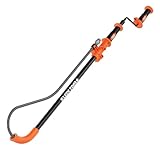
The Klein Tools 53018 is the tool that ends the argument. It is a six-foot extendable steel toilet auger from a brand long established in hand tools and plumbing equipment, and its defining advantage is reach: six feet of steel cable takes you through the bowl, through the trapway, past the flange and into the drain line, which is further than any other manual tool in this roundup. If you have ever had a clog that a three-foot closet auger simply could not touch, this is the tool that solves it. It is the best overall pick because it covers the widest range of blockages with the fewest dependencies — no battery, no charge, no compressor, no priming stroke.
Who it suits: homeowners who want one tool that will still be useful in ten years, people who have already been defeated by a short auger, and anyone whose clogs tend to sit deeper than the trapway. It also suits households on septic systems, where the priority is clearing the toilet’s own path without introducing anything harsh into the tank. It is less suited to a very small bathroom, where a six-foot tool is more awkward to work than a three-foot one, and it is overkill if your clogs are always shallow and soft.
Key specs and spec class
- Type: manual extendable steel toilet auger / plumbing snake
- Reach: 6 ft (about 183 cm) — long enough to pass the trapway, the flange and a stretch of the drain line on most residential installations
- Construction: steel cable with an extendable mechanism, so the working length can be adjusted rather than left fully extended
- Head: steel drop head designed to compress through the trapway and expand to catch material
- Bowl protection: protective bowl-guard sleeve at the tool mouth, which keeps the rotating cable away from the porcelain rim and bowl walls
- Handle: crank-style grip in this class, sized for two-handed turning under load
- Power required: none
Strengths and trade-offs
Reach is the headline, but the extendable mechanism is the underrated feature. A fixed six-foot cable is unwieldy when the clog is close to the bowl; an extendable one lets you work short for a shallow clog and long for a deep one, adjusting as you go rather than fighting slack cable. That also makes the tool easier to store and easier to control in a confined space, because you are only managing the length you actually need.
The steel drop head is the other reason this tool earns its tier. A drop head is designed to fold down as it passes through the trapway and spring open on the far side, so it can hook material and pull it back rather than merely poking at it. Combined with six feet of reach, that means this auger can retrieve a clog that has travelled beyond the toilet — something no air plunger and no three-foot closet auger can do.
The trade-offs are weight, bulk and price. Six feet of steel cable is heavier than three feet, and turning a loaded cable through a tight trapway is real work; the crank needs to be comfortable or the job becomes unpleasant. The tool is also physically longer to store, and it sits in the premium tier, which is a meaningful step up from a basic closet auger. And as with every manual auger, the cable must be pulled out, wiped and dried after use — retracting a wet steel cable into a closed housing is how rust starts.
One more consideration: a bowl-guard sleeve protects the porcelain only if it is intact. Check it every time. A split or worn guard turns a bowl-safe tool into one that can scratch a glaze, and glaze scratches become staining and odour problems that no amount of cleaning fully resolves.
Pros
- Six feet of reach — the longest in this roundup and enough to pass the flange
- Extendable cable adjusts to the clog instead of leaving slack
- Steel drop head hooks and retrieves rather than pushing
- No power source, no battery, no charging, no priming
- Bowl-guard sleeve protects the porcelain
- From an established hand-tool and plumbing brand with widely available parts
Cons
- Premium price tier — the most expensive manual tool here
- Heavier and bulkier than a three-foot closet auger
- Awkward to work with in a very small bathroom
- Requires physical effort; the crank loads up in a tight trapway
- Cable must be dried after every use to prevent rust
- More tool than a household with only shallow, soft clogs needs
How it compares
Against the HimaPro 3-Foot Closet Auger, the Klein Tools adds three feet of reach, an extendable mechanism and a steel drop head at a higher price tier — the right upgrade for anyone who has hit the limits of a three-foot cable. Against the GuardFlow 56658 K-6P, also a premium six-foot telescopic auger, the two are close competitors in the same class: both offer six feet of telescopic reach and a drop head, and the GuardFlow adds drill compatibility for users who want to spin the cable under power. If you would rather never depend on a drill, the Klein Tools is the more self-sufficient choice; if powered assistance appeals, look at the GuardFlow.
6. Granarbol High-Pressure Toilet Plunger — Best Cheapest Entry with a Gauge

The Granarbol High-Pressure Toilet Plunger is the lowest-cost way into the air-pressure category while still getting useful feedback. It is a manual high-pressure plunger with a real-time gauge, sold in the budget tier, and it does the same fundamental job as every other air tool here: build pressure, seat the cone over the bowl outlet, release the burst, and let the air displace the clog. The gauge is the feature that keeps it from being a disposable gadget, because it lets you confirm the cone is sealing before you commit to a burst.
Who it suits: a second bathroom, a rental unit, a first apartment, or a spare tool for a household that already owns a good auger and wants a fast-response option in another part of the house. It is also a reasonable purchase for someone who is not yet sure how their clogs behave — at the budget tier, a gauge-equipped air blaster is a low-risk experiment. It does not suit hard blockages, deep clogs past the flange, or users who struggle with repeated manual pumping.
Key specs and spec class
- Type: manual high-pressure air plunger with a real-time gauge
- Pressure feedback: gauge readout that shows pressure building and holding, which indicates whether the rubber cone is sealing
- Head: rubber cone in this class, sized for standard residential bowl outlets
- Power required: none
- Typical weight in this class: roughly 0.5 to 1 kg (1 to 2 lb)
- Best on: soft clogs, paper and light waste in the bowl and upper trapway
Strengths and trade-offs
The case for the Granarbol is simple: it costs the least of anything here and it still gives you the two things that make an air tool work — a rubber cone that seals and a gauge that tells you whether it is sealing. For a tool that might be used four times a year, that is a rational purchase. It stores small, needs no maintenance beyond rinsing the cone, and will never be flat when you need it.
The trade-offs are the same as every manual air tool, with the emphasis on effort. You are the compressor. A firm seal and a firm stroke are required, and a weak stroke produces a weak burst. Users who find manual plunging tiring will find manual air blasting tiring too — the motion is different, but the demand on the hands and forearms is comparable. And as with all pressure tools, it should never be used in a bowl that has recently received chemical drain cleaner.
One practical note on the gauge: it is a diagnostic, not a target. You do not need to reach any particular number. What you need is a reading that climbs and holds while the cone is seated. If it climbs and immediately falls, the seal is leaking and you should reposition the cone rather than pump harder. Learning that single habit will make any air tool work better.
Pros
- Budget price tier — the cheapest way to try air pressure
- Real-time gauge confirms whether the cone is sealing
- No battery, no charging, no electronics
- Compact and easy to store in a small bathroom
- Works immediately after long storage
- Sensible spare for a second bathroom or rental
Cons
- Manual pumping effort required for every burst
- Cannot reach past the trapway
- Ineffective on hard blockages and foreign objects
- Rubber cone wears and must be replaced
- Lower pressure ceiling than powered units
- Build feel is budget-tier and less substantial in the hand
How it compares
Against the Mieaoll High-Pressure Toilet Plunger, the Granarbol occupies almost exactly the same niche: budget tier, manual operation, real-time gauge, rubber cone. Both are direct substitutes, and the deciding factors are how the handle and trigger sit in your hand and how the gauge is positioned for reading while you work. Against the mid-range AMPFORCE Electric Toilet Plunger, the Granarbol trades powered compression for a much lower price and no dependence on a battery — a fair trade for occasional use, a poor one for a household that clears clogs weekly.
7. Toilet Auger Drain Snake Cleaner Tool, 50″ — Best Budget Auger

The gulrear 50-inch Toilet Auger Drain Snake Cleaner Tool is the budget route into cable-based clog removal. At 50 inches — just over four feet — it sits between a three-foot closet auger and a six-foot premium snake, and it uses the same fundamental mechanism as both: a flexible steel cable with an auger head that feeds down through the trapway, breaks up or hooks the blockage, and pulls it back into the bowl. For a household whose clogs sit at the bowl or in the first stretch of the trapway, that is enough.
Who it suits: tight budgets, first apartments, rental units and anyone who wants the hook-and-pull capability of an auger without paying mid-range or premium prices. It is also a reasonable second auger for a house that already has a six-foot tool in the main bathroom and needs something smaller for a powder room. It does not suit deep clogs past the flange, where the extra ten inches over a three-foot tool help but the missing two feet over a six-foot tool hurt.
Key specs and spec class
- Type: manual toilet auger / drain snake cleaner
- Cable length: 50 in (about 127 cm) — roughly 4.2 ft, between a standard three-foot closet auger and a six-foot tool
- Head: auger head on a flexible steel cable, in this class, designed to pass the trapway and catch material
- Bowl protection: a bowl-guard sleeve or protective collar in this class keeps the cable off the porcelain
- Handle: crank or grip-style, in this class, sized for one- or two-handed turning
- Power required: none
- Best on: bowl-level and trapway clogs of paper, waste and light wipes
Strengths and trade-offs
The 50-inch length is the interesting spec. Ten inches more than a standard closet auger makes a real difference on deeper residential trapways and on toilets where the clog has pushed past the first bend. It is also meaningfully shorter and lighter than a six-foot tool, which makes it easier to manage in a small bathroom and easier to store. For the money, it delivers the core auger action — feed, catch, pull — that air tools cannot replicate.
The trade-offs are tier-related. Budget augers tend to have thinner cable, simpler handles and less refined guards than mid-range and premium models. A thinner cable transmits less torque, which means a stubborn clog takes longer to break up, and a simpler handle is less comfortable once the cable loads up. None of that makes the tool unusable — it makes it slower. For occasional use, slower is usually acceptable; for a household that clears clogs every month, it becomes the reason to upgrade.
As with any manual auger, maintenance decides the lifespan. Pull the cable out fully after each use, wipe it dry, check the head for a bent or splayed spring, and inspect the guard for cuts. Store it dry. A budget auger that is dried and stored properly will outlast a premium one that is retracted wet.
Pros
- Budget price tier with genuine hook-and-pull capability
- 50 inches of reach — more than a standard three-foot closet auger
- Lighter and easier to store than a six-foot tool
- No power source, no battery, no charging
- Good fit for small bathrooms and secondary toilets
- Simple enough that there is nothing to configure or learn
Cons
- Thinner cable and simpler handle than mid-range tools
- Cannot reach past the flange into the drain line
- Slower on stubborn or compacted clogs
- Budget guard may be less robust than premium sleeves
- Cable must be dried after use to prevent rust
- Hard mineral scale can defeat a basic auger head
How it compares
Against the HimaPro 3-Foot Professional Closet Auger, the gulrear offers roughly ten extra inches of reach at a lower price tier, but gives up the mid-range build quality and the more substantial handle. If reach is the constraint, the gulrear wins; if you want a tool that feels solid under load and lasts longer, the HimaPro does. Against the premium Klein Tools 53018 and GuardFlow 56658 K-6P, the gulrear is a different class of tool entirely — those two reach the drain line, this one does not. Buy the gulrear for shallow, routine clogs; step up to six feet the moment you suspect the clog is beyond the toilet.
8. GuardFlow 56658 K-6P 6FT Toilet Auger — Best for Manual or Drill-Assisted Reach
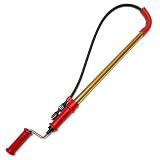
The GuardFlow 56658 K-6P is a six-foot telescopic toilet auger designed to be used either manually or with a drill, which makes it the most flexible tool in this roundup for deep clogs. Its six-foot reach puts it in the same class as the Klein Tools 53018, and its telescopic construction means the working length adjusts to the job rather than being fixed. The drill compatibility is the distinguishing feature: instead of turning a crank by hand, you can chuck the cable’s driver end into a variable-speed drill and let the motor spin the head while you feed it.
Who it suits: homeowners who deal with recurring deep clogs and want to reduce the physical effort of cranking a loaded six-foot cable, and anyone who already owns a drill and would rather use it than their wrist. It also suits people who want a single premium tool that covers both shallow and deep blockages, since the telescopic design works short as well as long. It is less suited to a household that wants simplicity — a drill-assisted auger asks more of the operator than a plain crank tool, and used carelessly it can kink a cable or damage a trapway.