What's inside
- Quick comparison: the main termite treatment product classes
- Liquid soil termiticides: best overall when you already have termites
- Bait stations: best when you’re preventing, not fighting
- Foams and gels: best for wall voids and spot work
- Borate wood treatments: best for new builds and remodels
- How to choose: the coverage math that decides your budget
- Decision matrix: match the product to your situation
- What wears out, what you rebuy, and the mistakes that waste money
- Frequently Asked Questions
- Quick comparison: the main termite treatment product classes
- Liquid soil termiticides: best overall when you already have termites
- Bait stations: best when you’re preventing, not fighting
- Foams and gels: best for wall voids and spot work
- Borate wood treatments: best for new builds and remodels
- How to choose: the coverage math that decides your budget
- Decision matrix: match the product to your situation
- What wears out, what you rebuy, and the mistakes that waste money
- Frequently Asked Questions
As an Amazon Associate I earn from qualifying purchases. This post may contain affiliate links at no extra cost to you.
For an active subterranean termite infestation, the best termite treatment product for most DIY-capable homeowners is a fipronil 9.1% soil concentrate — sold as Termidor SC or the generic Taurus SC — applied as a continuous trench-and-treat barrier around the foundation, because it is non-repellent (termites tunnel straight through it and transfer it back to the colony) and the manufacturer’s label residual is measured in years, not months. If you don’t have termites yet and want to keep it that way, a bait-station system such as BASF’s Trelona ATBS is the better buy: no digging, no trench, and it keeps working for as long as you service it. Foams, gels, and borate wood treatments are spot and construction tools — they solve specific problems well and cannot replace a soil barrier or a bait grid.
As an Amazon Associate we earn from qualifying purchases at no extra cost to you.


What we cover
- Quick comparison: the main termite treatment product classes
- Liquid soil termiticides: best overall when you already have termites
- Bait stations: best when you’re preventing, not fighting
- Foams and gels: best for wall voids and spot work
- Borate wood treatments: best for new builds and remodels
- How to choose: the coverage math that decides your budget
- Decision matrix: match the product to your situation
- What wears out, what you rebuy, and the mistakes that waste money
- Frequently Asked Questions
Quick comparison: the main termite treatment product classes
| Product / class | Best for | Active ingredient & key spec | Coverage per container | Typical price range |
|---|---|---|---|---|
| Fipronil 9.1% concentrate (Termidor SC, Taurus SC) | Active infestations; full perimeter barrier | Fipronil 9.1%; 0.8 fl oz per gallon of finished solution at the termite trench rate | 20 oz bottle → ~25 gal → ~60 linear ft of trench | $50–$90 |
| Imidacloprid 21.4% concentrate (Dominion 2L) | Budget barrier, preventive perimeter work | Imidacloprid 21.4%; roughly 0.4 fl oz per gallon | 27.5 oz bottle → 60–70 gal → ~160 linear ft | $40–$70 |
| Bait stations — Trelona ATBS | Prevention and continuous monitoring | Noviflumuron 0.5% in an in-ground station; one station every 10–20 linear ft | Sold in 4-station kits; scales with perimeter | $250–$500 per kit; $1,500–$3,000 professionally installed |
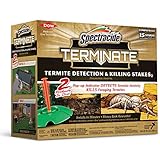
| Consumer bait stakes (e.g. Spectracide Terminate) | Low-cost early detection | Slow-acting toxicant stake designed to be carried back to the colony | Multi-stake packs; one every 10–20 linear ft | $15–$35 per pack |
| Fipronil aerosol foam (Termidor Foam) | Wall voids, baseboards, spot knockdown | Fipronil foam, ready-to-use, no mixing | One can treats a limited void volume, not a perimeter | $25–$45 per can |
| Gel bait (Advion Termite) | Void and cartridge baiting, localized colonies | Indoxacarb-based gel in a syringe applicator | 30 g syringe; small targeted placements | $20–$40 |
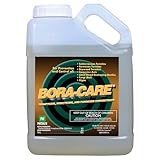
| Borate wood treatment (Bora-Care) | New construction, remodels, exposed framing | Disodium octaborate tetrahydrate 40%; mixes 1:1 with water | Several hundred sq ft of framing per gallon of concentrate, per the label’s coverage chart | $80–$150 per gallon of concentrate |
Liquid soil termiticides: best overall when you already have termites
Best overall: fipronil 9.1% concentrate (Termidor SC / Taurus SC)
Fipronil is the benchmark for a reason: it is non-repellent, so termites don’t detect it and avoid it — they pass through treated soil, pick up a lethal dose, and spread it through the colony through grooming and contact. That transfer effect is what separates it from older repellent chemistries, which simply push termites around the house. According to the manufacturer’s label, the termite trench rate is 0.8 fl oz per gallon of water, and the standard application volume is about 4 gallons per 10 linear feet of trench dug against the foundation.
It suits anyone willing to dig a 6-by-6-inch trench down to the top of the footing and mix concentrate in a pump sprayer. The trade-off is price and legality: it is the most expensive liquid per linear foot, and some states restrict or prohibit homeowner application of soil termiticides — check with your state’s pesticide regulator before you buy.
Best budget liquid: imidacloprid 21.4% (Dominion 2L)
Imidacloprid is also non-repellent and does the same job chemically, just with a shorter residual — typically cited at three to five years in undisturbed soil versus the five-to-ten-year range commonly claimed for fipronil. The dilution is lower (about 0.4 fl oz per gallon), so a single bottle stretches far further. For a homeowner treating 150-plus linear feet on a tight budget, it is the pragmatic pick. The trade-off: you will likely re-treat sooner, and if you sell the house inside a decade the barrier may already be aging out.
Bait stations: best when you’re preventing, not fighting
Best professional-grade bait: Trelona ATBS (noviflumuron)
In-ground bait stations use an insect growth regulator — noviflumuron in Trelona ATBS, hexaflumuron in older Sentricon installations — that prevents termites from molting. It is slow by design: workers feed, return to the nest, and the colony collapses weeks later. The advantage is that no trenching is required and the system is permanent infrastructure rather than a barrier that degrades. The trade-offs are up-front cost, the need to inspect stations every three to four months, and the fact that baits are consumables you will keep buying.
Best cheap monitoring option: consumer bait stakes
Big-box stake kits cost a fraction of a professional system and are genuinely useful for detection — you’re buying early warning more than colony elimination. They typically cover 10 to 20 linear feet per stake, so a typical home perimeter needs a dozen or more. The main trade-off is potency: consumer stakes are slower and less aggressive than professional bait matrices, and they won’t rescue a house with an established infestation.
Foams and gels: best for wall voids and spot work
Fipronil aerosol foam is the tool for the case where you’ve pulled off a baseboard or opened a wall and found live termites but have no soil access. It expands to fill the void, which is exactly where a liquid spray can’t reach. Gel baits such as Advion Termite work similarly in tighter cracks and behind trim. The honest limitation: foam residue lasts days to weeks, not years. It kills what it contacts and leaves no barrier behind, so it is a complement to a soil treatment or a bait grid — never a substitute.
Borate wood treatments: best for new builds and remodels
If the framing is open — a remodel, an addition, a new build — borate is the highest-value dollar you’ll spend. Bora-Care at 40% disodium octaborate tetrahydrate soaks into bare wood and makes the timber itself indigestible to termites, and it also suppresses wood-decay fungi. Because it protects the wood rather than the soil, it lasts as long as the wood stays dry; borates are water-soluble, so repeated wetting will leach them out. It must be applied before paint, stain, or sheathing goes on, which is why it’s a construction-phase product.
How to choose: the coverage math that decides your budget
You buy termite products by container but you actually need coverage, so run the arithmetic before ordering. A 20 oz bottle of fipronil 9.1% concentrate at 0.8 fl oz per gallon makes about 25 gallons of finished solution. At 4 gallons per 10 linear feet of trench, that’s roughly 62 linear feet of foundation. A typical single-story 2,000 sq ft home has 150–200 linear feet of perimeter, so one bottle covers about a third of the job — plan on two to three bottles, or $150–$270, for a full wrap.
Imidacloprid 21.4% at about 0.4 fl oz per gallon yields roughly 65–70 gallons from a 27.5 oz bottle, which is around 160 linear feet of trench for $40–$70. That works out near $0.30–$0.40 per linear foot, against roughly $1.10–$1.60 per linear foot for fipronil. The fipronil premium buys residual and transfer performance, not coverage — which is the right trade if you have an active infestation and the wrong one if you’re just reinforcing a barrier.
Decision matrix: match the product to your situation
| Your situation | Best pick | Why | Budget |
|---|---|---|---|
| Active infestation, mud tubes visible, willing to dig | Fipronil 9.1% soil barrier | Non-repellent transfer effect plus the longest labeled residual | $150–$270 for a full perimeter |
| No infestation, prevention only, no digging wanted | Trelona ATBS or pro-installed bait system | No trench, continuous monitoring, permanent hardware | $250–$500 DIY; $1,500–$3,000 installed |
| 150+ linear feet to cover on a tight budget | Imidacloprid 21.4% concentrate | Roughly a third the cost per linear foot | $40–$70 |
| Live termites inside a wall void, no soil access | Fipronil aerosol foam | Expands into cavities a sprayer can’t reach | $25–$45 per can |
| Open framing during a remodel | Borate (Bora-Care) | Protects the wood itself and won’t degrade if kept dry | $80–$150 per gallon of concentrate |
| Drywood termites in trim or furniture | Borate spot treatment or gel bait | Localized, no trenching, no whole-house work | $20–$150 |
What wears out, what you rebuy, and the mistakes that waste money
- Soil barriers degrade with disturbance, not just time. A fipronil barrier left alone is commonly quoted at five to ten years; regrade the yard, trench for irrigation, or till a flower bed along the foundation and you’ve broken the treated zone. Termites find gaps.
- Bait stations are a subscription, not a purchase. Cartridges and stakes get consumed and need replacing, and stations must be inspected every three to four months to stay effective. Budget for the ongoing cost, not just the kit.
- Foam is a consumable with a short life. Cans don’t keep indefinitely and the residue inside a void lasts weeks at most. Buy what you’ll use in one season.
- Don’t mix repellents with baits. The single most common self-inflicted failure is spraying a pyrethroid around the perimeter and then wondering why termites never find the bait stations — repellent-treated soil keeps them away from the very product meant to kill the colony.
- Treat soil, not mulch. Labels require application to the soil surface or into a trench; spraying over a mulch layer wastes product and puts it where termites aren’t tunneling.
- Fix the moisture first. Termites need water. Clogged gutters, downspouts dumping at the foundation, and soil piled above the siding will undermine any product you apply.
General information only — termiticides are pesticides, so follow the label exactly, use the specified personal protective equipment, and for an established infestation inside a structure it’s worth paying a licensed pest professional for an inspection and a treatment plan.
Frequently Asked Questions
How much termiticide do I need for an average house?
Measure your perimeter in linear feet, then divide by 10 and multiply by 4 gallons. A 2,000 sq ft single-story home with 150–200 linear feet of foundation needs roughly 60–80 gallons of finished solution, which is two to three 20 oz bottles of fipronil 9.1% concentrate or one to two bottles of imidacloprid 21.4%. Add extra for slab penetration or rodding if you have a monolithic slab.
Is fipronil or imidacloprid better for termites?
Both are non-repellent and both work. Fipronil has the longer labeled residual and the stronger reputation for colony transfer, which is why it’s the default choice for an active infestation. Imidacloprid costs roughly a third as much per linear foot and is a sensible preventive choice. If you’re treating a home you plan to keep for decades, fipronil usually wins on value per year of protection.
Can I legally apply termiticide myself?
In many states, yes — homeowner application of general-use soil termiticides is permitted on your own property. Some states restrict or prohibit it, and a few restrict specific active ingredients, so verify your state’s rules with the state pesticide regulatory agency before ordering. Restricted-use products require a license regardless of where you live.
How long does a liquid termite barrier last?
Manufacturers typically claim five years or more for fipronil and three to five years for imidacloprid in undisturbed soil, with real-world performance often extending beyond that when the treated zone isn’t dug up or regraded. The practical failure mode is physical disturbance, not chemical breakdown. Annual inspections are the only reliable way to know your barrier is still intact.
Do bait stations work better than liquid treatments?
They solve different problems. Bait stations eliminate colonies and require no excavation, which makes them ideal for prevention and for homes with finished landscaping or slab construction. Liquid barriers stop termites from entering immediately, which matters more during an active infestation. Many pest control programs use both — a barrier for exclusion and baits for colony reduction.
Can I use termite spray and bait stations at the same time?
Only if the spray is non-repellent. Repellent pyrethroid sprays create a treated zone termites avoid, which prevents them from ever reaching your bait stations and can stall a baiting program for months. If you’re running baits, keep repellent products away from the station footprint and use a non-repellent chemistry if you need a barrier at the same time.
