What's inside
As an Amazon Associate I earn from qualifying purchases. This post may contain affiliate links at no extra cost to you.
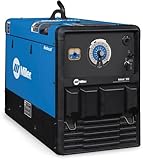
The best engine-driven welding machine for most field crews in 2026 is the Miller Bobcat 265 for general-purpose stick and MIG work, the Lincoln Ranger 330MPX if you want maximum output in a compact footprint, and the Hobart Champion Elite 260 if you’re a farm or ranch owner who needs solid performance without the premium price. Below, we rank the leading models by welding output, auxiliary power, fuel economy, runtime, portability, noise, and service access — and map each to the situations where it actually makes sense.
As an Amazon Associate we earn from qualifying purchases at no extra cost to you.


What we cover
What an Engine-Driven Welder Actually Buys You
Engine driven welding machines combine a welder and a generator in one unit, powered by gasoline or diesel. They’re built for jobs where the grid doesn’t reach: pipeline and structural steel work, farm repairs, fence fabrication, and emergency field service. Two numbers define them: welding output (amps, plus duty cycle) and auxiliary power (watts available to run grinders, lights, compressors, or even another welder). Everything else — fuel burn, noise, weight — is a trade-off between those two figures and what your truck can carry.
Spec Comparison: Top Picks for 2026
| Model | Max Weld Output (Stick) | Duty Cycle | Auxiliary Power | Fuel | Tank / Approx. Runtime @ 50% | Weight | Noise Level |
|---|---|---|---|---|---|---|---|
| Miller Bobcat 265 | 265 A | 100% @ 265 A | 11,000 W peak / 10,000 W cont. | Gas | 12 gal / ~14 hrs | ~395 lb | ~72 dB @ idle |
| Lincoln Ranger 330MPX | 330 A | 100% @ 300 A | 12,000 W peak / 11,000 W cont. | Gas | 20 gal / ~14 hrs | ~600 lb | ~75 dB |
| Hobart Champion Elite 260 | 260 A | 100% @ 225 A | 11,000 W peak / 9,500 W cont. | Gas | 12 gal / ~12 hrs | ~475 lb | ~74 dB |
| Miller Trailblazer 325 | 325 A | 100% @ 325 A | 12,000 W peak / 10,500 W cont. | Gas | 12 gal / ~12 hrs (Excel power on) | ~625 lb | ~68 dB idle w/ Auto-Speed |
| Miller Big Blue 400 Pro (diesel) | 400 A | 100% @ 400 A | 12,000 W cont. | Diesel | ~25 gal / ~20+ hrs | ~1,300 lb | ~70 dB |
| Lincoln Vantage 580X (diesel) | 580 A | 100% @ 500 A | 22,000 W cont. | Diesel | ~30 gal / ~24 hrs | ~1,750 lb | ~71 dB |
Note: runtime and decibel figures vary with load and ambient conditions; treat them as planning numbers, not guarantees.
Our Picks by Situation
Best Overall: Miller Bobcat 265
The Bobcat remains the default choice for service trucks and fabrication crews. At under 400 pounds it mounts behind the cab without eating half your payload, delivers 265 amps at 100% duty cycle, and its EFI engine starts reliably in cold weather — a real-world advantage over carbureted rivals. The 10 kW continuous auxiliary power runs a full-size angle grinder and wire feeder simultaneously.
Best High-Output Gas Unit: Lincoln Ranger 330MPX
If you burn 3/16″ and 1/4″ electrodes or run carbon arc gouging occasionally, the Ranger’s 330 amps give you headroom the Bobcat doesn’t. Its 20-gallon tank means you refuel every other day instead of daily. The trade-off is weight — 600 lb requires a dedicated truck bed mount or trailer.
Best Value: Hobart Champion Elite 260
Owned by the same parent company as Miller, Hobart delivers nearly identical welding output for roughly 20–30% less money. You lose some refinement (fewer process modes, slightly noisier engine), but for farm and ranch owners welding a few hours a week, it’s the rational buy.
Best for Fuel Efficiency and Quiet Operation: Miller Trailblazer 325
The Trailblazer’s Auto-Speed technology drops engine RPM to match weld load, cutting fuel use by up to a third on light work and dropping idle noise to around 68 dB — noticeably more neighbor-friendly on residential jobs. It’s the pick for contractors billing hourly fuel costs to clients.
Best for Pipeline and Heavy Structural: Diesel Units
Once you need 400+ amps, all-day duty cycles, or multi-operator setups, diesel is the only answer. The Miller Big Blue series and Lincoln Vantage line dominate pipeline work because diesel engines tolerate continuous high-load operation, offer 20+ hour runtimes on a tank, and the fuel is often already on-site for other equipment. Expect 1,300–1,800 lb — these are skid-mounted or trailer-mounted machines, not truck-bed units.
Decision Matrix
| Your Situation | Recommended Class | Suggested Model |
|---|---|---|
| Weekend farm/ranch repairs, budget-focused | Gas, ~260 A | Hobart Champion Elite 260 |
| Mobile fab/repair service truck | Gas, ~265 A, under 400 lb | Miller Bobcat 265 |
| Structural steel, heavy stick, arc gouging | Gas, 330 A | Lincoln Ranger 330MPX |
| Contractor billing fuel/noise-sensitive jobs | Gas, efficient idle tech | Miller Trailblazer 325 |
| Pipeline, shipyard, multi-operator crew | Diesel, 400–600 A | Big Blue 400 Pro / Vantage 580X |
Worked Example: What Fuel Actually Costs Per Day
A gas unit like the Bobcat 265 burns roughly 0.9–1.1 gallons per hour under moderate welding load. At $3.50/gallon, an 8-hour day costs about $28–$31 in fuel. The Trailblazer at reduced RPM can cut that to ~$20/day — roughly $2,000/year saved on a five-day schedule. A diesel Big Blue at partial load sips around 0.5 gal/hr (~$14/day) but the machine costs roughly triple upfront. Rule of thumb: diesel pays back only if you weld 5+ hours daily, every day.
Ownership Realities Listings Don’t Mention
- What wears first: engine oil and filters (every 100 hours), spark plugs (gas units, ~300 hours), and weld cables/connectors from being dragged across job sites. Budget 1–2% of purchase price annually in consumables.
- Cold starts: EFI-equipped units (Bobcat, Ranger MPX) start far more reliably below freezing than carbureted models — a decisive factor in northern climates.
- Maintenance access: check that the oil drain and filter are reachable without removing panels. The Bobcat and Trailblazer have single-side service; older designs require tipping or removal from the mount.
- Common mistake: buying maximum amperage “for the future.” Most field stick work uses 3/32″–5/32″ rods at 70–180 A. A 265 A unit covers 90% of field jobs; the extra 70 amps of a 330 costs you 200 lb of payload.
- Weld cable is not included on most units — factor $300–$600 for leads, holder, ground clamp, and a remote for pipeline-style work.
- Generator power quality: if you’ll run a battery charger, VFD, or computer-fed wire feeder off the auxiliary, confirm clean sine output; the Ranger MPX and Bobcat’s generator outputs are suitable for most tools.
FAQ
Can an engine driven welder power a whole jobsite?
Units with 10–12 kW continuous auxiliary output can run a small crew’s worth of grinders, lights, and a compressor — but welders draw generator power while welding, so simultaneous use is limited. For dedicated site power, a separate generator is usually more efficient.
Gas or diesel — which should I choose?
Gas for output under ~350 A, intermittent use, and truck mounting. Diesel for continuous heavy welding, multi-operator setups, better fuel economy under load, and resale value in industrial markets.
How long do engine-driven welders last?
Gas engines typically run 3,000–5,000 hours before major service; industrial diesels routinely exceed 10,000 hours. Hour meters matter more than age — a well-maintained 10-year-old diesel with 2,000 hours is a better buy than a 3-year-old rental with 4,000.