Best TIG Welding Screens for Controlling Arc Flash in Shared Shops
In a shared shop, a TIG arc can injure people who are several feet away from the weld. The risk is not only the bright visible light. Ultraviolet and infrared…
In a shared shop, a TIG arc can injure people who are several feet away from the weld. The risk is not only the bright visible light. Ultraviolet and infrared…
Choosing a TIG rod for copper or brass is less straightforward than choosing filler for mild steel. Copper conducts heat away from the arc extremely fast, while brass contains zinc…
Choosing Filler for Aluminum Castings Aluminum castings are harder to TIG weld than clean sheet or extrusion. They often contain oil, oxide, trapped gas, silicon, and small cracks that only…
Argon TIG welding is sensitive to gas flow. Too little shielding gas leaves the tungsten and weld pool exposed to air; too much can create turbulence that pulls air into…
Choosing a TIG rod for carbon steel pipe is mostly a matter of matching the filler to the pipe grade, joint design, and service temperature. For ordinary mild-steel pipe, ER70S-2…
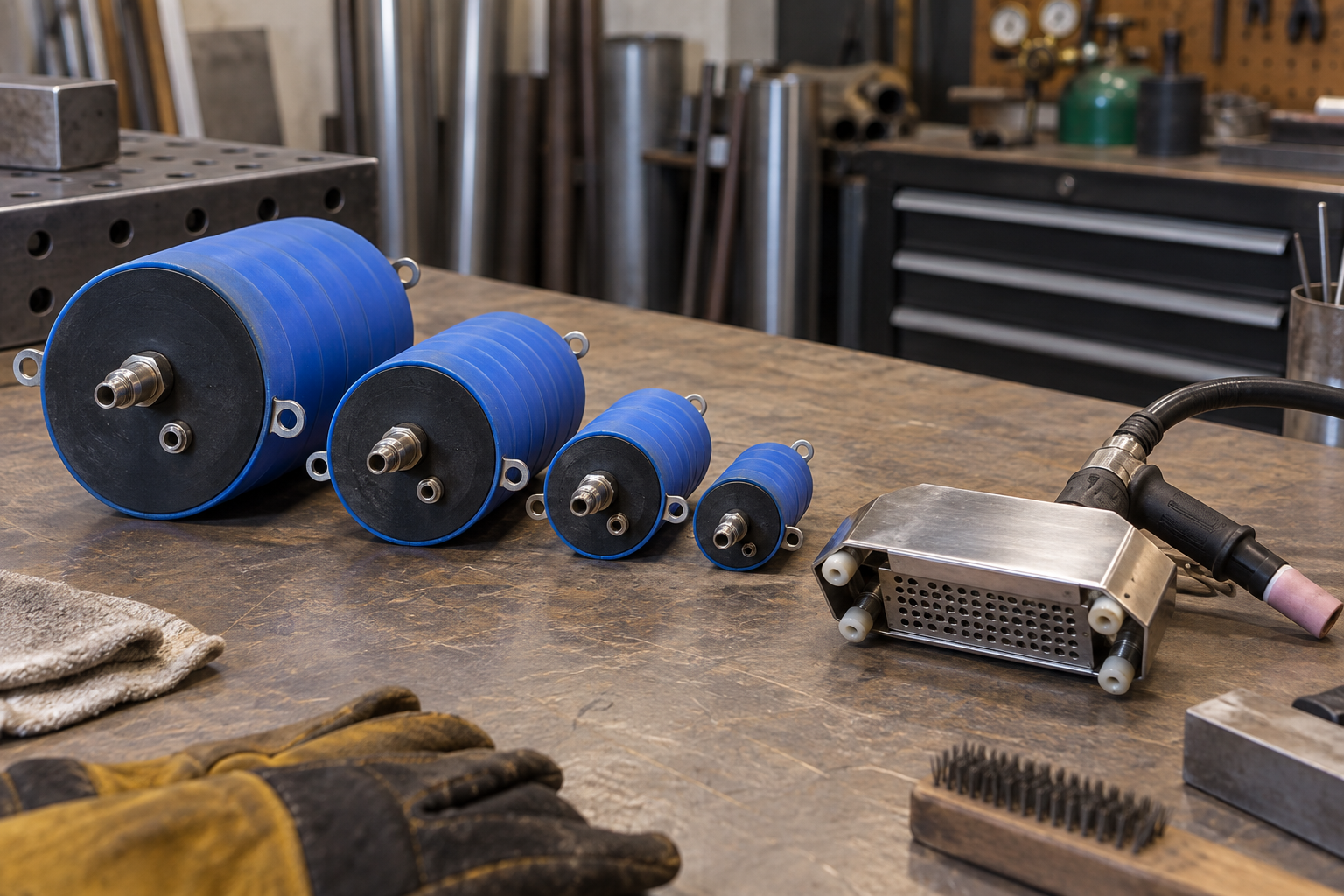
Back-purging protects the inside of a stainless steel pipe weld from oxygen while the root pass is hot. Without it, the root can turn gray, black, and heavily oxidized—a condition…
A TIG collet has one job: hold the tungsten firmly and concentrically inside the torch. A poor collet can let the electrode shift, increase arc wander, restrict gas flow, or…
Choosing the right TIG rod for mild steel repair is mostly about matching the filler to the cleanliness of the base metal, the thickness of the repair, and the strength…
Repeated TIG work is where a programmable welder earns its price. If you weld the same brackets, stainless fittings, aluminum parts, or tubing assemblies every week, manually rebuilding the settings…
Tight bench work changes what matters in a TIG torch. Maximum amperage is usually less important than head size, torch angle, gas coverage, and how easily you can keep your…