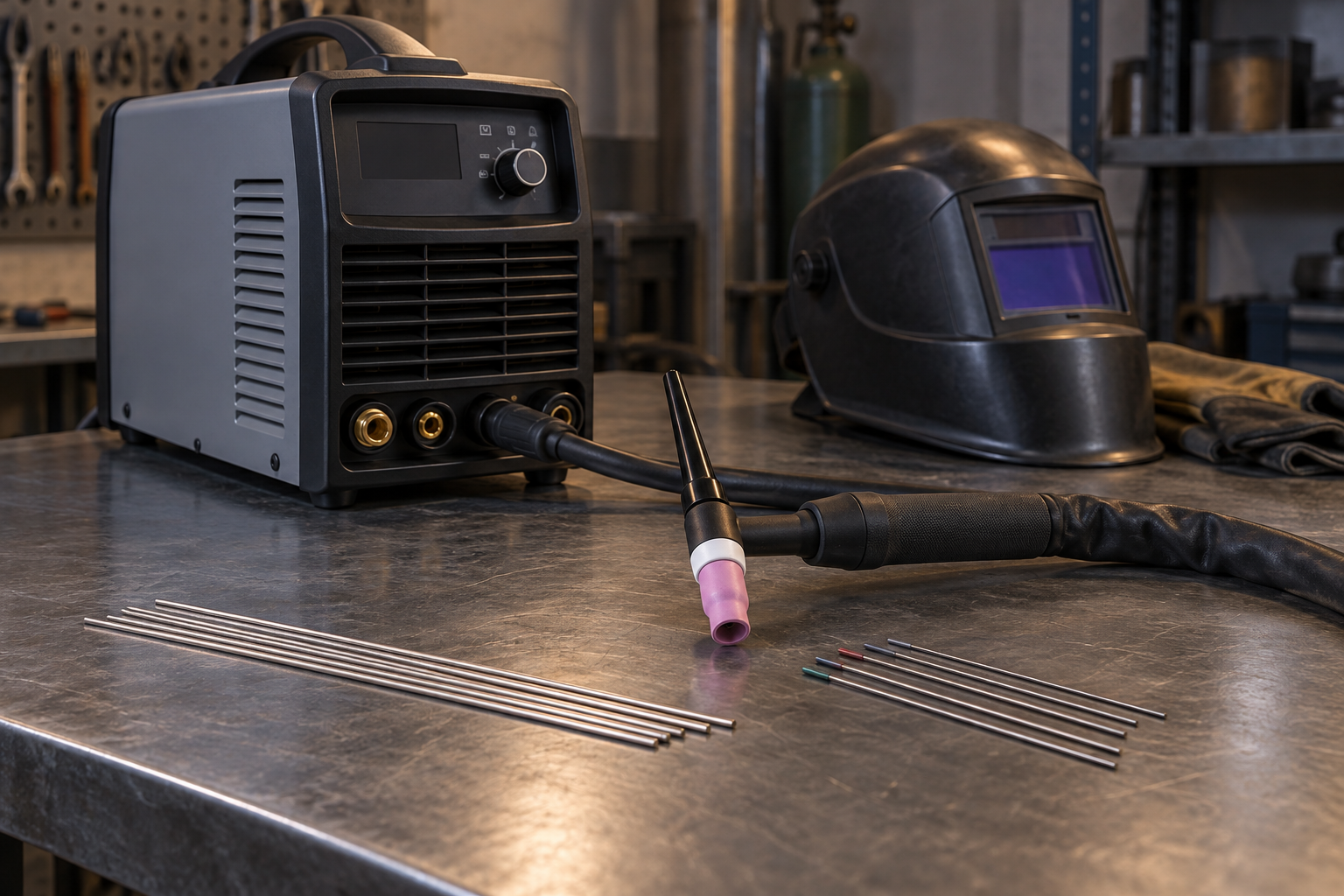
How to Select TIG Filler Rod Diameter for Sheet Metal
Choosing TIG filler rod for sheet metal is a balancing act. A rod that is too large takes too much heat to melt, which encourages you to raise amperage…

1795 articles published
Choosing TIG filler rod for sheet metal is a balancing act. A rod that is too large takes too much heat to melt, which encourages you to raise amperage…
A contaminated TIG weld usually leaves clues on the torch: a gray or black tungsten, a sooty cup, unstable arc, excessive spatter, or a weld that turns…
Aluminum TIG welding is easier to control when you can change amperage without lifting your torch hand.
Black soot around an aluminum TIG weld is usually a sign that the weld pool is contaminated or inadequately shielded.
Aluminum forms a thin aluminum-oxide layer almost immediately when exposed to air.
AC frequency is one of the most useful TIG controls for aluminum, but it is not a magic setting.
AC balance is one of the most useful controls on an aluminum TIG welder, but it is also one of the easiest to misunderstand.
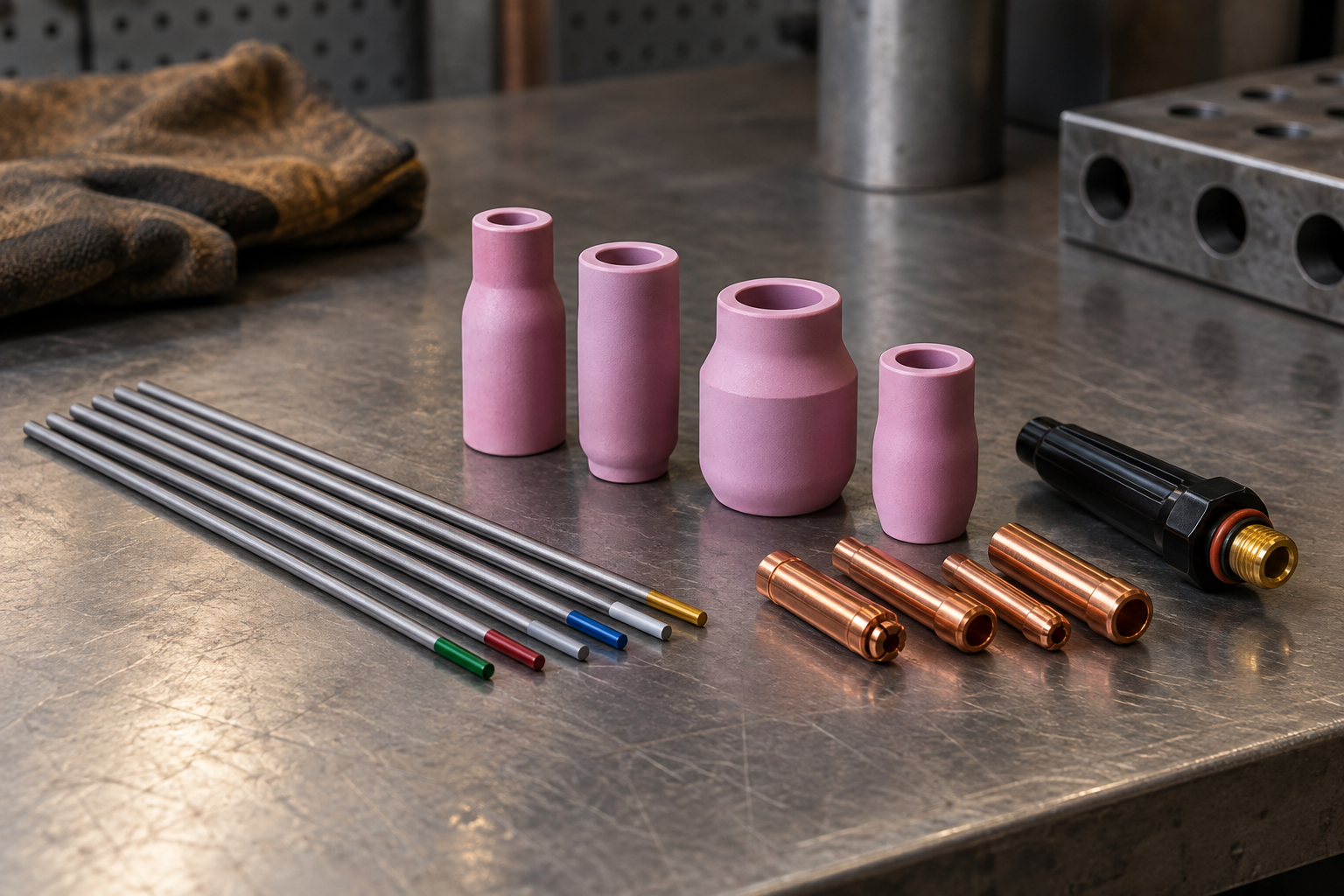
A tungsten electrode should be sharpened so its tip is clean, centered, and aligned with the electrode’s length.
TIG welding is easiest to control when the distance between the tungsten and the workpiece stays nearly constant. That distance is the arc length.
For a standard 90-degree inside fillet weld, start with the TIG torch at approximately a 45-degree work angle.