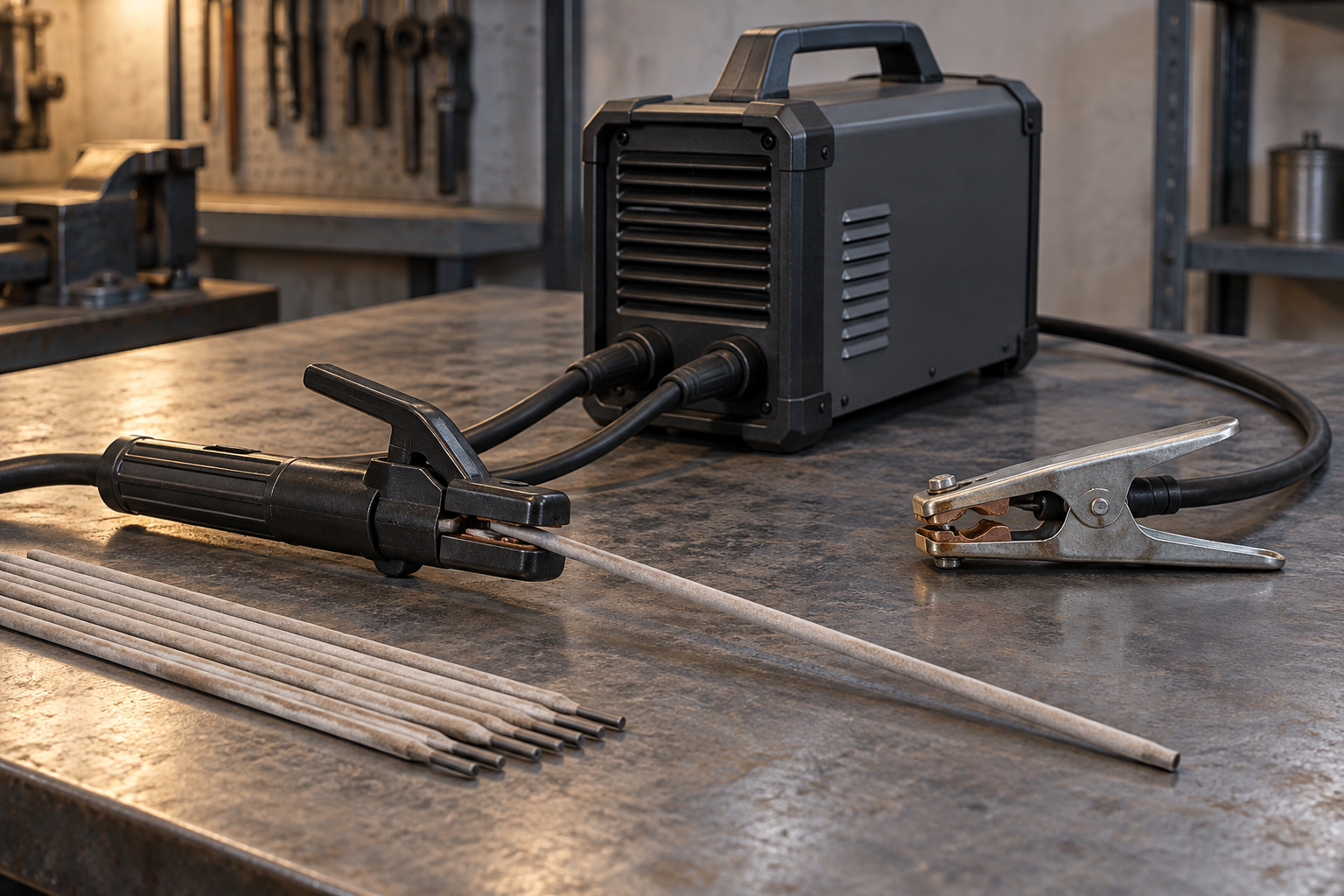
Best Stick Welders for Welding Thick Steel in a Home Workshop
Thick steel changes the stick-welder buying decision. A machine that runs 1/8-inch rod comfortably may struggle with 5/32-inch electrodes, especially on a…

1988 articles published
Thick steel changes the stick-welder buying decision. A machine that runs 1/8-inch rod comfortably may struggle with 5/32-inch electrodes, especially on a…
For tack welds and fill passes on structural steel, the useful question is not simply how many amps a welder claims.
Broken steel plow parts are often thick, dirty, and subject to shock loads. A stick welder is a practical choice for field and shop repairs because it…
Retaining-wall brackets are usually short, structural weldments: plate or angle joined to a post, channel, or reinforcing piece.
Heavy equipment attachments put unusual demands on a stick welder. A cracked bucket ear or a worn cutting edge may involve thick steel, dirty surfaces and…
Joining steel pipe to plate is a fit-up and technique job as much as a welder-selection job.
For workshop plate work, the right stick welder depends less on a high advertised amp number than on the plate thickness, available power, and how long…
Dock steel takes a rough mix of spray, grit, impact and awkward access. A stick welder is often a practical choice for repairing brackets, braces and…
Stick welding tolerates imperfect surfaces better than MIG or TIG because the flux coating creates shielding and slag as the electrode burns.
A cracked steel column is a structural problem, not just a welding project. Before buying a welder or striking an arc, find out what the column supports…