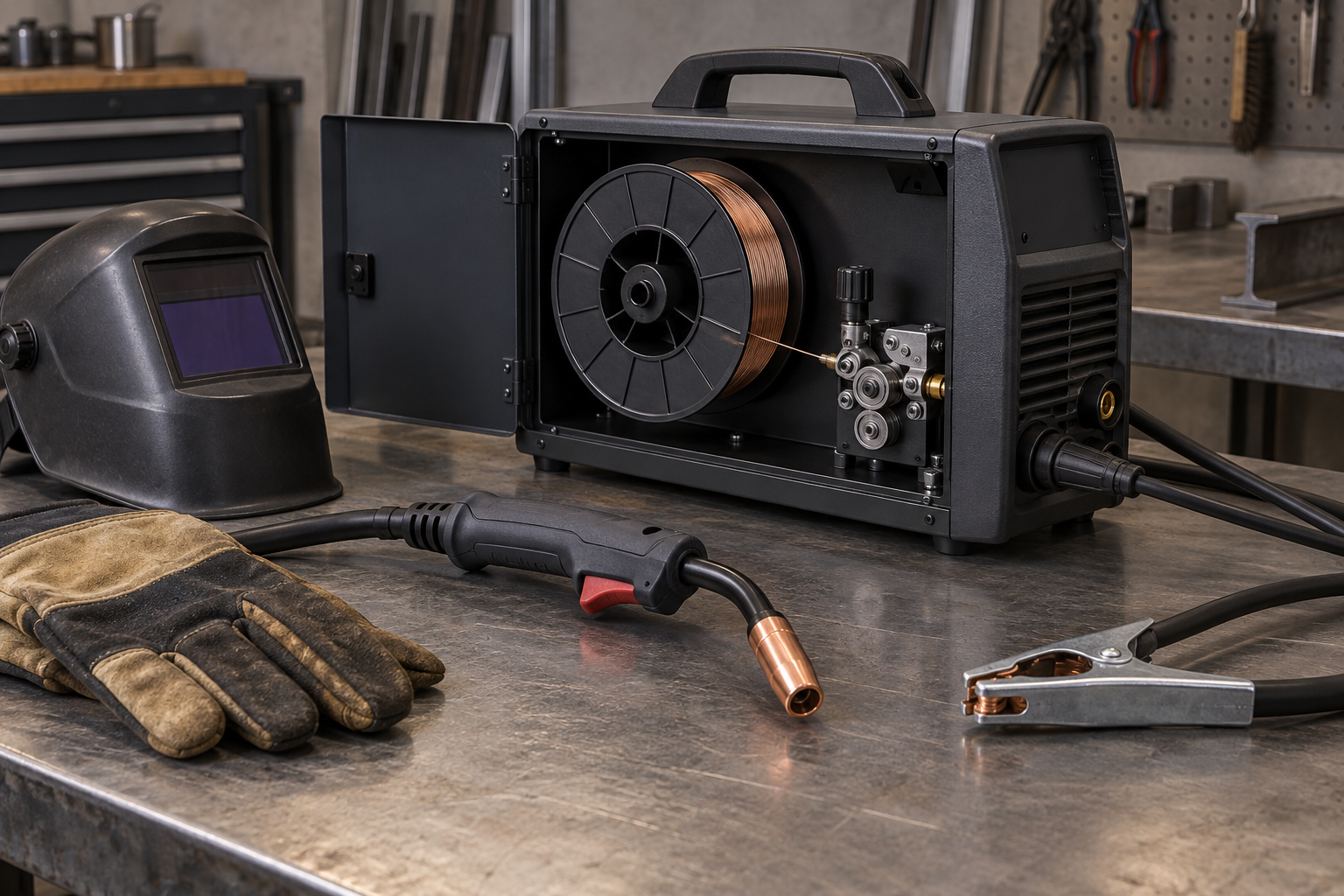
How to Choose Shielding Gas for MIG Welding Carbon Steel
Shielding gas for MIG welding carbon steel is a trade-off between arc stability, weld appearance, penetration, and cost.

1988 articles published
Shielding gas for MIG welding carbon steel is a trade-off between arc stability, weld appearance, penetration, and cost.
Spatter is the small droplets of molten metal thrown from a MIG weld. A few flecks are normal; a sudden increase, large BB-sized blobs, or spatter that…
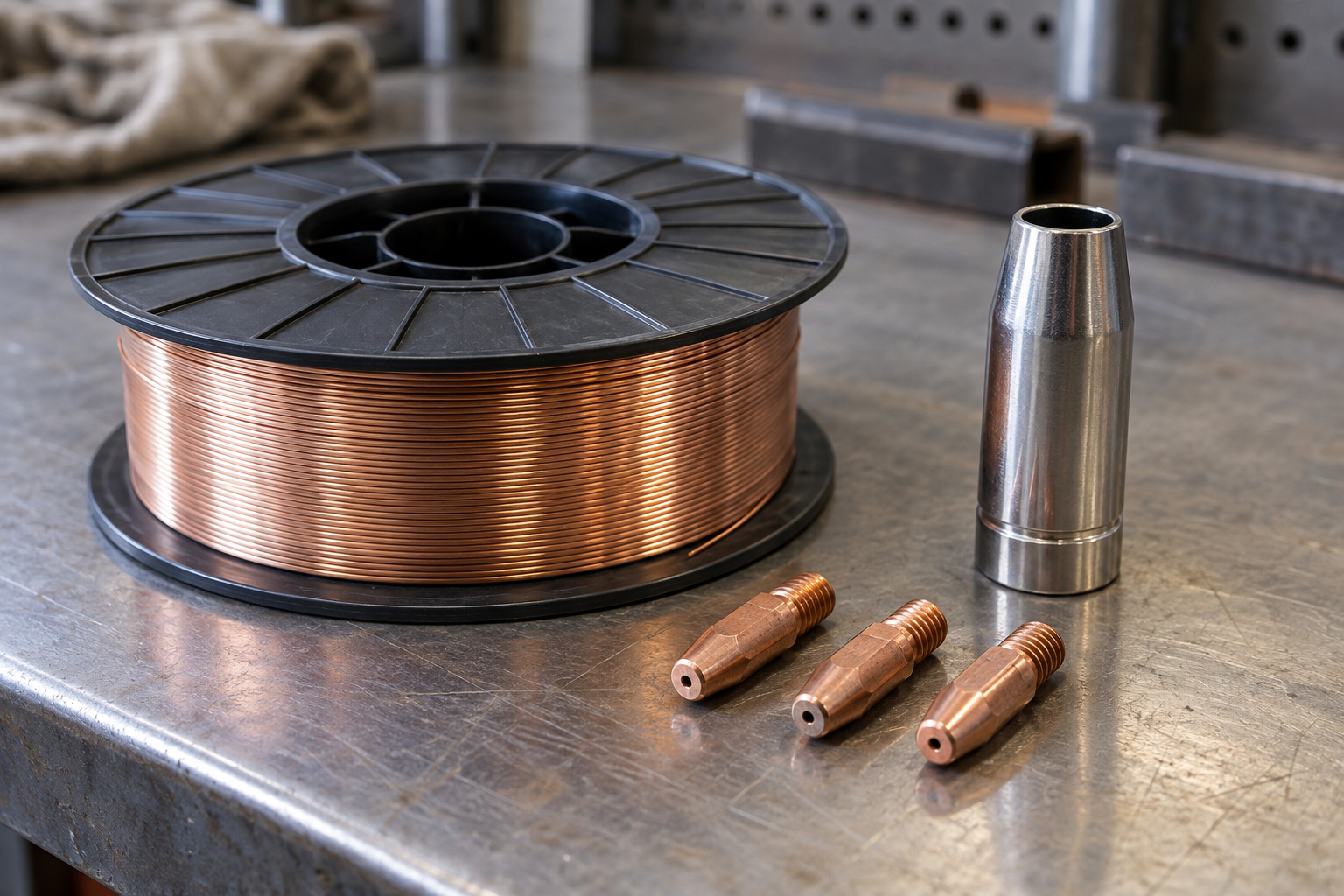
The contact tip transfers welding current to the wire while letting the wire feed through. The nozzle directs shielding gas around the weld.
A lap joint puts one piece of metal over another, with the weld usually placed along the edge of the upper piece.
Mill scale is the dark, hard oxide layer formed when hot-rolled steel cools in air. It looks like clean metal, but it is not a reliable welding surface.
Rust and dirt do not automatically rule out MIG welding, but they make the result less predictable.
Uneven MIG wire feeding usually shows up as a pulsing arc, irregular popping, or wire that alternately stubs into the work and burns back toward the…
MIG welding around a corner is less about turning the gun and more about keeping the shielding gas where the arc is working.
A MIG contact tip transfers welding current to the wire while allowing the wire to feed through the gun.
Burnback happens when the wire melts back and fuses to the contact tip instead of feeding smoothly into the weld pool.