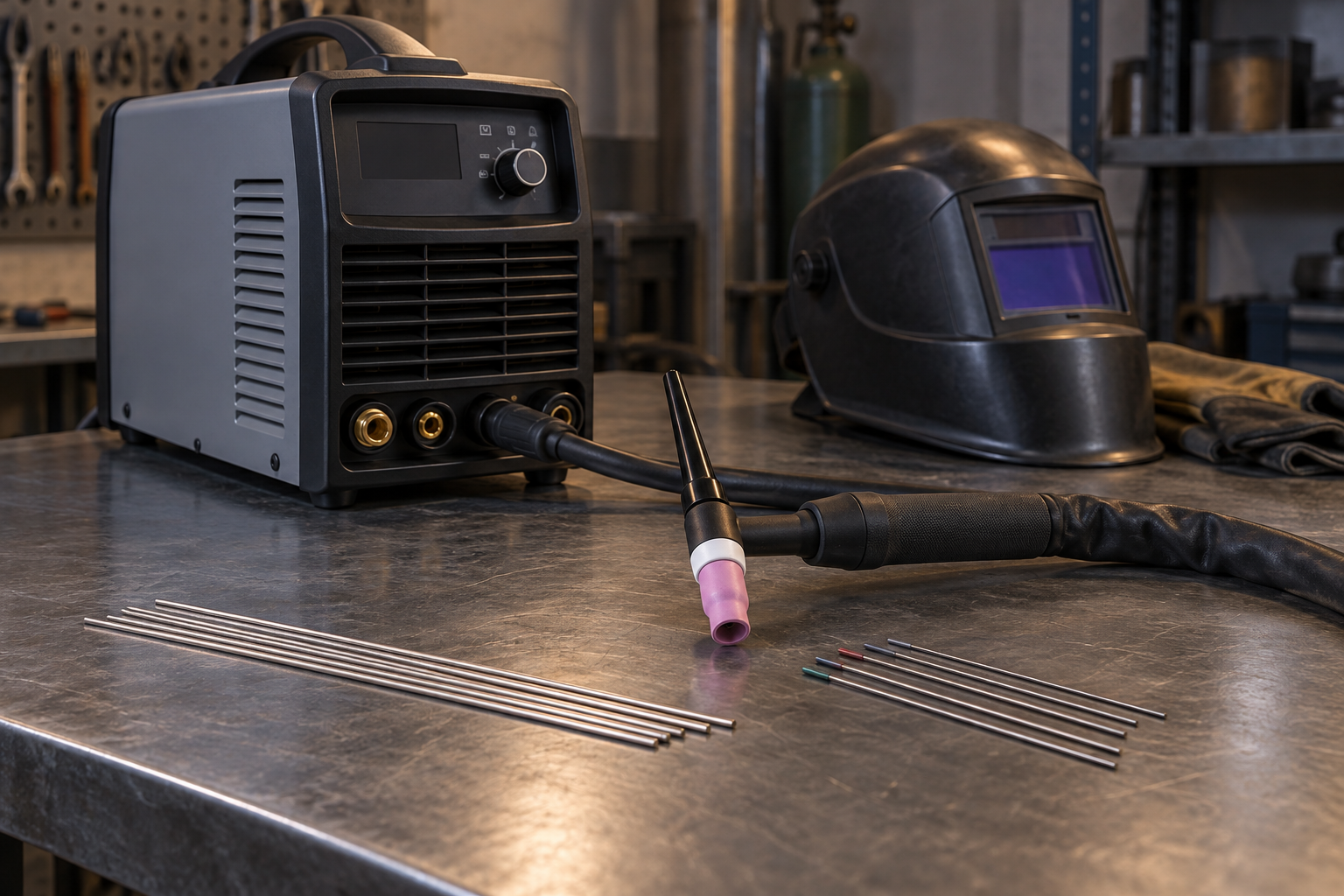
How to Clean Aluminum Oxide Before AC TIG Welding
Aluminum oxide is the thin, tough film that forms on aluminum as soon as clean metal meets air.

1988 articles published
Aluminum oxide is the thin, tough film that forms on aluminum as soon as clean metal meets air.
TIG welding carbon steel is straightforward when the tungsten, joint, filler, and shielding gas stay clean.
TIG gives you control over a small weld pool, which helps when joining thin stainless without burning through or leaving a bulky bead.
Arc wandering during TIG welding shows up as a wandering arc, an arc that pulls sharply to one side, or a puddle that refuses to stay centered under the…
Adding filler smoothly is mostly a timing and distance problem: keep the tungsten steady, hold a short arc, and feed small amounts of rod into the edge of…
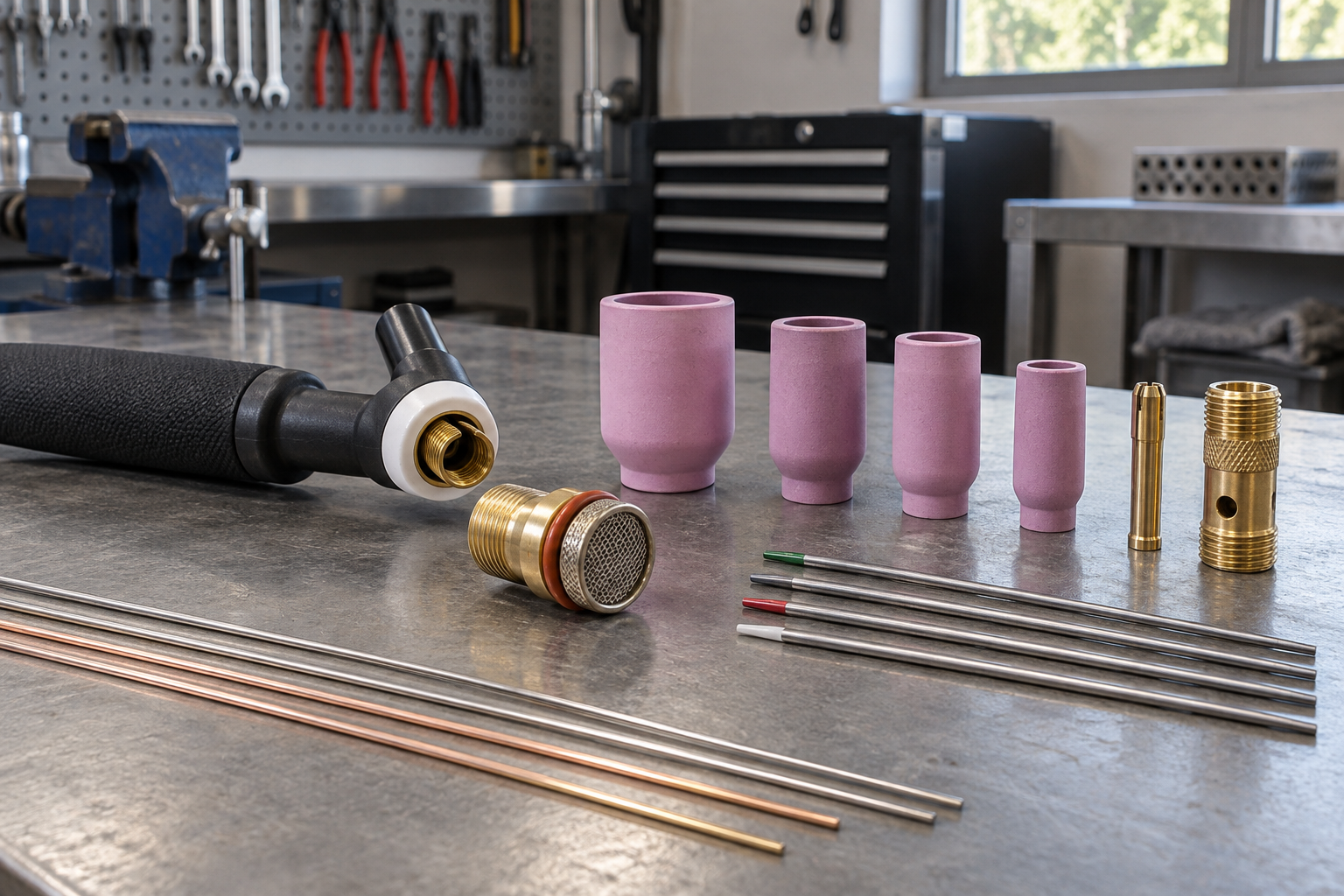
A TIG gas lens replaces the torch’s standard collet body with a gas-distribution component that spreads shielding gas more evenly around the tungsten.
Argon flow rate is one of the easiest TIG settings to get wrong. Too little gas leaves the tungsten and weld pool exposed to air.
A TIG weld can look tidy while still having a weak root, sugared backside or heat-distorted joint. On stainless steel, fit-up has a big say in all three.
Brass plumbing components are awkward TIG work. Brass conducts heat quickly, melts at a relatively low temperature, and can release zinc fumes when…
Heat tint on a TIG-welded corner joint is oxidation caused by heat and exposure to air.