
What's inside
As an Amazon Associate I earn from qualifying purchases. This post may contain affiliate links at no extra cost to you.
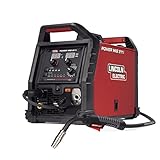
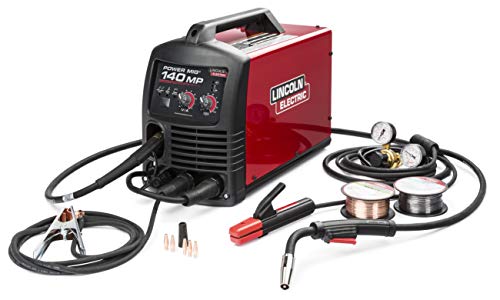
Weathering steel, often sold under names such as COR-TEN, forms a protective-looking rust patina only under suitable conditions. A MIG welder can join it, but the weld metal, joint design and exposure matter as much as the machine. For most repair and fabrication work, a 180–220 amp MIG welder with gas-shielded solid wire is a useful range; a small 120-volt machine may be enough for thin panels, but it leaves little margin for thicker structural joints.
As an Amazon Associate we earn from qualifying purchases at no extra cost to you.

What we cover
Our Top Picks

Know what the steel and joint require
Identify the steel grade and thickness before choosing wire or settings. Weathering steels are not all interchangeable, and a decorative garden panel has different demands from a bridge component or load-bearing frame. For structural work, follow the project’s applicable welding code and material specification, and use a qualified welding procedure when required. Do not assume a generic wire is acceptable just because it makes a sound bead.
Check the base metal for paint, oil, mill scale and existing rust. Remove contaminants around the joint; coatings and trapped moisture can cause porosity, fumes or poor fusion. Fit the parts closely and leave enough access to weld the joint properly. On thick material, beveling and multiple passes may be needed. A larger welder cannot compensate for poor fit-up or an unsuitable procedure.
Features worth paying for
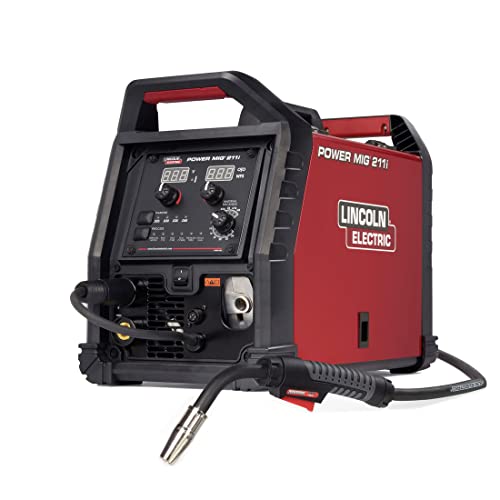
For shop work, a 240-volt machine in the 180–220 amp class is a practical choice for steel roughly 1/8 to 3/8 inch thick, depending on joint design, position and duty cycle. Check the manufacturer’s output chart rather than relying on a headline amperage. A 30% duty cycle at 200 amps means about three minutes of welding in a ten-minute period at that output, followed by cooling time. If you weld long seams or production parts, a higher duty cycle is useful.
A 120-volt welder is more portable and often cheaper, and it can be fine for sheet and light brackets. Its limits show up on thicker sections: slower travel, more passes, and a greater risk of lack of fusion if the joint is not prepared well. If the work is occasional and under about 1/8 inch, a 120-volt MIG welder may be the sensible buy.
Look for a stable wire feed, adjustable voltage and wire speed, and a parts supply you can actually obtain. A spool gun connection is useful for aluminum, but it is not a requirement for welding weathering steel. For outdoor work, remember that wind can blow shielding gas away from the arc; use a windbreak or choose a process better suited to the conditions.
Wire, gas and weld compatibility
Solid wire with a mixed shielding gas is a common MIG setup for clean steel in a shop. The right filler depends on the steel grade, service conditions and project requirements. Weathering-steel filler metals are available for applications where matching atmospheric-corrosion performance matters, but they are not automatically necessary or suitable for every joint. Consult the steel and filler manufacturers’ guidance, or a welding engineer for critical work. Ordinary mild-steel filler can leave a weld that weathers differently from the surrounding plate; that visual mismatch is not proof of a sound or unsound weld.
For a versatile setup, compare machines that accept standard shielding-gas cylinders and have a conventional gun connection. A 180-amp, 240-volt MIG welder set up for gas gives more headroom than a basic 120-volt unit without jumping to industrial equipment. Gasless flux-core wire is handy outdoors because it tolerates drafts better, but it produces more spatter and slag, and the weld appearance is rougher. It is not a shortcut around selecting compatible filler metal.
Welder types at a glance
| Welder setup | Best fit | Main trade-off |
|---|---|---|
| 120-volt MIG, solid wire and gas | Thin panels, small repairs, light brackets | Limited capacity on thicker plate and long welds |
| 180–220 amp, 240-volt MIG with gas | General fabrication and moderate-thickness steel | Needs a suitable circuit and gas setup |
| Flux-core-capable MIG | Outdoor work or jobs where gas is impractical | More cleanup; confirm wire is appropriate for the job |
| Industrial MIG power source | Repeated heavy work and high duty-cycle demands | Higher cost and often unnecessary for a small shop |
Avoid the common failure modes
Porosity often comes from contamination, a leaking gas connection, poor gas coverage or drafts. Check the cylinder, regulator and hose with a leak solution, and keep the nozzle clean. Lack of fusion can result from low heat input, excessive travel speed, poor joint access or welding over scale. On thicker joints, make test welds on matching scrap and inspect them before committing to the finished piece. A pretty surface bead does not show whether the root fused.
Weathering steel needs wet-and-dry cycles to develop a stable patina. Persistent dampness, salt exposure and contact with dissimilar metals can produce ongoing corrosion or staining. Design details that trap water can undermine the project regardless of weld quality. Avoid sealing in moisture, and use compatible fasteners and drainage details where appropriate.
Make the purchase fit the job
For occasional thin-gauge work, the cheaper 120-volt machine is adequate if its output chart covers your material and you accept slower progress. For a mixed shop workload, a 180–220 amp 240-volt MIG is the better long-term choice. Buy a reputable machine with clear specifications, available consumables and a duty cycle suited to your actual weld length—not the thickest metal you might someday encounter. If the project is structural or the steel grade is uncertain, confirm the procedure and filler before welding; upgrading the welder alone will not make an unqualified joint safe.
Related guides
More from Amazon
Programs that pair well with the guide above. Offers and eligibility are set by Amazon and may change.
A free business account with business pricing and bulk-buying tools for work, shop or home office.
Create a business accountFree shipping on eligible items, Prime Video and more. Eligible new members can start with a free trial.
Start a Prime free trialAudiobooks and podcasts to listen to on the go. Eligible new members can start with a free trial.
Try Audible freeAd-free music streaming. Eligible new subscribers can start with a free trial.
Try Music Unlimited freeAs an Amazon Associate we earn from qualifying purchases.








Write Your Review
No reviews yet. Be the first to share your experience!