
What's inside
As an Amazon Associate I earn from qualifying purchases. This post may contain affiliate links at no extra cost to you.
MIG gloves have two jobs: protect your hands from sparks and radiant heat, and let you hold the work without fumbling. Those goals can conflict. Thick gloves buy more insulation but reduce feel; a flexible glove makes positioning easier but is a poor choice for lifting hot steel. For handling workpieces, the right pick depends less on the MIG process itself than on how hot the part is, how long you need to hold it, and whether you can use pliers or a clamp instead.
As an Amazon Associate we earn from qualifying purchases at no extra cost to you.


What we cover
Our Top Picks
 John Tillman Medium 14"" Gold and Pearl TopMedium (Pack of 2)7 x 1.5 x 12 inches0.2 poundsCheck on Amazon
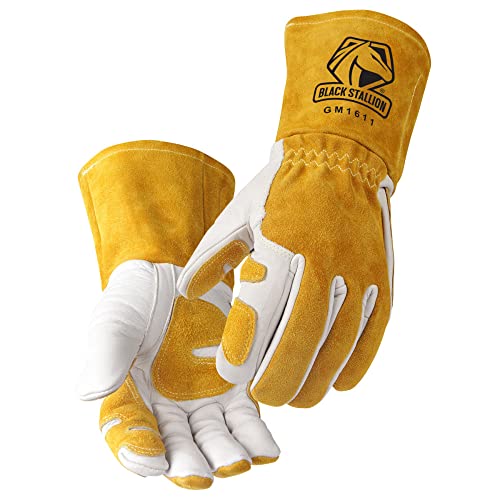

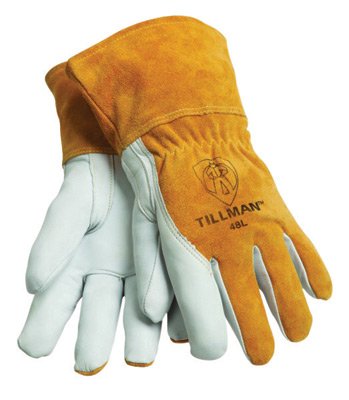
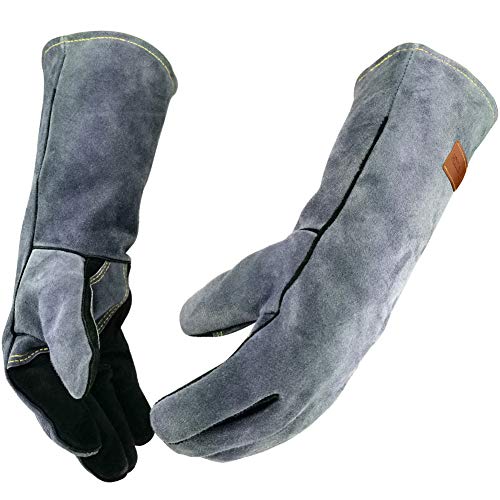
What to look for in MIG gloves
Start with the cuff. A long cuff—roughly 4 inches or more beyond the wrist—helps cover the gap between glove and jacket when sparks fall or you reach across a joint. A gauntlet cuff is useful for overhead or out-of-position work; a shorter cuff is less cumbersome for bench work, but leaves more wrist exposed.
Look for leather construction, reinforced palms and seams, and a lining that suits the heat you face. Cowhide is a common, durable all-round choice. Goatskin tends to be more supple, which helps with dexterity, but thin, soft gloves are not automatically suitable for prolonged contact with hot metal. Split leather is often rugged and insulating; grain leather is generally smoother and easier to move in. The actual construction matters more than the animal name on the label.
Fit is a safety feature. A glove that is too large can snag or make it harder to control a MIG gun; one that is tight can restrict movement and trap sweat. Try the gloves with your jacket and gun if possible. You should be able to close your hand around the handle and press the trigger without straining. If you use a specific glove, check its manufacturer’s heat and use guidance rather than treating “welding glove” as a universal temperature rating.
Compare glove types by task
| Glove type | Best use | Main trade-off |
|---|---|---|
| Heavy split-leather MIG glove | General MIG welding, spatter, and brief handling of warm parts | Good coverage and durability, but limited fingertip feel |
| Reinforced, flexible MIG glove | Short welds, fixture changes, and tasks needing gun control | More dexterity; less suitable for sustained contact with hot work |
| Dedicated heat-resistant handling glove | Moving hot parts after welding, within its rated use | May be too bulky for welding and is not a substitute for process-rated PPE |
| Light leather work glove | Cool stock, setup, and occasional low-heat shop handling | Usually not enough protection for active MIG spatter or hot metal |
Handling hot workpieces safely
A welding glove is not a license to grab hot steel. Heat moves through leather, especially when a glove is damp, compressed against a part, or held in contact for more than a moment. A piece that looks dull can still burn skin quickly. Use locking pliers, tongs, a hook, or a dedicated lifting tool for hot parts whenever practical, and set the work on a marked, heat-safe surface.
For short repositioning of a warm part, a well-fitting, lined leather MIG glove may be adequate if the glove maker’s instructions allow it and you can release the part immediately. For repeated handling, choose a glove specifically intended for heat handling and follow its contact-time and temperature limits. If a glove feels hot inside, put the part down; do not assume you can safely hold on for another few seconds.
Do not use a glove with a burn-through, open seam, hardened or cracked leather, or a lining contaminated with oil. Spatter can lodge in folds and burn through later. Let gloves dry fully between sessions, and replace them when damage reaches the palm, fingertips, or seams. Never cool hot gloves by dipping them in water: moisture can increase heat transfer and can create a steam hazard.
Which gloves are worth buying?
For regular MIG work, a lined, long-cuff split-leather pair is a sensible starting point. Check for reinforced palm and thumb areas, secure stitching, and a cuff that covers your wrist when your arm is extended. Compare the inside dimensions as well as the stated size; sizing varies between makers. Compare lined split-leather MIG welding gloves.
If you weld thin material, tack frequently, or need more control around clamps and fixtures, consider a more flexible MIG glove. It can make gun positioning easier, but do not trade away coverage for a thin, unlined glove if you are exposed to sustained spatter or handling hot parts. Look at flexible leather MIG gloves.
When moving parts is a regular part of the job, keep welding gloves and handling gloves as separate tools. A dedicated heat-resistant handling glove can be chosen for the task’s temperature and contact time, while a welding glove stays focused on sparks and arc work. Confirm that the product is meant for contact with hot metal, not merely heat-resistant materials or oven use. Shop heat-resistant metal-handling gloves.
For occasional home welding on cool stock, a basic leather welding glove can be fine if it fits, has intact seams, and provides adequate cuff coverage. Spending more is worthwhile when you weld often, work overhead, or need better reinforcement and durability. It is not a reason to handle hotter parts bare-handed or to ignore the glove’s limits.
Common buying mistakes
Do not choose solely by a thick appearance. Bulk can make you grip the MIG gun too tightly and tire your hand, while a thick glove with poor seams can still fail. Avoid using general-purpose mechanics’ gloves for active welding: many have synthetic panels that can melt, and short cuffs leave skin exposed. Likewise, do not assume TIG gloves are the best MIG option. Their thinner leather can improve fine control but may offer less protection from MIG spatter.
Before buying, match the glove to your longest weld, typical position, and handling routine. If you cannot control the gun comfortably, try another size or cut. If the job includes frequent hot-part movement, plan for tools or a separate rated handling glove rather than asking one pair to do everything.
FAQ
Which gloves are worth buying?
Related guides
More from Amazon
Programs that pair well with the guide above. Offers and eligibility are set by Amazon and may change.
A free business account with business pricing and bulk-buying tools for work, shop or home office.
Create a business accountFree shipping on eligible items, Prime Video and more. Eligible new members can start with a free trial.
Start a Prime free trialAudiobooks and podcasts to listen to on the go. Eligible new members can start with a free trial.
Try Audible freeAd-free music streaming. Eligible new subscribers can start with a free trial.
Try Music Unlimited freeAs an Amazon Associate we earn from qualifying purchases.







Write Your Review
No reviews yet. Be the first to share your experience!