
Key takeaways
- Find the best waders for fishing, hunting and wet workshop jobs, from breathable bootfoot pairs to warm neoprene and stockingfoot picks with sturdy boots.
As an Amazon Associate I earn from qualifying purchases. This post may contain affiliate links at no extra cost to you.
As an Amazon Associate we earn from qualifying purchases.
Waders earn their keep in more places than a trout stream. Around a pond, in a flooded yard, or in a workshop with wash-down work and mud, staying dry turns a miserable job into a routine one. The best waders seal out cold water, shrug off brush and gravel, and give you footing you can trust on slick rock and soft banks. Get the material or boot wrong, and you end up sweaty, cold, or sliding.
This guide compares five proven directions: a breathable bootfoot pair for active days, two light nylon and PVC bootfoot pairs for warm weather and chores, a thick neoprene pair for cold water, and a stockingfoot pair that lets you choose your own wading boots.
Disclosure: This post contains affiliate links. If you buy through links on this page, we may earn a commission at no extra cost to you.
Quick picks
- Frogg Toggs Hellbender Pro Bootfoot Chest Wader — Best breathable bootfoot pick, with a tough 4-ply upper and lug-soled boots.
- TIDEWE Bootfoot Chest Wader — Best light general-purpose pick, with a simple 2-ply shell and handy included extras.
- Foxelli Neoprene Chest Waders — Best for cold water, with 4mm neoprene, reinforced knees, and a handwarmer pocket.
- Hodgman Mackenzie Cleated Bootfoot Chest Wader — Best simple classic, light for its class and easy to pull on.
- Caddis Men’s Neoprene Stockingfoot Wader — Best for choosing your own boots, with a warm neoprene body.
Frogg Toggs Hellbender Pro Bootfoot Chest Wader
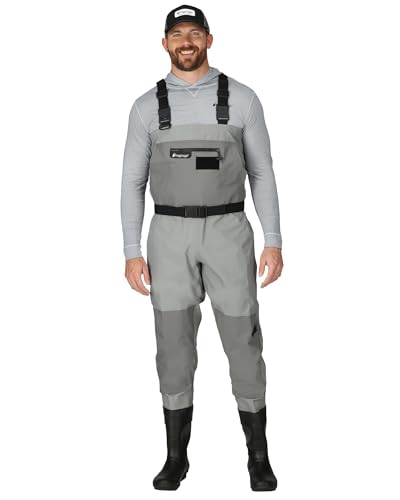
The Hellbender Pro is the pair we would hand to someone who moves a lot in the water. Its DriPore Plus upper uses 4-ply nylon that blocks water while letting heat escape, so long walks, bank climbs, and warm afternoons feel far less clammy than in a plain PVC shell. Double-reinforced knees address the spot that fails first when you kneel on gravel, and adjustable suspenders with quick-release buckles keep the fit secure.
The attached boots complete the system. A neoprene-lined boot with a reinforced midsole, toe, and heel kicker feels more supportive than a thin rubber boot, and the lug sole grips mud and wet rock with confidence. A fleece-lined handwarmer pocket, a waterproof zippered storage pocket, and a fly patch round out the chest layout. In our practical notes, this was the most complete all-season bootfoot system here.
Specs
- Shell: DriPore Plus 4-ply nylon upper, breathable and waterproof
- Boot: Neoprene-lined bootfoot with reinforced midsole, toe, and heel kicker
- Sole: Lug sole, also offered in a felt version
- Knees: Double-reinforced knees
- Pockets: Fleece-lined handwarmer, waterproof zippered storage, fly patch
- Style number: 2HB011
- ASIN: B0BP9981V3
Pros:
– Breathable upper stays comfortable during long, active use
– Supportive boot with strong lug traction
– Reinforced knees and useful pockets
Cons:
– Bootfoot fit is less precise than a separate wading boot
– Breathable shell needs gentler care than plain PVC
TIDEWE Bootfoot Chest Wader

The TIDEWE Bootfoot is the straightforward, do-everything pair for occasional fishing, hunting, pond cleanup, and messy outdoor chores. Its 2-ply nylon and PVC shell is light, flexible, and fully waterproof, with taped seams that keep shallow and mid-depth water out. It packs down small, hoses off easily, and dries fast between uses — practical virtues for a pair that may live in a truck bed or a workshop corner.
Adjustable suspenders and a waist belt help dial in the fit, the attached cleated boots grip mud and grass well, and TIDEWE includes a boot hanger and a waterproof phone pouch. Our take is that this is the easiest recommendation for warm-weather wading and for households that want one shared pair for fishing weekends and wet jobs alike. In cold water, plan on warm socks and layers underneath, since the thin shell adds little insulation.
Specs
- Shell: 2-ply nylon and PVC, waterproof with taped seams
- Boot: Attached bootfoot with cleated sole
- Fit: Adjustable suspenders and waist belt
- Included: Boot hanger and waterproof phone pouch
- Part number: WD001 series
- ASIN: B07J4NFL1P
Pros:
– Light, packable, and easy to clean after muddy work
– Cleated boots and secure suspender fit
– Useful extras included for storage and drying
Cons:
– Thin shell offers little warmth in cold water
– Less breathable than a laminate wader on hot, active days
Foxelli Neoprene Chest Waders

When the water is cold, neoprene changes the whole day, and the Foxelli pair leans into that strength. A 4mm neoprene shell holds warmth in chilly streams, early-season ponds, and late-season marshes, while seams that are double-stitched, taped, and sealed keep leaks at bay. Reinforced knee pads add protection on rough ground, and the cut allows enough flex for climbing banks and stepping over logs.
Lightweight PVC boots with anti-slip soles, adjustable elastic suspenders with quick-release buckles, and a nylon belt keep the system simple. Storage includes D-rings for clipping tools, an exterior chest pocket that doubles as a handwarmer, and an inner mesh pocket, plus a nylon carrying bag for transport. In our practical notes, this was the warmest pick here for cold, still water, though that insulation feels heavy and hot once summer arrives.
Specs
- Shell: 4mm neoprene, waterproof
- Seams: Double-stitched, taped, and sealed
- Boot: Lightweight PVC bootfoot with anti-slip sole
- Knees: Reinforced knee pads
- Pockets: Exterior chest pocket and handwarmer, inner mesh pocket, D-rings
- Included: Nylon carrying bag
- Sizes: Boot sizes 7 to 14 in listed variants
- ASIN: B09ZYTCQM3
Pros:
– Thick neoprene provides real warmth in cold water
– Reinforced knees and sealed seams for durability
– Good storage layout with handwarmer and gear clips
Cons:
– Warm and bulky in hot weather
– PVC boots are light but less rugged than heavy rubber boots
Hodgman Mackenzie Cleated Bootfoot Chest Wader
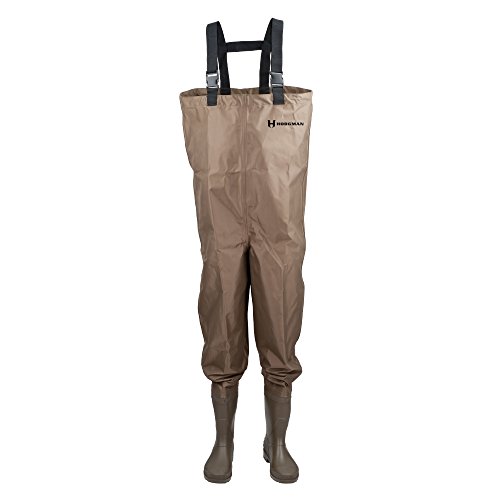
The Mackenzie has been a familiar sight at ponds and boat ramps for years, and its appeal is simplicity. A tough nylon shell with a PVC coating keeps water out while weighing notably less than a traditional rubber wader, so long walks and repeated bending feel less tiring. Hodgman describes the design as about a third lighter than rubber equivalents, and that lightness is the first thing you notice when you pull them on for yard, farm, or shoreline work.
Details stay intentionally basic. Adjustable suspenders, a top drawstring, and an internal chest pocket cover the essentials, and the attached PVC boots use a cleated outsole for traction on mud, grass, and gravel. There is no insulation to speak of, so cold water calls for layered clothing and thick socks, and pocket space is modest. Our take is that the Mackenzie suits best as a dependable, no-fuss pair for shallow to mid-depth water and pond maintenance.
Specs
- Shell: Tough nylon shell fabric with PVC coating
- Boot: Attached PVC bootfoot with cleated outsole
- Weight: About 35 percent lighter than traditional rubber waders, per the maker
- Fit: Adjustable suspenders with quick-release buckles, top drawstring
- Storage: Internal chest pocket
- Sizes: Boot sizes 7 to 13 in listed variants
- ASIN: B00PCAHILC
Pros:
– Noticeably light and flexible compared with rubber waders
– Simple, durable shell that is easy to rinse and store
– Cleated boots give solid grip for pond and yard work
Cons:
– No meaningful insulation for cold water
– Minimal storage and few extra features
Caddis Men’s Neoprene Stockingfoot Wader

The Caddis stockingfoot model takes the opposite approach from the bootfoot pairs above: the wader ends in a neoprene stocking foot, and you add the wading boots you prefer. That separation matters. A good separate boot gives better ankle support, a more precise fit, and a choice of felt, rubber, or studded soles for the water you fish most. For anglers who walk rocky rivers, or for workers who already own sturdy wading boots, this flexibility is the main reason to choose stockingfoot gear.
The body itself is warm and proven. Built largely from neoprene, the CA5902W series insulates in cold, slow-moving water, in a generous cut with room for fleece. Every Caddis wader is water tested before sale, per the brand, and stout sizing is available. You will need boots if you do not own a pair, and neoprene runs warm in summer, but paired with the right boots this is the most adaptable system here.
Specs
- Style: Chest-high stockingfoot wader, model CA5902W series
- Fabric: 95 percent neoprene, 5 percent nylon
- Foot: Neoprene stocking foot, requires separate wading boots
- Care: Hand wash only
- Weight: About 4 pounds in the listed XXL Stout variant
- Fit: Loose, relaxed fit with room for layering, stout sizes available
- ASIN: B000LZSCC2
Pros:
– Lets you choose wading boots for fit, support, and sole type
– Warm neoprene body with room for cold-weather layering
– Generous and stout sizing options
Cons:
– Boots are not included and must be selected separately
– Neoprene feels hot in warm weather and needs careful drying
How to choose
Start with water temperature and how long you will stand in it. Thin nylon and PVC shells, like the TIDEWE and Hodgman pairs, are light and ideal for warm weather, shallow work, and jobs where you are in and out of the water. Neoprene, like the Foxelli and Caddis pairs, is the better call for cold water and long, still stands, because the foam itself insulates. Breathable laminates, like the Hellbender Pro, handle warm, active days best and, with layering underneath, stretch comfortably into cooler seasons.
Next, decide between bootfoot and stockingfoot. Bootfoot waders are faster, simpler to store, and better for mud, ponds, and chores. Stockingfoot waders with dedicated boots give better ankle support, walking comfort, and sole choices — felt for slick rock where allowed, lugged rubber for mud and trails, and studs for extra bite.
Fit deserves real attention. Bootfoot models are sized by boot size and stockingfoot models by body size, so read the chart for the exact variant. Leave room for thick socks and fleece, but avoid a baggy fit that bunches at the knee. For care, rinse after use, hang in shade, dry fully before storage, keep shells away from sharp tools and hot surfaces, and patch punctures promptly.
Frequently asked questions
Should I choose bootfoot or stockingfoot waders?
Choose bootfoot waders for convenience, mud, ponds, and general work. Choose stockingfoot waders with separate boots for rocky rivers, long walks, and uses where ankle support and sole choice matter.
How do I pick the right size?
Use the size chart for the exact model. For bootfoot pairs, begin with boot size and confirm chest and inseam. For stockingfoot pairs, match body size first, then check foot size against your boot. Allow room for heavy socks and winter layers, and size up if you fall between sizes.
Are neoprene waders better than breathable waders?
Neither is better in every setting. Neoprene insulates on its own and suits cold, still water, but feels hot in summer. Breathable waders shed heat during active use and layer well for cooler days, but rely on clothing underneath for warmth.
How long should a pair of waders last?
Lifespan depends on use, storage, and prompt repair. Gravel, brush, and concrete wear knees and boot junctions fastest. Rinsing, full drying, shaded storage, and prompt patching extend service life for every material here.
Conclusion
For most buyers, the Frogg Toggs Hellbender Pro offers the best balance of breathability, support, and durability across seasons. The TIDEWE and Hodgman pairs cover warm-weather needs with light, simple shells. For cold water, the Foxelli delivers warmth in one ready-to-go system, while the Caddis rewards anglers who want to choose their own boots. Match shell to water, boot to ground, and fit to layers, and any of these five will keep you dry and steady.
Related guides
More from Amazon
Programs that pair well with the guide above. Offers and eligibility are set by Amazon and may change.
A free business account with business pricing and bulk-buying tools for work, shop or home office.
Create a business accountFree shipping on eligible items, Prime Video and more. Eligible new members can start with a free trial.
Start a Prime free trialAudiobooks and podcasts to listen to on the go. Eligible new members can start with a free trial.
Try Audible freeAd-free music streaming. Eligible new subscribers can start with a free trial.
Try Music Unlimited freeAs an Amazon Associate we earn from qualifying purchases.
Write Your Review
No reviews yet. Be the first to share your experience!