
What's inside
As an Amazon Associate I earn from qualifying purchases. This post may contain affiliate links at no extra cost to you.
What we cover
Our Top Picks
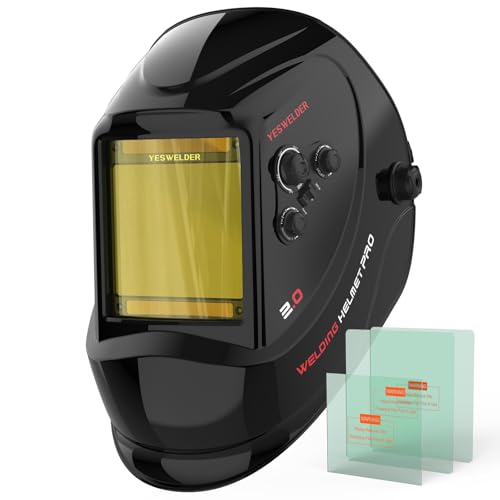


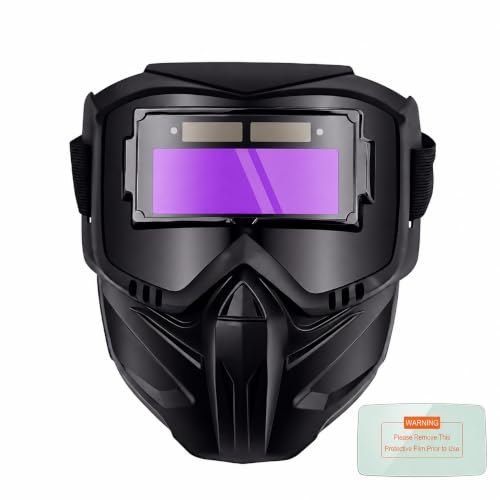
Why low-amp TIG is hard on an auto-darkening helmet
At less than 10 amps, TIG can be difficult for some auto-darkening filters to detect. The arc is small, the current is low, and a torch cup or your hand may partly block the light reaching a sensor. If the lens does not trigger reliably, it can flash light through before darkening or clear while the arc is still on. That is a poor fit for close, repetitive work.
For low-current TIG, look for a helmet whose manufacturer explicitly rates it for TIG at 5 amps or below, or states a similarly low TIG sensitivity threshold. A general claim such as “TIG compatible” is not enough to establish performance below 10 amps. Check the current manual or specification sheet; ratings can differ between models in the same product line.
As an Amazon Associate we earn from qualifying purchases at no extra cost to you.


What to look for before buying
Low-amp detection: This is the key specification. Prefer a published minimum TIG amperage of 2–5 amps over an unspecified threshold. If you weld below the stated limit, do not assume a sensitivity knob will make the helmet safe or dependable.
Sensor layout: Four sensors can help when your torch, workpiece, or position obscures one or more. They do not guarantee detection: all sensors can still be blocked, and poor line of sight remains a problem. A good two-sensor helmet may work well in open, flat positions.
Adjustments and delay: Adjustable sensitivity helps tailor detection to a faint arc, while delay controls how long the lens stays dark after welding stops. A short delay can be convenient for tacking, but too little delay may expose your eyes to afterglow or repeated starts. Start with the maker’s TIG recommendations rather than turning settings to extremes.
Viewing area and fit: A large window is useful for tracking the tungsten and puddle, but it can add weight and cost. Comfort matters during long sessions: check headgear adjustment, balance, replacement-lens availability, and whether the helmet clears your torch hand in the positions you use.
Comparison: choosing by your work
| Helmet type | Best fit | Main trade-off | What to verify |
|---|---|---|---|
| Entry-level auto-darkening | Occasional TIG above its published minimum, plus MIG or stick | May have a higher detection threshold or fewer sensors | Minimum TIG amperage, sensitivity control, and dependable power supply |
| Low-amp TIG-rated auto-darkening | Frequent thin-material work and starts below 10 amps | Costs more; extra features may not improve weld quality | Manufacturer’s minimum TIG rating, sensor count, and lens standard |
| Fixed-shade passive helmet | Budget-conscious work where a suitable shade and repeatable technique are practical | You lift or reposition the helmet to see between welds | Correct shade, full face coverage, and a safe way to lower the helmet |
Buying options that make sense
For regular low-current TIG, compare auto-darkening helmets rated for low-amp TIG. Read the actual specification sheet, not just the listing title. If your work is mostly occasional repairs at higher currents, an adjustable-sensitivity auto-darkening helmet may be sufficient, provided its stated minimum covers your settings.
A passive helmet is a reasonable low-cost choice if you weld infrequently and can lower it reliably before striking the arc. Look for a properly rated fixed shade and secure headgear. The savings are less useful if you repeatedly miss the puddle while lowering the helmet or expose yourself during starts.
Set it up and test it safely
Before welding, inspect the cover lenses for spatter, scratches, or clouding, confirm the battery or solar-assist system is ready, and check that the lens has not been left in grind mode. Select the shade recommended for your process and current by the helmet maker or applicable safety guidance. Shade selection is separate from sensitivity: increasing sensitivity changes triggering, not the protection level once the filter is dark.
Test the helmet at the lowest current you actually use, with the torch position and joint access typical of the job. Keep the helmet down and use a safe, controlled test setup; do not stare at an arc to see whether the lens triggers. If the lens flickers, fails to darken, or clears during a steady arc, stop. Check mode, power, sensor visibility, and settings. If the problem persists, use a helmet rated for that current or a suitable passive helmet rather than relying on luck.
Common failure causes include a sensor covered by a hand or torch, bright sunlight or nearby welding confusing the filter, a depleted battery, a dirty outer cover lens, and sensitivity set too low. On crowded benches, interference from another arc can also cause unexpected switching. Reposition yourself, shield the work area, and follow the helmet instructions. Do not continue if you cannot get stable darkening.
Match the helmet to the lowest current
For TIG below 10 amps, buy by the published low-current detection rating first, then weigh sensor count, viewing area, comfort, and price. A more expensive helmet is not automatically better, and a basic unit can be fine when its verified minimum covers your work. If the maker does not state a minimum TIG current, treat that as uncertainty—not proof that the helmet will handle a faint arc.
Related guides
More from Amazon
Programs that pair well with the guide above. Offers and eligibility are set by Amazon and may change.
A free business account with business pricing and bulk-buying tools for work, shop or home office.
Create a business accountFree shipping on eligible items, Prime Video and more. Eligible new members can start with a free trial.
Start a Prime free trialAudiobooks and podcasts to listen to on the go. Eligible new members can start with a free trial.
Try Audible freeAd-free music streaming. Eligible new subscribers can start with a free trial.
Try Music Unlimited freeAs an Amazon Associate we earn from qualifying purchases.







Write Your Review
No reviews yet. Be the first to share your experience!