What's inside
- Best anamorphic lenses by shooting situation
- What the squeeze ratio actually changes
- Head-to-head comparison
- SIRUI Saturn 1.6x: the practical everyday choice
- Atlas Orion 2x: maximum anamorphic character
- Laowa Proteus 2x: resolution with a cinematic signature
- Blazar Remus 1.5x: lower entry cost, useful compromise
- Focus methods and camera compatibility
- Decision matrix
- Ownership, maintenance, and common mistakes
- Final buying advice
- Best anamorphic lenses by shooting situation
- What the squeeze ratio actually changes
- Head-to-head comparison
- SIRUI Saturn 1.6x: the practical everyday choice
- Atlas Orion 2x: maximum anamorphic character
- Laowa Proteus 2x: resolution with a cinematic signature
- Blazar Remus 1.5x: lower entry cost, useful compromise
- Focus methods and camera compatibility
- Decision matrix
- Ownership, maintenance, and common mistakes
- Final buying advice
As an Amazon Associate I earn from qualifying purchases. This post may contain affiliate links at no extra cost to you.
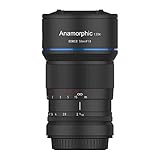
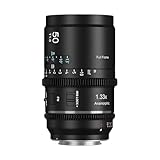
The best anamorphic lenses for cinematic video depend on your sensor, desired squeeze ratio, tolerance for manual focusing, and whether you want controlled modern rendering or pronounced vintage character: for most full-frame filmmakers, the SIRUI Saturn 1.6x is the most practical starting point, while Atlas Orion 2x, Laowa Proteus 2x, Blazar Remus 1.5x, and Great Joy 1.8x serve more specialized needs.
As an Amazon Associate we earn from qualifying purchases at no extra cost to you.


What we cover
- Best anamorphic lenses by shooting situation
- What the squeeze ratio actually changes
- Head-to-head comparison
- SIRUI Saturn 1.6x: the practical everyday choice
- Atlas Orion 2x: maximum anamorphic character
- Laowa Proteus 2x: resolution with a cinematic signature
- Blazar Remus 1.5x: lower entry cost, useful compromise
- Focus methods and camera compatibility
- Decision matrix
- Ownership, maintenance, and common mistakes
- Final buying advice
Best anamorphic lenses by shooting situation
- Best lightweight full-frame option: SIRUI Saturn 1.6x.
- Best for strong classic anamorphic character: Atlas Orion 2x.
- Best for high-end cinema production: Laowa Proteus 2x.
- Best affordable full-frame compromise: Blazar Remus 1.5x.
- Best value with a stronger widescreen look: Great Joy 1.8x.
- Best for compact cameras and occasional use: a single-focus anamorphic lens in the appropriate mount, rather than a heavy cinema set.
What the squeeze ratio actually changes
Anamorphic lenses compress the horizontal field of view onto the sensor. A 2x lens records a scene at half its normal horizontal width; software or the camera then stretches the image horizontally during editing. A 1.5x or 1.6x lens produces a less extreme effect and is usually easier to use on modern widescreen sensors.
For example, a 50mm lens with a 2x squeeze behaves approximately like a 25mm horizontal field of view after desqueezing, while retaining the vertical perspective of a 50mm lens. On a 16:9 sensor, a 2x desqueezed image becomes approximately 3.55:1, so cropping is normally required for a 2.39:1 delivery. A 1.5x lens on a 16:9 sensor produces roughly 2.67:1, requiring less cropping.
That difference matters. A 2x lens delivers more pronounced oval bokeh, horizontal streak flares, and wide-angle coverage, but it also makes focus, alignment, and edge behavior more demanding. A 1.5x or 1.6x lens is generally easier to integrate into a conventional 2.39:1 workflow.
Head-to-head comparison
| Lens family | Squeeze | Typical focal lengths | Approx. weight per lens | Focus method | Best fit |
|---|---|---|---|---|---|
| SIRUI Saturn | 1.6x | 35mm, 50mm, 75mm | About 0.7–0.8 kg | Single-focus, manual | Lightweight full-frame rigs |
| Atlas Orion | 2x | 32mm, 40mm, 50mm, 65mm, 80mm, 100mm | About 2.0–2.4 kg | Single-focus, manual | Controlled narrative production |
| Laowa Proteus | 2x | 35mm, 45mm, 60mm, 85mm, 100mm | About 2.0 kg | Single-focus, manual | High-resolution cinema cameras |
| Blazar Remus | 1.5x | 33mm, 45mm, 65mm, 85mm | About 1.0–1.2 kg | Single-focus, manual | Affordable full-frame cinema kits |
| Great Joy anamorphic | 1.8x | Various focal lengths | About 1.0–1.3 kg | Manual, model dependent | Budget-conscious independent work |
Weights and focal-length availability vary by mount and production revision, so confirm the exact specification before building a gimbal, matte box, or lens-support system around one lens.
SIRUI Saturn 1.6x: the practical everyday choice
The SIRUI Saturn range is attractive when weight and camera mobility matter. Its carbon-fiber construction keeps the lenses considerably lighter than many traditional 2x cinema anamorphics, making them more suitable for handheld work, gimbals, drones with adequate payload, and smaller full-frame cinema cameras.
The 1.6x squeeze provides visible anamorphic character without forcing extreme cropping on a 16:9 sensor. Flare is usually more controlled than on strongly vintage-oriented designs, and the image is intended to remain relatively usable toward the edges. Expect oval out-of-focus highlights and horizontal flares, but not necessarily the chaotic streaking associated with older anamorphic glass.
The trade-off is that the Saturn lenses are still manual cinema lenses. They require careful focus-pulling technique, and their lighter construction does not make them immune to the need for lens support in demanding rigs. They are a strong choice for one-person crews that need cinematic rendering without a large rental-style package.
Atlas Orion 2x: maximum anamorphic character
The Atlas Orion series is aimed at filmmakers who want the unmistakable 2x anamorphic look: pronounced horizontal flares, oval bokeh, shallow depth of field, and a wide horizontal perspective after desqueezing. The lenses are large and heavy, but their common cinema ergonomics, long focus rotation, and consistent mechanical design make them suitable for narrative crews.
Edge distortion is part of the creative appeal, particularly on wider focal lengths. Straight lines near the frame edge can stretch or bow, and faces close to the sides may look less natural. This can add energy to a shot, but it demands deliberate composition. A 40mm or 50mm is often a safer starting point than the widest lens when shooting dialogue.
The Orions are best when a focus puller, sturdy support, and properly calibrated monitoring workflow are available. They are less convenient for fast documentary work or lightweight gimbals.
Laowa Proteus 2x: resolution with a cinematic signature
Laowa Proteus lenses combine a 2x squeeze with a cinema-oriented design intended for modern high-resolution cameras. They are worth considering when you want strong anamorphic behavior but still need a relatively consistent image across a professional set.
Compared with more aggressively vintage lenses, Proteus models are designed to offer better control of sharpness, breathing, and aberrations. That does not mean the image is perfectly rectilinear or clinically clean: the squeeze, flares, oval bokeh, and focus falloff remain central to the design. The practical advantage is greater predictability from focal length to focal length.
They make the most sense for productions that can justify a complete lens set. Buying one Proteus lens may create awkward visual continuity if the next shot uses a different anamorphic design.
Blazar Remus 1.5x: lower entry cost, useful compromise
The Blazar Remus range targets filmmakers who want full-frame anamorphic coverage without immediately moving to the size and cost of large 2x cinema lenses. Its 1.5x squeeze is easier to frame for conventional widescreen delivery and generally produces less severe edge stretching than a 2x design.
Remus lenses can show attractive blue or neutral horizontal flares depending on the model and coating, along with oval bokeh and noticeable anamorphic focus character. The compromise is that lower-cost anamorphic lenses may show more variation in flare, sharpness, and edge behavior between focal lengths. Check the specific lens rather than assuming the whole set renders identically.
This is a sensible route for independent narrative, music video, and commercial work where manual focus is acceptable but a large cinema package is not practical.
Focus methods and camera compatibility
Most purpose-built cinema anamorphics listed here use a single focusing mechanism: both the cylindrical and spherical elements are moved together. This is preferable to pairing a taking lens with a separate anamorphic adapter, because it avoids dual-focus operation and reduces alignment problems.
Older or adapter-based systems may require focusing the taking lens and anamorphic unit separately. That can be inexpensive, but it is slow and makes close-ups difficult. Dual-focus adapters can also introduce softness, vignetting, and inconsistent sharpness if the two lenses are not carefully matched.
Before buying, check four compatibility points:
- Sensor coverage: confirm full-frame, Super 35, APS-C, or Micro Four Thirds coverage for your camera.
- Mount: verify PL, Canon EF, Sony E, Leica L, Nikon Z, or another mount is available and mechanically suitable.
- Desqueeze support: confirm that the camera monitor or external monitor can display the lens’s exact ratio.
- Rig clearance: measure the lens diameter, front thread or clamp size, and rear clearance around the camera mount.
Some cameras offer only limited desqueeze options. In that case, record normally and apply the correct horizontal scale in post-production. For a 1.5x lens, set horizontal scale to 150%; for a 1.6x lens, 160%; for a 2x lens, 200%.
Decision matrix
| Your situation | Most suitable direction | Why |
|---|---|---|
| First anamorphic purchase, lightweight full-frame camera | SIRUI Saturn 1.6x | Manageable weight and moderate squeeze |
| Experienced crew seeking obvious 2x character | Atlas Orion 2x | Strong flare and oval-bokeh signature |
| High-resolution cinema production with a complete set | Laowa Proteus 2x | More controlled, consistent cinema rendering |
| Independent filmmaker balancing budget and full-frame coverage | Blazar Remus 1.5x | Practical widescreen ratio and moderate size |
| Occasional anamorphic shots on a small budget | One compatible 1.5x or 1.8x lens | Avoids paying for a set that spends most of its time unused |
Ownership, maintenance, and common mistakes
Anamorphic lenses need the same basic care as other cinema lenses, but their front elements and alignment deserve extra attention. Use a blower before a lens cloth, clean with optical solution sparingly, and avoid pressing on the cylindrical front element. Store lenses capped, dry, and supported so heavy glass does not place unnecessary strain on the mount.
The parts most likely to cause trouble are focus-ring wear, mount play, front-filter threads, and matte-box alignment. A poorly supported heavy lens can loosen a camera mount over time. A clamp-on matte box that is not centered can vignette a wide anamorphic lens or interfere with the focus ring.
Test every focal length at the intended working distance before a production. Shoot a brick wall or architectural lines at the edges, a face near each side of the frame, and bright point lights at night. This reveals edge distortion, flare intensity, focus shift, and whether your chosen lens is compatible with the visual style rather than merely producing an impressive test image.
Final buying advice
Choose a 1.5x or 1.6x lens if you want a manageable widescreen workflow, mobile operation, and fewer framing surprises. Choose 2x if the distinctive anamorphic look is central to the project and you can support the weight, focus demands, and cropping requirements. The best anamorphic lenses are not simply the ones with the strongest flare; they are the ones whose squeeze ratio, distortion, focus system, and physical size fit the way you actually shoot.