As an Amazon Associate I earn from qualifying purchases. This post may contain affiliate links at no extra cost to you.
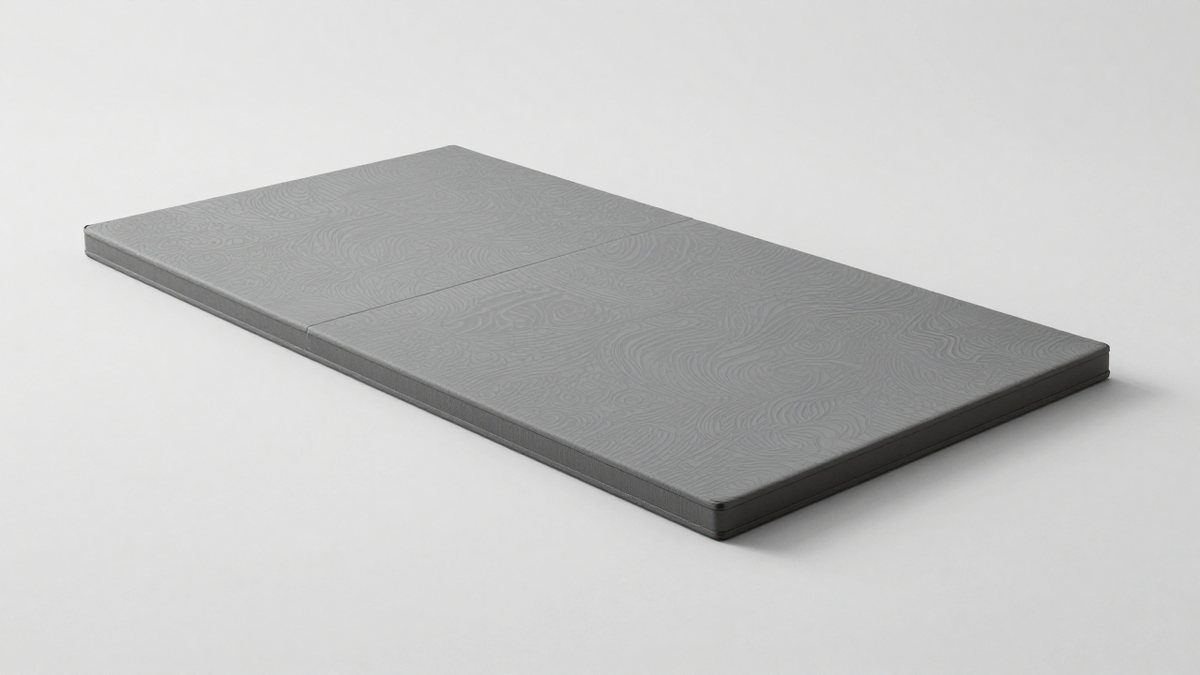
Dropping a loaded barbell onto bare concrete sends noise through the walls and bruises the floor over time. A proper gym floor mat solves three problems at once: it cushions impact, protects the substrate underneath, and keeps equipment from sliding during lateral movements. The category looks simple — foam tiles that interlock like a puzzle — but quality varies enormously in density, edge durability, and how well the pieces hold their shape after months of use.
Owner feedback and published specifications reveal what separates a mat that survives two years of deadlifts from one that cracks along the puzzle seams within a few months. Thickness, material composition, and coverage area are the concrete numbers that matter. Below we compare eight options across price tiers, from single-tile replacements to full-room kits, so you can match coverage to your workout style without overpaying.
As an Amazon Associate we earn from qualifying purchases at no extra cost to you.



Our Top Picks
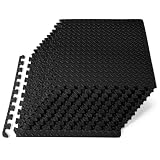
 Haulcove 18 Pcs EVA Foam Floor Tiles12.6" X 12.6" X 0.4"12.6 x 12.6 x 0.4 inches2.77 poundsCheck on Amazon
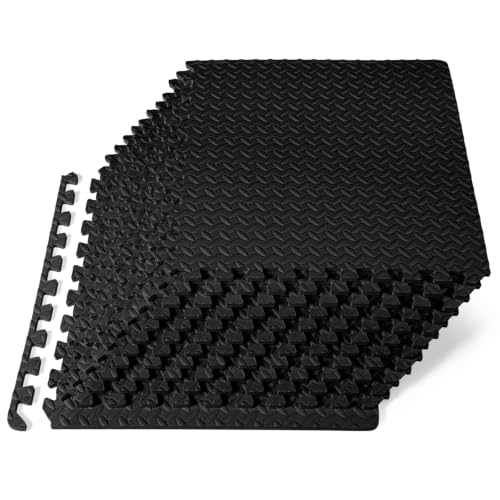 ProsourceFit Exercise Puzzle Mat ½-inch12 Pack (48 SQ FT)24 x 24 x 0.5 inches9.3 PoundsCheck on Amazon
 AIRHOP 0.56in Thick 48 Sq Ft Exercise Equipment48 Sq Ft (12 Tiles)24 x 24 x 0.56 inches29 poundsCheck on Amazon
 SUPERJARE 0.56'' Thick 48 Sq Ft Rubber Top12 Tiles (48 Sq Ft)96 x 72 x 0.56 inches2.5 poundsCheck on Amazon

Quick Picks
| Product | Best for | Price |
|---|---|---|
| Haulcove 18 Pcs EVA Foam Tiles | Large-area coverage on a budget | $24.99 |
| ProsourceFit 48 SQ FT (12 Tiles) | Small home gym or single-station setup | $54.99 |
| ProsourceFit 144 SQ FT (36 Tiles) | Full workout room | $139.99 |
| AIRHOP 0.56in Rubber Top | Heavy free-weight training | $99.99 |
| SUPERJARE 0.56in Rubber Top | Durability-focused lifting platform | $89.99 |
| 36 Pack 144 SQ FT Blue | Budget coverage for kids and workouts | $119.95 |
| bemaxx Gym Mats Set | Entry-level multi-tile starter kit | $24.99 |
| CAP Black Diamond Single Tile | Replacement or targeted spot coverage | $19.99 |
How We Picked
We compared these eight products on three criteria that owner reviews consistently highlight: material density and construction (whether the tiles compress permanently or spring back), coverage relative to price (cost per square foot across each set), and edge-and-seam integrity (how well puzzle tabs resist breaking under repeated assembly or heavy loads). We also weighed whether the product suits high-impact lifting versus general fitness and play-area use, because a mat ideal under a bench press is often overkill for stretching or a children’s corner.
The 8 Best Gym Floor Mats in 2026
Haulcove 18 Pcs EVA Foam Floor Tiles
This set gives you the most tiles per dollar in the group, making it a sensible choice when you need to cover a wide area quickly — say a garage corner for bodyweight circuits or a playroom. Eighteen pieces at half-inch thickness provide decent cushioning for moderate exercises. Owner feedback praises the straightforward interlocking system and the fact that the foam stays flat without curling edges. The main trade-off is density: lighter foam means these tiles compress faster under heavy weights, so they are not the best match for Olympic lifting. Skip them if your primary use is dropping loaded plates repeatedly.
- Pros: Highest tile count in this roundup at the lowest per-tile cost; easy puzzle assembly with no tools.
- Con: Lower foam density causes faster compression under sustained heavy loads.
ProsourceFit 48 SQ FT (12 Tiles)
ProsourceFit is a recognized name in home-fitness accessories, and this twelve-tile set targets the single-station lifter who needs roughly a six-by-eight-foot zone under a squat rack or bench. At half an inch thick, the EVA foam absorbs moderate impact without bottoming out on concrete. Owners report good seam alignment and a surface that resists scuffing from shoe treads. The coverage is limited though: twelve tiles will not surround an entire room, so pair this with the larger pack or buy extras if you want continuous coverage beyond one station. Skip if you need more than 48 square feet.
- Pros: Reputable brand with consistent tile dimensions; edges interlock tightly without gaps.
- Con: Coverage stops at 48 SQ FT, leaving limited room to expand without a second purchase.
ProsourceFit 144 SQ FT (36 Tiles)
The same construction as the twelve-tile version but scaled for a full workout room. Thirty-six tiles cover twelve feet by twelve feet, enough for a rack, a bench, and open floor for conditioning work. Owners who have used it for over a year note that the puzzle tabs hold up well through several disassembly cycles, which matters if you move or reconfigure. The per-square-foot cost is reasonable for a brand-name option. Skip if your space is smaller than a full training zone — you will be storing excess tiles.
- Pros: Generous coverage eliminates the need for multiple purchases; tabs resist breaking through repeated reassembly.
- Con: Higher upfront cost; overkill for a single-station setup.
AIRHOP 0.56in Rubber Top
This set adds a rubber top layer bonded to high-density EVA foam, which is the construction most suited to heavy barbell work. The rubber face resists gouging from knurling and plate edges far better than bare foam. At just over half an inch thick across twelve tiles covering 48 SQ FT, it provides impact protection that pure EVA mats struggle to match under repeated drops. Owner reviews highlight the reduced odor compared to cheaper foam-only alternatives. The premium materials show in the price. Skip if your routine is bodyweight or yoga-focused — you are paying for impact resistance you will not use.
- Pros: Rubber top resists cuts and plate damage; noticeably less chemical smell than budget EVA.
- Con: Costlier than foam-only equivalents at similar coverage.
SUPERJARE 0.56in Rubber Top
SuperJARE targets the same lifting-focused buyer as AIRHOP but at a lower price point. The rubber-top-over-EVA construction provides the same core benefit: a surface that shrugs off barbell impacts and plate scrapes. Twelve tiles cover 48 SQ FT, which suits one or two stations comfortably. Owners note the tiles are slightly heavier than pure foam sets, which keeps them from shifting during lateral movements. The trade-off is a marginally less refined edge finish on some pieces reported in reviews. Skip if you need more coverage than 48 SQ FT and do not want to buy a second set.
- Pros: Rubber-top durability at a more accessible price than the nearest competitor; heftier tiles stay put.
- Con: Occasional reports of rougher edge finishing between tiles.
36 Pack 144 SQ FT Blue
Thirty-six half-inch EVA tiles in a blue-and-black combination, this set competes directly with the ProsourceFit 144 SQ FT option but at a lower price. The coverage suits a full room for mixed training or a household that shares the space with kids. Owner feedback is mixed: many praise the value, while some note the foam is softer than the ProsourceFit equivalent and shows compression marks sooner. The dual-color design helps hide scuffs. Skip if you plan to drop heavy plates regularly — the softer foam will not recover.
- Pros: Best coverage-per-dollar ratio in the 144 SQ FT tier; two-tone color masks wear.
- Con: Softer foam compresses faster under sustained heavy loads.
bemaxx Gym Mats Set
A small multi-tile starter kit at the same price as the Haulcove set, bemaxx offers a compact footprint for users who want to test interlocking foam before committing to a full-room purchase. Tiles are standard half-inch EVA. Owner reviews are limited but generally positive on fit and finish for the price. The main limitation is coverage: this set handles a single station or a small stretch area, not a full gym. Skip if you need more than a modest training zone.
- Pros: Low-risk entry point to puzzle-mat flooring; tight interlocking for the price.
- Con: Small coverage area; not suited for rooms that need full-floor protection.
CAP Black Diamond Single Tile
One tile, sold individually. This is the replacement part for lost or damaged pieces, or for users who want to extend an existing mat by a small amount without buying a multi-pack. CAP is an established fitness-equipment brand, and the tile matches standard half-inch puzzle dimensions. The value proposition is not cost per square foot — it is convenience and brand compatibility. Skip if you are building a floor from scratch; you will need many of these.
- Pros: Single-unit purchase eliminates waste when replacing one damaged tile; fits standard puzzle dimensions.
- Con: Very poor cost per square foot as a primary flooring solution.
Buying Guide
Thickness and Density: What Actually Matters Under Load
Half-inch EVA foam handles bodyweight exercises, dumbbell work, and moderate barbell lifts without issue. Once you start dropping loaded plates from lockout height, you need either a denser foam formulation or a rubber top layer that distributes the impact over a wider area. Rubber-top-over-EVA constructions, like the AIRHOP and SuperJARE options, add a hard-wearing face that resists gouging while the foam underneath absorbs shock. If your training involves deadlifts or cleans from the floor, prioritize a product with a rubber or composite top rather than bare EVA.
Coverage and Cost Per Square Foot
Calculate the usable area of your space before buying. Measure length times width and add roughly ten percent for cuts around baseboards or odd corners. The budget sets in this roundup range from about $0.17 to $0.83 per square foot depending on tile count and material. Premium rubber-top products cost more per unit of area but last longer under heavy loads. For kids’ play areas or yoga, the cheapest coverage wins; for a home gym with heavy free weights, the per-square-foot math should be weighted toward durability.
Seam Integrity and Odor
Puzzle tabs are the failure point on most mats. Owners frequently report that cheaper tiles crack at the connection points after repeated disassembly or when a tab is forced during assembly. Look for feedback specifically mentioning long-term seam durability. Odor is the other common complaint: low-quality EVA off-gasses a chemical smell for weeks. Several products in this list include rubber tops or higher-grade foam that reduces the issue. If your gym is in a basement or small enclosed room, this matters more than it would in a garage.
Our Verdict
The top pick for most serious home-gym builders is the AIRHOP 0.56in Rubber Top — it balances impact protection, durability, and reasonable coverage without the premium pricing of commercial-grade flooring. For a budget-oriented buyer who needs a full room and trains with moderate weights, the 36 Pack 144 SQ FT Blue delivers the most coverage for the least money. The CAP Black Diamond Single Tile wins outright if you only need to replace one or two pieces from an existing setup, saving you from repurchasing an entire pack.
FAQ
Can I use gym floor mats over carpet?
Yes, interlocking foam tiles sit flat on low-pile carpet without issue. High-pile or shag carpet can cause uneven support and make the seams flex more, which accelerates tab breakage over time.
How many tiles do I need for a 10-by-10 room?
A 10-by-10-foot space is 100 square feet. At 4 SQ FT per tile, you need 25 tiles. Round up to account for cuts along walls, so a 28-tile purchase is the safe minimum.
Do rubber-top mats smell less than plain EVA foam?
Rubber-top constructions typically off-gas less than bare EVA because the rubber layer seals the foam beneath it. Plain EVA, especially in budget packs, can carry a noticeable chemical odor for the first one to three weeks of use.
Are these mats suitable for outdoor use?
EVA foam degrades under prolonged UV exposure and can become brittle in freezing temperatures. These mats are designed for indoor use; a covered patio or garage that stays dry and above freezing is the limit of their outdoor tolerance.