As an Amazon Associate I earn from qualifying purchases. This post may contain affiliate links at no extra cost to you.
Buying a Senix lawn mower means navigating a lineup that ranges from basic 144cc push models to 201cc self-propelled machines, with prices spanning roughly $199 to $413. The core question every buyer faces is whether they actually need the larger engine, the variable speed transmission, or the self-propelled drive — or whether a lighter, cheaper option covers their yard without the extra expense and maintenance burden.
What separates a good fit from a frustrating one comes down to matching mower weight and power to terrain and acreage. A 144cc push mower handles a quarter-acre flat lot beautifully and saves the owner a couple hundred dollars, but the same unit leaves someone with gentle slopes and dense growth pushing harder than necessary every single mow. This roundup compares published specs, listed prices, and aggregated owner feedback across the Senix gas and electric lineup for 2026 to identify which model suits which buyer.
As an Amazon Associate we earn from qualifying purchases at no extra cost to you.





Our Top Picks
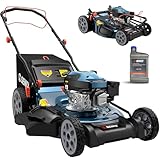
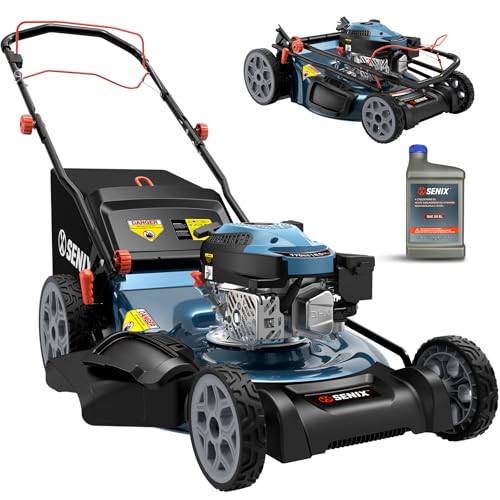
 SENIX 201cc 22" 3-in-1 Variable Speed Self Propelled22INCH-201CC37 x 23.5 x 15.8 inches79 PoundsCheck on Amazon
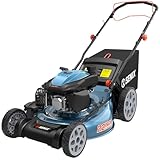
 SENIX 22'' Self Propelled Gas Lawn Mower22INCH-170CC37.5 x 23.75 x 15.87 inches72.8 poundsCheck on Amazon
 SENIX 22Inch 201cc 3-in-1 Gas Lawn Mower22 inch 201 cc37.4 x 23.7 x 15.8 inches72 poundsCheck on Amazon


Quick Picks
| Product | Best for | Price |
|---|---|---|
| SENIX 21-Inch 144cc 2-in-1 Mulching | Small-to-medium flat yards on a tight budget | $224.99 |
| SENIX 201cc 22″ 3-in-1 Variable Speed Self-Propelled | Sloped or mixed terrain where speed control matters | $399 |
| SENIX 20″ 144cc Lightweight | Light-duty gardens and storage-constrained spaces | $199.99 |
| SENIX 22″ 170cc Self-Propelled Easy Start | Mid-range yards wanting self-propulsion without premium pricing | $329.99 |
| SENIX 20″ 144cc Push | Minimalist budget buyers in small yards | $199 |
| SENIX 22″ 201cc 3-in-1 Rear Wheel Self-Propelled | Maximum power with full 3-in-1 versatility | $412.99 |
| SENIX 60 Volt Max 21″ 3-in-1 Cordless Push | Noise-sensitive neighborhoods and eco-conscious buyers | $299.99 |
| SENIX 201cc 22″ 3-in-1 Single Speed Self-Propelled | Flat-to-gently-sloped yards wanting high power simply | $389 |
How We Picked
Four criteria shaped these rankings. First, engine-to-terrain matching: a 144cc engine is underpowered for anything but flat, thin grass, while 201cc machines handle thicker growth without bogging. Second, deck width versus maneuverability: 20-inch decks fit tighter spaces, while 22-inch decks cover open lawns faster. Third, the self-propelled premium: we assessed whether the price jump from push to self-propelled models is justified by the drive system quality and owner satisfaction. Fourth, feature completeness: 3-in-1 models offering bagging, side discharge, and mulching provide more flexibility than 2-in-1 units at similar price points.
The 8 Best Senix Lawn Mower in 2026
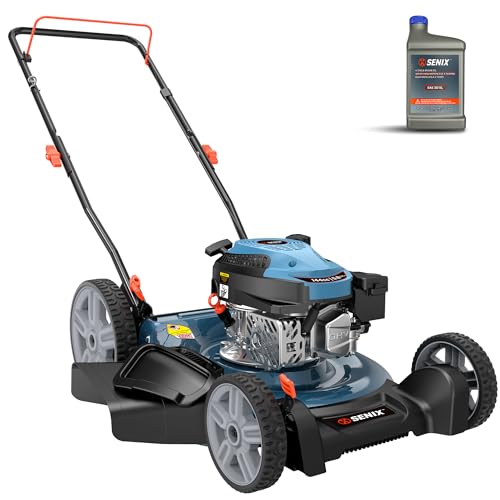
SENIX 21-Inch 144cc 2-in-1 Mulching
This is the sensible middle ground among Senix push mowers. The 21-inch deck covers slightly more ground per pass than the 20-inch models while remaining light enough for most users to manage without fatigue. Owners with flat quarter-acre lots report clean cuts and straightforward startup. The 2-in-1 configuration means you get mulching plus bagging but not side discharge, which is a limitation if you prefer to scatter clippings freely. The 144cc engine is adequate for maintained turf but struggles with overgrown patches.
- Pro: 21-inch deck provides a practical width-to-weight balance for small-to-medium yards.
- Pro: Consistent mulching performance praised by owners with well-maintained lawns.
- Con: No side-discharge option limits flexibility compared to 3-in-1 models.
Skip this if your yard has slopes or thick growth; the 144cc push setup will demand more effort than you expect.
SENIX 201cc 22″ 3-in-1 Variable Speed Self-Propelled
The variable-speed transmission is the standout feature here. Rather than a fixed forward pace, owners can dial the drive to match grass density and terrain, which the owner community frequently highlights as a meaningful quality-of-life improvement over single-speed equivalents. The 201cc engine provides noticeably more reserve power than the 144cc models, handling taller growth without stalling. At $399, it sits below the top-tier Senix self-propelled unit but above the mid-range 170cc option.
- Pro: Variable speed lets owners slow down in thick patches without losing drive control.
- Pro: Full 3-in-1 versatility covers mulching, bagging, and side discharge.
- Con: Heavier than push models, making it awkward to load into trucks or maneuver in tight garden beds.
Skip this if your yard is perfectly flat and short; the single-speed 201cc model below delivers similar power for less money.
SENIX 20″ 144cc Lightweight
Senix markets this explicitly as lightweight, and owner feedback confirms it is one of the easiest models to lift and store in this lineup. The 20-inch deck and three height settings suit small garden plots and narrow side-yards where a wider mower cannot turn comfortably. The 144cc four-cycle engine handles routine mowing of thin-to-medium grass without issue. The trade-off is that three height positions are fewer than some competitors offer, and the narrower deck means more passes on anything beyond a postage-stamp lawn.
- Pro: Light enough for users with limited strength or mobility to operate without strain.
- Pro: Compact footprint ideal for sheds with minimal storage space.
- Con: Only three cutting-height options restrict adaptability to seasonal grass-length changes.
Skip this if your yard exceeds a small garden size; you will spend noticeably more time mowing with a 20-inch deck.
SENIX 22″ 170cc Self-Propelled Easy Start
This model occupies an interesting price point between push and premium self-propelled options. The 170cc engine provides a meaningful step up from 144cc without the full weight penalty of the 201cc machines. Owners highlight the easy-start mechanism as a genuine advantage, particularly for users who struggle with choke-pull-start sequences on other models. The self-propelled drive reduces fatigue on moderate slopes. The limitation is that it lacks the variable-speed transmission and 3-in-1 full feature set of the higher-tier models.
- Pro: Noticeably less effort on inclines compared to any push model in this lineup.
- Pro: Easy-start system reduces frustration for infrequent operators.
- Con: Fewer cutting options than the 3-in-1 models at a higher price than push alternatives.
Skip this if you need side discharge or bagging flexibility; it is the self-propelled convenience without full feature coverage.
SENIX 20″ 144cc Push
At $199, this is the entry price into the Senix gas lineup. The name includes “cortadora de pasto,” signaling its bilingual-market appeal and straightforward design. It functions as a basic walk-behind push mower with the same 144cc engine family found in the lightweight model above. Owner reports describe it as adequate for very small, flat yards with thin grass. The minimal feature set means fewer things to break, which some buyers value as a reliability advantage.
- Pro: Lowest price in the Senix gas lineup with a proven engine platform.
- Pro: Simple design with fewer mechanical components reduces maintenance complexity.
- Con: Lacks the lightweight framing and ergonomic refinements of similarly priced Senix alternatives.
Skip this if you can find the $199.99 lightweight variant; paying an extra dollar for explicit ergonomic advantages is worthwhile.
SENIX 22″ 201cc 3-in-1 Rear Wheel Self-Propelled
The most expensive model in this roundup at $412.99, this mower pairs the largest available Senix engine with rear-wheel drive and full 3-in-1 cutting flexibility. Rear-wheel propulsion gives better traction on wet or uneven ground compared to front-drive alternatives. Owners describe it as the most capable Senix gas unit for demanding conditions. The price premium over the $399 variable-speed model is modest, but you sacrifice the speed-adjustment control for rear-drive traction advantages.
- Pro: Rear-wheel drive delivers superior traction on damp or sloped terrain.
- Pro: Full 3-in-1 system with maximum engine displacement available from Senix.
- Con: Highest price in the lineup with no variable-speed control.
Skip this if your yard is dry, flat, and short; the single-speed front-drive model below covers the same job for $24 less.
SENIX 60 Volt Max 21″ 3-in-1 Cordless Push
This is the only battery-powered option in the lineup, and it changes the ownership experience substantially. No fuel mixing, no oil changes, no pull-start — owners appreciate the zero-maintenance convenience and quieter operation. The 21-inch deck and 3-in-1 configuration match the feature set of comparable gas models. The push design means you still provide the forward motion, but the absence of engine vibration and noise reduces fatigue on shorter sessions. Run time and power reserve are the open questions against the 201cc gas units.
- Pro: Significantly quieter operation suits early-morning mowing and noise-restricted areas.
- Pro: Minimal maintenance eliminates fuel, oil, and spark-plug service costs.
- Con: Battery run time limits continuous mowing sessions compared to a full gas tank.
Skip this if your yard is large, sloped, or overgrown; the gas self-propelled models will complete the job faster and more easily.
SENIX 201cc 22″ 3-in-1 Single Speed Self-Propelled
This mower delivers the same 201cc engine and 3-in-1 flexibility as its variable-speed sibling but at a fixed drive pace, which brings the price down to $389. For owners whose yards are relatively uniform in grass density, the single speed works perfectly well and removes a component that can potentially fail. Owner feedback is generally positive, though some note the fixed pace feels too fast when navigating flower beds or obstacles without pausing the drive.
- Pro: Maximum engine power without the cost of a variable-speed transmission.
- Pro: Simpler drivetrain with fewer potential failure points than the variable-speed version.
- Con: Fixed speed forces you to manage forward pace with body movement near obstacles.
Skip this if your yard has varying terrain or dense patches where you need to slow the drive independently of your walking pace.
Buying Guide
Engine Displacement and Terrain Match
The Senix gas lineup spans 144cc to 201cc. The 144cc engines handle flat, thin, regularly maintained turf without problem but struggle as soon as grass gets thick or wet. The 170cc mid-range engine is the practical minimum for anyone with slight slopes or inconsistent mowing frequency. The 201cc engines carry the most reserve power and are appropriate for properties where grass grows quickly or terrain is uneven.
Self-Propelled Versus Push: The Value Threshold
A self-propelled Senix costs roughly $100 to $200 more than a push model with similar deck width. That premium is justified when your yard has slopes, when you mow more than a half-acre regularly, or when physical strain is a concern. On a flat quarter-acre lot, a push mower is the better financial decision and the lighter weight improves maneuverability around trees and beds.
Cutting Width and Maneuverability Trade-Offs
Twenty-inch decks clear tight spaces and are easier to store, but require more passes on open lawns. Twenty-one-inch decks are the balanced option. Twenty-two-inch decks cover ground fastest but add weight and reduce agility in cluttered gardens. Match deck width to your yard’s largest open stretch and its narrowest gap, not to one or the other alone.
Our Verdict
Top pick: The SENIX 201cc 22″ 3-in-1 Variable Speed Self-Propelled at $399 offers the most complete package of power, drive convenience, and cutting flexibility without reaching the premium pricing of the rear-wheel model. It handles the widest range of yard conditions in the Senix gas lineup.
Budget pick: The SENIX 20″ 144cc Lightweight at $199.99 is the best entry option for small, flat yards where storage space and ease of lifting matter more than cutting width or engine reserve.
If noise restrictions or environmental preference outweigh raw cutting capacity, the 60 Volt Max Cordless at $299.99 is the clear alternative — it trades engine power for maintenance-free, near-silent operation on manageable flat ground.
FAQ
Do I need a variable-speed self-propelled mower?
Variable speed is worthwhile when your yard has mixed terrain, dense patches, or obstacles that require you to slow the mower’s forward motion independently of your walking pace. On uniform, flat lawns with short grass, a single-speed self-propelled model performs identically and costs less.
Is a 144cc engine sufficient for most residential lawns?
A 144cc engine is adequate for flat, regularly maintained lawns under half an acre with thin-to-medium grass. If your lawn has slopes, thick growth, or wet patches, owners consistently report that 144cc units bog down and require multiple passes.
What does 3-in-1 mean versus 2-in-1?
A 3-in-1 mower can mulch, bag, and side-discharge clippings. A 2-in-1 offers only two of those modes. The practical difference is that side discharge lets you scatter cuttings freely without stopping to empty a bag, which matters most on larger yards with taller grass.
Are cordless Senix mowers a viable alternative to gas models?
The 60 Volt Max cordless model handles flat, small-to-medium yards effectively and eliminates fuel and maintenance hassles. For properties beyond roughly a quarter-acre or with significant slopes, owners report that gas models complete the job more reliably without mid-session battery concerns.